
A psychology degree abroad starts with a three- or four-year bachelor's, but on its own that degree almost nowhere lets you work as a clinical psychologist or psychotherapist. In the UK, a bachelor's accredited by the British Psychological Society (BPS) is only the first step, and registration as a clinical psychologist requires a professional doctorate. In the US, licences are issued by each state, and most states require a doctoral degree, supervised experience and the EPPP exam for independent practice. In Germany, psychotherapists receive their licence (Approbation) after a bachelor's and master's totalling 300 ECTS and must know German. So choose the country and programme by your goal: research, HR and user research — or clinical work, in which case what matters is where you intend to practise.
Below: which careers require state registration, how the route to practice works in different countries, where to study in English, what it costs in 2026/27 and what to consider if you plan to work in Russia afterwards.
| In brief | Answer |
|---|---|
| Length of a bachelor's | 3 years in the UK and the Netherlands, 4 in the US and Turkey |
| What a BPS-accredited bachelor's gives you | eligibility for the Graduate Basis for Chartered Membership, the first step to becoming a Chartered Psychologist |
| Clinical practice in the UK | HCPC registration after a professional doctorate |
| Licensing in the US | issued by the state; all 66 ASPPB member jurisdictions require the EPPP |
| Example bachelor's fee, 2026/27 | BSc Psychology at Goldsmiths: $30,470 (£23,000) a year |
| Medical psychologist in Russia | a specialist degree in clinical psychology, or a bachelor's and master's in psychology plus professional retraining; a foreign degree must be recognised first |
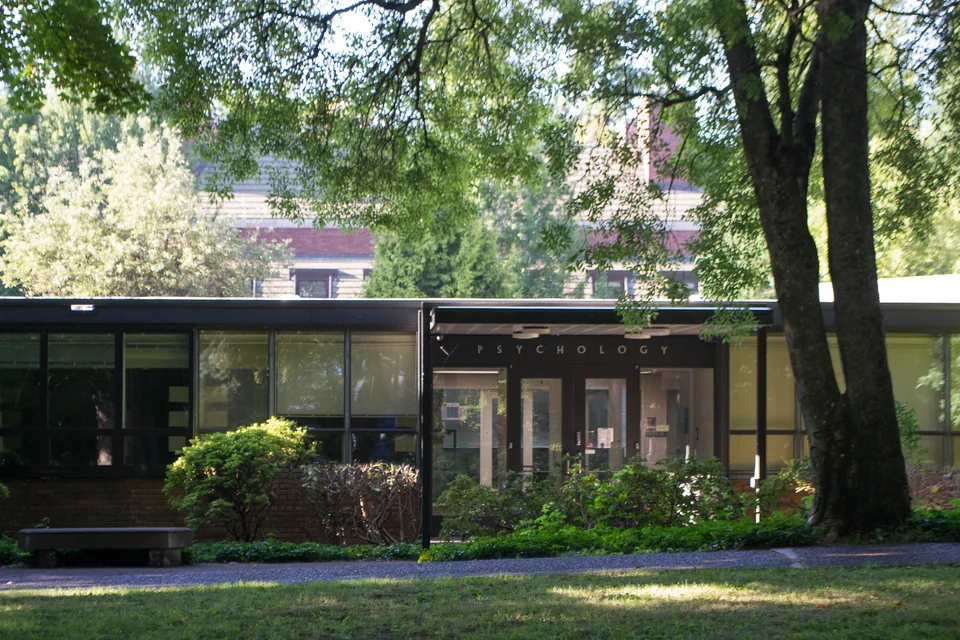
Careers after a psychology degree and where registration is required
Psychology graduates go in two directions. One is work where a degree matters but a licence usually does not: research, behavioural analytics, HR and assessment, user research for digital products, education and consulting. The other is helping people with mental disorders and providing psychotherapy. Here, in almost every country, professional titles are protected by law and granted only after long professional training.
| Area | Registration or licence needed? | What is usually required |
|---|---|---|
| Research, analytics, UX research | usually not | a bachelor's or master's, strong statistics and research methods |
| HR, assessment and talent development | usually not; in the UK "occupational psychologist" is a protected title | for the protected title, a master's and a BPS qualification |
| School and educational psychology | yes, in most countries | in the UK, a professional doctorate or equivalent |
| Clinical psychology | yes | UK — professional doctorate; US — usually a doctoral degree and a state licence |
| Psychotherapy | yes, under national rules | Germany — bachelor's and master's in psychotherapy plus Approbation; Netherlands — BIG register |
The route to practice: countries compared
| Country | First stage | Next steps | Language of practice | Who decides |
|---|---|---|---|---|
| United Kingdom | BPS-accredited bachelor's or conversion master's | clinical — professional doctorate; forensic, health, occupational, sport — master's and BPS qualification; then registration | English | Health and Care Professions Council (HCPC) |
| United States | bachelor's, then a PhD or PsyD | supervised experience and the EPPP; some states add a jurisprudence exam | English | the state licensing board |
| Germany | a bachelor's in psychology whose content meets the Psychotherapists Act | master's in psychotherapy, the psychotherapy examination and Approbation; 300 ECTS in total | German required for Approbation | the state (Land) health authority |
| Netherlands | bachelor's, then master's | healthcare psychologist and psychotherapist are professions listed in the BIG Act; these titles require BIG registration | Dutch in clinical work | BIG register |
| European benchmark: EuroPsy | 5 years of study (300 ECTS) | 1 year of supervised practice (1,500 hours) | — | national associations within EFPA |
EuroPsy is not a licence but a certificate from the European Federation of Psychologists' Associations. It shows that your training meets a common standard; the right to practise is still granted nationally.
In the US, internationally trained graduates face an extra step. State boards usually rely on a credential evaluation by a NACES member rather than comparing the foreign degree themselves. You must then show that your supervised experience is equivalent, and only after that can you sit the EPPP. About half of US and Canadian jurisdictions allow people with a master's degree to practise, but only under the supervision of a doctoral-level licensed psychologist.
Where to study psychology in English
United Kingdom. A bachelor's takes three years. Look for a statement that the programme confers the Graduate Basis for Chartered Membership: the BSc Psychology at Goldsmiths, for example, is BPS-accredited, costs $30,470 (£23,000) a year for international students starting in 2026/27 and requires IELTS 6.0 with 6.0 in writing. Graduates of other subjects can take a BPS-accredited conversion master's. Applicants with an 11-year school certificate usually need a preparatory year first; see our guide to the UK foundation year.
Netherlands. The University of Amsterdam teaches its psychology bachelor's in English, but numbers are capped: the English track has 300 places, and you must register for selection by 15 January. The university sets out the selection steps on its admissions page. Non-EEA nationals pay an institutional fee, shown on the programme page. See our University of Amsterdam profile and applying to Dutch universities.
Germany. Psychology bachelor's degrees at public universities are mainly taught in German, and most states charge no tuition. For anyone aiming to become a psychotherapist in Germany, German is essential: the law requires language skills for Approbation.
Turkey. Bachelor's programmes are taught in English or Turkish, and most private universities admit students after 11 years of school without an entrance exam. Based on our research, fees start at $2,250 a year in Turkish and $2,500 in English after the university's discount. See psychology in Turkey.
United States. The bachelor's lasts four years, with psychology chosen as a major alongside general first-year courses. Clinical training begins only at doctoral level (PhD or PsyD), where selection is much tighter than for the bachelor's.
What admissions look at
Psychology abroad is a science with a heavy load of statistics and research methods, so admission is not only about motivation. Universities usually check:
- school mathematics and grades in biology or social studies;
- English: IELTS 6.0–7.0 or an equivalent, depending on the university;
- a personal statement that shows interest in studying behaviour, not just a wish to "help people";
- selection tests on capped programmes in the Netherlands;
- for a master's, statistics and methodology courses on your transcript. Without them, research master's programmes often reject even psychology graduates.
What it costs
| Option | Fee | Worth knowing |
|---|---|---|
| Goldsmiths, BSc Psychology, 2026/27 | $30,470 (£23,000) a year | three years, BPS accreditation |
| University of Amsterdam, BSc Psychology | institutional fee for non-EEA nationals, listed on the programme page | the 2026/27 statutory fee for EU students is $3,060 (€2,694) |
| Public universities in Germany | no tuition in most states | taught in German |
| Private universities in Turkey | from $2,250 a year, based on our research | the final price depends on the discount and language |
| EPPP exam for a US licence | $600 for Part 1 and $450 for Part 2 | plus a test-centre appointment fee and state board fees |
By the European EuroPsy benchmark, the route to practice takes at least six years of study and supervised work, so budget for the whole chain rather than the bachelor's alone. A place on a professional doctorate is a separate competition, and conditions for international applicants vary by programme — check them before choosing a country for a clinical career.
If you plan to work in Russia
In Russia, the post of medical psychologist is regulated separately. Under Ministry of Health Order No. 206n of 2 May 2023, it requires a specialist degree in clinical psychology (or in psychology with a clinical specialisation), or a bachelor's and master's in psychology plus professional retraining in clinical psychology.
A foreign degree gives the same academic and professional rights as a Russian one only after recognition. Under Article 107 of the Law on Education, recognition works in three ways: under an international treaty, through a government list of foreign universities, or by application to Rosobrnadzor. The state fee for recognition by Rosobrnadzor is $77 (RUB 6,500). If you plan to return, choose a programme with a clear course structure; that makes recognition and later retraining simpler.
Plan: from choosing a country to practice
- Define your goal. Research, HR or UX — a bachelor's and possibly a master's are enough. Clinical work — pick the country where you will practise and study its registration rules.
- Check programme accreditation. In the UK, the Graduate Basis for Chartered Membership; in Germany, compliance with the Psychotherapists Act; in the US, the requirements of your target state's board.
- Meet the deadlines. The main UCAS date for 2027/28 entry is 13 January 2027; capped Dutch programmes close on 15 January.
- Take your English test before you apply.
- Plan the next stage by your second year: a master's, a doctorate or supervised practice.
Common mistakes
- Assuming a bachelor's makes you a practitioner. Almost everywhere it is only the first stage, and protected titles follow registration.
- Choosing a UK bachelor's without BPS accreditation. You will later need a conversion master's.
- Underestimating statistics. Research methods take up a large share of the curriculum, and weak maths causes problems from the first year.
- Choosing Germany for free tuition without planning to learn German. Neither the bachelor's nor Approbation is possible without it.
- Counting on a clinical career in the US after a master's. Most states require a doctorate for independent practice.
- Forgetting recognition in Russia. Without it, a foreign degree does not qualify you for a medical psychologist post.
FAQ
You can continue with a master's if your degree includes enough statistics and research methods. The right to practise depends on the country: in the UK you will need a BPS-accredited programme or conversion master's, followed by a doctorate or a BPS qualification.
In the UK, a three-year bachelor's followed by a professional doctorate, usually with work experience in between. In the US, a four-year bachelor's and several years of doctoral study with an internship, then the EPPP. In Germany, psychotherapists study for five years (300 ECTS) and pass the examination for Approbation.
In terms of tuition, private universities in Turkey, from $2,250 a year based on our research. Bachelor's degrees in the Netherlands and the UK cost more but give a clearer path to European master's programmes. Germany's tuition-free programmes are mostly taught in German.
Yes, through one of the three procedures in Article 107 of the Law on Education: an international treaty, the government list of universities or a Rosobrnadzor decision. After recognition the degree carries the same rights as a Russian one, but a medical psychologist post also requires the right subject profile.
It is a European psychologist certificate based on five years of study and one year of supervised practice. It helps demonstrate your level when moving within Europe, but it does not replace national registration or grant the right to practise by itself.
In roughly half of US and Canadian jurisdictions, master's-level practitioners may work under the supervision of a licensed doctoral-level psychologist. Many counsellors also hold separate licences in related professions, whose rules are likewise set by each state.
Scholarships only for psychology are rare; general university schemes are more common. The university or a foundation, not the embassy, awards them, and each scheme sets its own rules on nationality, grades and deadlines. Public universities in most German states charge no tuition, so the main cost there is living expenses. In the Netherlands, non-EEA students pay the institutional fee; university scholarships for them exist but are limited, so check their conditions while you shortlist programmes.
Sources
- Goldsmiths: BSc Psychology — 2026/27 fee, BPS accreditation, IELTS
- HCPC: protected titles for practitioner psychologists
- HCPC: threshold qualifications for registration (SET 1)
- ASPPB: licensing requirements in the US and Canada
- ASPPB: internationally trained applicants
- ASPPB: EPPP registration fees
- German Psychotherapists Act (PsychThG), sections 1, 2 and 9
- Dutch BIG Act, Article 3
- EFPA: the EuroPsy standard
- University of Amsterdam: BSc Psychology — language, places, deadline
- University of Amsterdam: tuition fees 2026/27
- UCAS: application calendar for 2027 entry
- Russian Ministry of Health Order No. 206n of 02.05.2023 (official publication)
- Russian Law on Education, Article 107
- Russian Tax Code, Article 333.33: recognition fee
- Turkish private-university fees come from our guide to psychology in Turkey.
Conversions to dollars rely on the ECB rate of 29 September 2026 — $1.1355 per euro and about $1.3247 per pound via the ECB cross rate — rounded to $10, or to $1 for sums below $100.
Matching a country and programme to your goal, checking accreditation and degree requirements, and preparing documents and applications are provided under an agreement with StudyU. The university decides on admission, the consulate on the visa, and each country's professional regulator on the right to practise.
