
Belgium has ten full universities. Five belong to the Flemish Community (KU Leuven, Ghent University, the University of Antwerp, VUB and Hasselt University) and five to the French-speaking Community (UCLouvain, ULB, the University of Liège, UMONS and UNamur). Flemish universities teach mainly in Dutch, French-speaking ones mainly in French, and English is common mostly at master's level. For 2026/27, a non-EU student pays $6,100 (€5,369) a year at a French-speaking university, while Flemish universities set their own rates: the Study in Flanders guideline is $6,020–13,630 (€5,300–12,000), though some programmes cost less, such as UGent humanities master's at $2,610 (€2,297.40).
This guide lists all ten universities, explains how the two education systems differ, shows where English-taught study is realistic and gives a short checklist for narrowing your choice. For a country overview, see studying in Belgium.
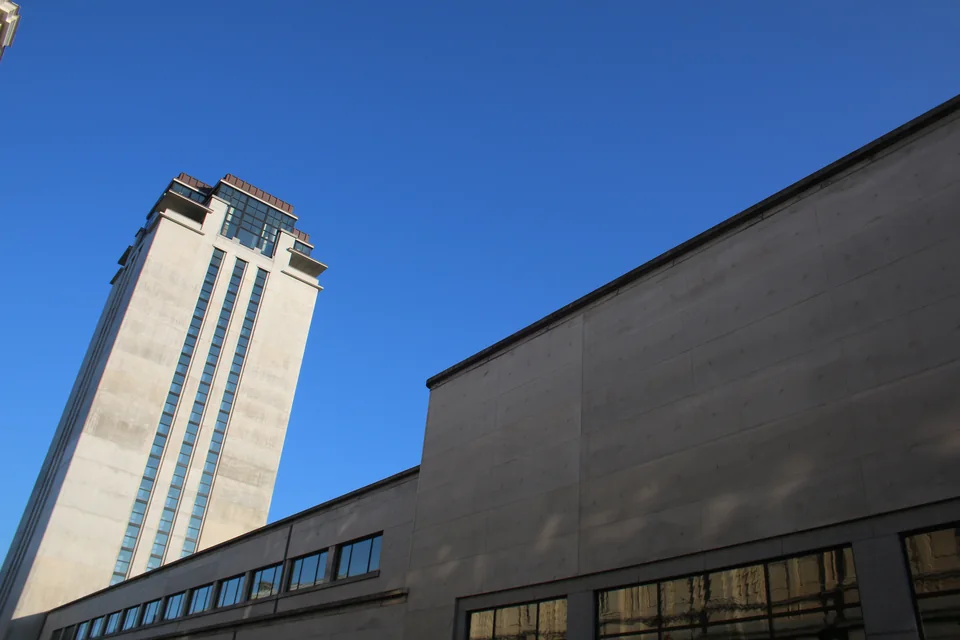
All Belgian universities at a glance
| University | City | System and language | What matters for international applicants |
|---|---|---|---|
| KU Leuven | Leuven, plus campuses in Brussels and other Flemish cities | Flemish, Dutch; 7 bachelor's and 75 master's programmes in English | the oldest university in the country (1425); 59th in the QS ranking published in 2026 |
| Ghent University (UGent) | Ghent | Flemish, Dutch | applicants who need a visa must apply before 1 April; foreign degrees are verified through Qualification Check |
| University of Antwerp (UAntwerp) | Antwerp | Flemish, Dutch | English-taught master's programmes, including Maritime and Air Transport Management run with Antwerp Management School |
| Vrije Universiteit Brussel (VUB) | Brussels, Etterbeek and Jette campuses | Flemish, Dutch | the Dutch-speaking university of the capital; not the same as French-speaking ULB |
| Hasselt University (UHasselt) | Hasselt and Diepenbeek | Flemish, Dutch | English-taught Master of Transportation Sciences (120 ECTS); non-EEA deadline 1 May |
| UCLouvain | Louvain-la-Neuve and Brussels (Saint-Louis campus) | French-speaking, French | non-EU applicants pay a $230 (€200) file fee, deducted from tuition if they enrol; non-EU school leavers need a final equivalence decision and an average of at least 13/20 |
| Université libre de Bruxelles (ULB) | Brussels | French-speaking, French | non-EU nationals living outside the EU apply between 16 February and 31 March; they pay the $1,360 (€1,194) fee plus the $4,740 (€4,175) supplement |
| University of Liège (ULiège) | Liège, Gembloux, Arlon | French-speaking, French | non-EU applications for 2026/27 closed on 31 March 2026; the university offers a blocked-account deposit for the visa |
| University of Mons (UMONS) | Mons | French-speaking, French | has a medical faculty; medicine is entered through the Community-wide exam |
| University of Namur (UNamur) | Namur | French-speaking, French | listed in QS 2026, according to Study in Belgium |
All ten are recognised and funded by their Community. EU students therefore pay a modest fee. For everyone else, the French-speaking Community adds one flat supplement, while Flemish universities set their own non-EEA rates.
Flanders or French-speaking Belgium: the difference that matters
Higher education is run by the Communities, not the federal government. In practice you are choosing between two systems with their own recognition rules, fees and calendars.
| Question | Flemish institutions | French-speaking institutions |
|---|---|---|
| Main language | Dutch; English mostly at master's level | French; more English options in the second cycle |
| School-leaving certificate | assessed by the institution, together with a declaration that it gives access to university at home | mandatory equivalence from the Community's Equivalence Service; applications 15 November–15 July, fee $450 (€400) |
| Non-EU fee, 2026/27 | guideline $6,020–13,630 (€5,300–12,000) per 60 credits; schools of arts $9,990–28,390 (€8,800–25,000) | $1,360 (€1,194) registration fee + $4,740 (€4,175) supplement = $6,100 (€5,369) |
| Application period | usually opens in November–December; UGent visa applicants by 1 April | non-EU files usually by 31 March; each institution sets its own date |
| Medicine and dentistry | entrance exam in Dutch | Community-wide competitive exam; 15% cap for non-residents |
If you speak French or can reach B2 before you start, French-speaking universities offer one fee and one recognition procedure. If English matters most and you are applying for a master's, Flanders offers more choice, but the price depends heavily on the programme.
University, university college or school of arts
Both systems also have professionally oriented institutions: 13 university colleges (hogescholen) in Flanders, and hautes écoles plus schools of arts in French-speaking Belgium.
- Academic bachelor's (180 ECTS, three years) at universities, schools of arts and the Antwerp Maritime Academy — the standard route to a master's.
- Professional bachelor's (180 ECTS; nursing 240) at university colleges, with compulsory placements. Moving on to a Flemish university master's requires a bridging programme.
- Associate degree (90–120 ECTS), a short practical EQF level 5 qualification, offered in Flanders only in Dutch.
- Schools of arts admit through an artistic test; in French-speaking Belgium these usually run 1 May–1 June and 25 June–21 September.
There is also a small German-speaking Community in the east. It has no university; higher education there is provided by the Autonome Hochschule Ostbelgien (AHS) in Eupen, with German-taught programmes in health, nursing, social sciences, education, finance and administration.
Choose a university if you plan a master's or research career. Choose a college if you want an applied profession sooner, but check how its degree counts if you later want to continue.
Where you can study in English
English-taught bachelor's programmes are rare. KU Leuven lists seven, compared with 75 English-taught master's programmes; examples include Business Administration and Business Engineering on its Brussels campus (the latter jointly with UCLouvain Saint-Louis – Bruxelles). French-speaking universities teach the first cycle almost entirely in French.
Master's level is different: Study in Flanders states that most English-taught programmes in Flemish institutions are master's programmes. The usual minimum is B2 English; Study in Flanders links it to IELTS 6.0 and TOEFL iBT 72 or higher, and some programmes set the bar above that.
Studying in Dutch or French without prior knowledge is possible if you add a preparatory language year. Ghent University, for example, runs a Preparatory Year of Dutch, and you apply for your degree programme together with it by 1 April of the year in which the language course starts in September. French-speaking bachelor's programmes require a French certificate only for teacher-training degrees, but lectures will be hard to follow without solid French. French tests are covered in our guide to DELF, DALF and TCF.
What a year costs
The rule of thumb for 2026/27: EU citizens pay about $1,340–1,360 (€1,181–1,194), everyone else several times more. Published rates for students starting in 2026/27:
| Institution | Who | Per year (60 credits) |
|---|---|---|
| All French-speaking universities | non-EU, no exemption | $6,100 (€5,369) |
| KU Leuven | non-EEA, depends on programme and nationality | calculator rates: $3,510 (€3,093.12), $6,370 (€5,613.12), $10,780 (€9,493.92); on a few programmes everyone pays the EEA rate of $1,340 (€1,181.40) |
| UGent, master's at the humanities faculties (arts, law, psychology) | non-EEA | $2,610 (€2,297.40), rate A |
| UGent, master's in other faculties | non-EEA | $8,040 (€7,079.40), rate B |
| UGent, Dutch-taught bachelor's | non-EEA | $1,340 (€1,181.40), same as EEA |
| UHasselt, Transportation Sciences | non-EEA | $4,430 (€3,899.40) |
Russian and Kazakh citizens do not qualify for the French-speaking supplement exemptions and should budget for the full $6,100 (€5,369); nationals of other CIS countries should check the ARES circular's annexes for their intake year. A full budget with housing, visa costs and proof of funds is in our cost of studying in Belgium guide.
Medicine, dentistry and veterinary science
These programmes are not entered on paper alone. In Flanders, medicine, dentistry and veterinary science require an entrance exam and are taught only in Dutch.
In French-speaking Belgium, medicine and dentistry use one competitive exam run by ARES. Applicants without their main residence in Belgium fall under a quota: in 2026, 251 of the 1,675 candidates admitted to medicine and 40 of 272 admitted to dentistry were non-residents. Veterinary science, physiotherapy and speech therapy also cap non-resident places and use a random draw when oversubscribed.
Private institutions and the visa
Belgium also has private institutions, including business schools, and their status changes the student visa process. For a private institution, the Immigration Office accepts only one proof of funds: a $14,470 (€12,744) deposit with one of two approved companies, Studely or Ready Study Go International. The Immigration Office file fee is $270 (€242) for a private institution and $290 (€251) for a publicly recognised one.
Before applying to a private school, check whether its degree is recognised in Belgium and at home. Without Community recognition, continuing to a Belgian master's can become harder.
How to read the rankings
In the QS ranking published in 2026, KU Leuven rose to 59th, its best result so far. Study in Belgium notes that ULB, ULiège, UMONS and UNamur also kept their place in QS 2026.
An overall rank says little about a specific programme. Compare the curriculum, the language of each course, prior-education requirements and the fee for your programme: within one university, fees can differ threefold.
Five questions to narrow your choice
| Question | If yes | If no |
|---|---|---|
| Applying for a bachelor's? | decide on French or Dutch; English options are few | master's level offers far more English-taught choice |
| Willing to learn French? | French-speaking universities: one $6,100 (€5,369) fee and one equivalence procedure | focus on Flanders and English-taught master's programmes |
| Tuition budget under $6,810 (€6,000) a year? | compare French-speaking universities, KU Leuven's rate for your programme and UGent's humanities master's | UGent rate B master's and top-rate KU Leuven programmes will stretch the budget |
| Aiming for medicine? | prepare for the entrance exam and the non-resident quota | — |
| Want life in the EU capital? | ULB, VUB and the Brussels campuses of KU Leuven and UCLouvain | Leuven, Ghent and Liège are university towns where most students rent a room (kot) |
The application procedure is in applying to Belgian universities, and level-specific advice in our bachelor's and master's guides. Once you have two or three names, check four things on each programme page: language, deadline for your applicant category, entry requirements and the exact fee.
Common mistakes
- Confusing ULB and VUB. Both are in Brussels, but one is French-speaking and the other Dutch-speaking, with different admission rules, fees and deadlines.
- Planning around an English-taught bachelor's. There are few, and they are competitive. A preparatory language year is often more realistic.
- Budgeting with the EU fee. The roughly $1,360 (€1,200) figure applies only to EU and assimilated students.
- Starting French-speaking equivalence too late. Without the decision or proof of application, the university will not enrol you and the consulate will not accept a visa file.
- Choosing a private school without checking recognition. It affects both your visa and your next degree.
FAQ
Ten full universities, five in each language Community. In addition there are university colleges, hautes écoles, schools of arts and private institutions offering professional and specialised programmes.
In the QS ranking published in 2026, KU Leuven is the highest-placed Belgian university at 59th in the world. For a specific subject, another university may be stronger, so compare programmes rather than overall ranks.
Yes, but choice is limited: KU Leuven, for example, has seven English-taught bachelor's programmes. Most first-cycle study is in Dutch or French, which is why many international students plan a language preparation year.
Both are in Brussels and share a common history. ULB belongs to the French-speaking Community and teaches mainly in French; VUB belongs to the Flemish Community and teaches in Dutch and English. Their fees and admission rules differ.
Not for a regular non-EU student. At French-speaking universities, nationals of countries on the ARES lists (mostly least developed countries) and some categories, such as WBI scholarship holders, are exempt from the supplement. Students from Russia and Kazakhstan pay the supplement unless another exemption applies, such as residence in Belgium combined with genuine employment there.
For non-EU students, French-speaking universities are usually cheaper and more predictable at $6,100 (€5,369) a year for any programme. In Flanders it depends on the institution: a Dutch-taught bachelor's at Ghent costs $1,340 (€1,181.40), while a master's there costs $2,610 (€2,297.40) or $8,040 (€7,079.40) depending on the faculty.
Sources
- Study in Flanders: Flemish higher education, admission requirements, tuition fees 2026/27 — checked 29.09.2026
- Study in Belgium: French-speaking universities, registration fees, quota studies, QS 2026 news — checked 29.09.2026
- ARES Circular No. 2026-001 on the non-EU supplement (PDF) — checked 29.09.2026
- Wallonia-Brussels Federation Equivalence Service — checked 29.09.2026
- KU Leuven: 2026/27 fee breakdown, choose your programme, English-taught business bachelor's, QS news — checked 29.09.2026
- UGent: master's fees 2026/27, bachelor's fees, deadlines — checked 29.09.2026
- Autonome Hochschule Ostbelgien (AHS): departments — checked 29.09.2026
- UHasselt: Transportation Sciences admission and fees — checked 29.09.2026
- UCLouvain: registration fees, ULiège: fees and non-EU admission, ULB: application dates and fees, UCLouvain: requirements for non-EU certificates — checked 29.09.2026
- Bruxelles-J: residence for study, Immigration Office fee and proof of funds — checked 29.09.2026
- L'Avenir, 24.08.2026: medicine and dentistry entrance exam results — checked 29.09.2026
- Rate used for conversions: ECB, 29.09.2026, €1 = $1.1355. Small sums are rounded to the dollar, anything from $100 up to the nearest $10.
University shortlisting, requirement checks and document preparation are provided under an agreement with StudyU. Admission is decided by the university, recognition of school certificates in French-speaking Belgium by the Equivalence Service, and visas by the Belgian consulate and the Immigration Office.
Next steps
- Bachelor's Degree in Belgium for International Students: Admission After School, Language and Cost
- Master's Degree in Belgium for International Students: English-Taught Programmes, Requirements and Cost
- Applying to Belgian Universities: Steps, Documents and Deadlines for International Students
- Cost of Studying in Belgium in 2026/27: Tuition, Living Costs and a First-Year Budget
- DELF, DALF and TCF: Which French Test You Need to Study in France and Where to Take It
- Studying in Belgium for international applicants
