
Harbin, the capital of Heilongjiang Province in north-east China, is one of the country's most affordable large university cities. International students mostly choose among four universities: Harbin Institute of Technology (HIT) and Harbin Engineering University (HEU) for engineering, Heilongjiang University (HLJU) for languages, economics and Russian studies, and Northeast Forestry University (NEFU) for ecology, biology and forestry. At 2026/27 rates, a Chinese-taught bachelor's costs $2,310–2,980 (CNY 15,500–20,000) a year and a dormitory place starts at $60 (CNY 400) a month. Chinese-taught programmes usually require HSK 4, bachelor's applicants need the CSCA, and a provincial scholarship is reserved for citizens of Eurasian countries including Russia and Kazakhstan.
This guide compares the universities by field, teaching language and price, and covers admission rules, scholarships, living costs and practical life in the city. For the national picture, see universities in China for international students and study in China.
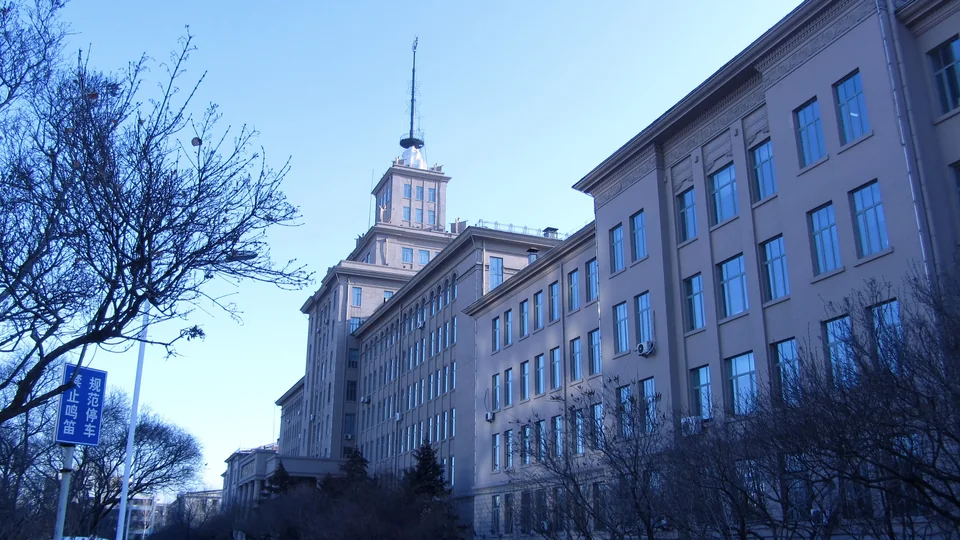
Which Harbin university for which goal
| University | Strengths | Bachelor's per year (2026/27 academic year) | Language | Notes |
|---|---|---|---|---|
| Harbin Institute of Technology (HIT) | Mechanical and aerospace engineering, computing, electronics, materials | $2,980 (CNY 20,000) Chinese-taught; $3,880 (CNY 26,000) English-taught | HSK 4 at 210+; IELTS 6.0 or TOEFL 80 | English cohort needs 20+ students; age under 30 |
| Harbin Engineering University (HEU) | Naval architecture and ocean engineering, nuclear energy, underwater acoustics, computing | $2,540 (CNY 17,000) Chinese-taught; $3,280 (CNY 22,000) for English-taught AI | HSK 4 (HSK 3 for Chinese Language); TOEFL 90 or IELTS 6.0 | Age 18–25; four application waves |
| Heilongjiang University (HLJU) | Russian studies, Chinese language, economics, law | $2,310 (CNY 15,500) a year, paid as $1,160 (CNY 7,750) per half-year; current rate, no year stated | Two programmes for international students accept beginners in Chinese | Roots in a 1941 Russian-language unit; joint projects with Novosibirsk, Moscow and St Petersburg state universities |
| Northeast Forestry University (NEFU) | Forestry, ecology, biology, landscape architecture | $2,460 (CNY 16,500) Chinese-taught; $3,210 (CNY 21,500) English-taught | HSK 4 at 180+ for science and engineering, HSK 5 at 180+ for literature and law; IELTS 6.0 | 2026 applications closed on 30 June |
For self-funded students, fee differences between these universities are small, so the field decides. Strong engineering with a comfortable HSK 4 points to HIT or HEU. If you are just starting Chinese or want an environment connected with Russia, Heilongjiang University fits. Ecology, biology and forestry belong at NEFU.
Harbin Institute of Technology (HIT)
HIT is Harbin's leading technical university, known for aerospace, mechanical engineering and computing. All bachelor's programmes are taught in Chinese, and majors marked "Chinese & English" can be taken in English if at least 20 students enrol. For 2026 entry HIT required the CSCA from all applicants, HSK 4 at 210+ for Chinese-taught programmes, and IELTS 6.0 (no band below 5.5) or TOEFL iBT 80 for English-taught ones. Self-funded applications closed on 15 July. Beyond tuition, HIT lists dormitory places at $120–150 (CNY 800–1,000) a month excluding utilities and insurance at $120 (CNY 800) a year, and asks applicants to show at least $2,980 (CNY 20,000) in savings.
HIT's own scholarship has four levels: a full tuition waiver, 50%, 30% or 20%. You cannot apply for it and for a Chinese Government Scholarship at the same time; such applications are rejected. Programmes and campuses are covered in our HIT profile.
Harbin Engineering University (HEU)
HEU traces its origins to a military engineering institute founded in 1953 and is known today for naval architecture, ocean engineering, nuclear energy and underwater acoustics. For 2026/27 it offered 35 bachelor's programmes to international students, most in Chinese. English-taught options covered computer science, electronic information engineering, artificial intelligence, robotics and civil engineering, the last a double degree with a fourth year at the University of Aberdeen (UK) at $6,710 (CNY 45,000) a year.
The 2026 rules: age 18–25 (under 18 requires guardian documents in Harbin), a school average of at least 75 out of 100, and HSK 4 for Chinese-taught programmes. CSCA subjects are Mathematics and Physics for engineering, and Chinese and Mathematics for arts and management. Applications ran in four waves from 1 November 2025 to 15 May 2026. See our Harbin Engineering University profile.
Heilongjiang University (HLJU)
HLJU grew out of a Russian-language unit founded in 1941 and still builds much of its international work around Russia. With Novosibirsk State University it runs a Sino-Russian Institute, a joint graduate school and a joint institute; with Moscow State University, a school of advanced translation; and with St Petersburg State University, a Russian-language testing centre. International applicants apply through the Institute of International Culture and Education.
The institute runs two bachelor's programmes of its own for international students, Chinese Language and Literature (4 years) and International Economics and Trade (5 years, starting with a language year), and both accept beginners in Chinese. At the current published rate (the fee page names no academic year), tuition is $1,160 (CNY 7,750) a half-year, the language course $970 (CNY 6,500) a half-year, and a twin dormitory room starts at $3 (CNY 21) a day. Other majors require HSK 5 at 180+. Every bachelor's application needs proof of funds: a bank statement in the applicant's or a relative's name for about $8,950 (CNY 60,000). See our Heilongjiang University profile.
Northeast Forestry University (NEFU)
NEFU specialises in forestry, ecology, biology and related engineering. For 2026 entry it accepted applications until 30 June; Chinese-taught tuition was $2,460 (CNY 16,500) a year and English-taught $3,210 (CNY 21,500). A twin room cost $75 (CNY 500) a month and a single $150 (CNY 1,000); the application fee and annual insurance were $60 (CNY 400) and $120 (CNY 800). All applicants take the CSCA: Mathematics in every case, Physics and Chemistry as agreed with the university.
Other universities in Harbin
The Ministry of Education and Heilongjiang Province scholarship for Eurasian countries also names Harbin Medical University, Harbin Normal University, Heilongjiang University of Chinese Medicine and Northeast Agricultural University among Heilongjiang's institutions. Northeast Agricultural University has run a joint Sino-Russian programme with Pacific National University in Khabarovsk for thirty years. These universities publish international fees and teaching languages each year, so check the 2027 figures before choosing.
Admission requirements and deadlines
The four main universities follow similar rules with different thresholds and dates.
| Requirement | HIT | HEU | HLJU | NEFU |
|---|---|---|---|---|
| CSCA for bachelor's | Yes, subjects by major table | Yes: Mathematics and Physics, or Chinese and Mathematics | Yes | Yes, Mathematics compulsory |
| Chinese-taught language level | HSK 4 at 210+ | HSK 4 | HSK 5 at 180+, except the institute's two programmes | HSK 4–5 at 180+ |
| Age | Under 30; under 18 needs a notarised guardianship certificate | 18–25; under 18 needs a guardian in Harbin | Under 18 needs a guardian letter on the university's form | University rules apply |
| 2026 deadline | 15 July | Four waves to 15 May | 10 June | 30 June |
| Application fee | $60 (CNY 400) | $60 (CNY 400) | Registration fee $39 (CNY 260) | $60 (CNY 400) |
| Proof of funds | At least $2,980 (CNY 20,000) in an account | Financial support document | About $8,950 (CNY 60,000) in the applicant's or a relative's account | Financial support letter on the university's form |
For September 2027 entry, take the CSCA in November 2026 or January 2027 to meet HEU's early waves and leave room for a retake. Our CSCA exam guide explains subject and session choice, and our guide to applying to Chinese universities covers certificates, apostilles and the medical form.
Scholarships for study in Harbin
- Ministry of Education and Heilongjiang Province scholarship for Eurasian countries. Open to citizens of Russia, Belarus, Kazakhstan, Uzbekistan, Kyrgyzstan and eight other countries. It covers tuition, housing, living costs and medical insurance at bachelor's, master's and doctoral level. Applications go through the China Scholarship Council's online system with a participating university's agency number; bachelor's applicants need the CSCA, and every applicant needs HSK 4 at 180+ from the past two years. Award holders without HSK 5 at 180 first spend a year on Chinese.
- Chinese Government (CSC) Scholarship. Type A goes through your country's dispatching authority or the Chinese Embassy; universities also hold quotas.
- University scholarships. HIT offers four levels from 20% to a full tuition waiver; other universities run their own schemes with separate deadlines.
HEU and NEFU were among the universities that announced 2026/27 places under the Eurasian scholarship, with applications filed through the CSC system; NEFU published its list of recommended candidates on 18 March 2026, so prepare the documents over the winter.
Living in Harbin: housing, costs and climate
Housing is the main budget variable. Rates for 2026/27 (HLJU: current rate, no year stated):
| University | Dormitory | Note |
|---|---|---|
| HIT | $120–150 (CNY 800–1,000) a month per bed | Excludes water, electricity and internet |
| HEU | $60–390 (CNY 400–2,600) a month | Five room categories |
| NEFU | $75 (CNY 500) twin, $150 (CNY 1,000) single, per month | — |
| HLJU | $3 (CNY 21) a day twin without private bathroom, $5 (CNY 33) with bathroom and shared kitchen | Single rooms cost double |
HEU estimates living costs at $220–370 (CNY 1,500–2,500) a month. Add insurance of $120 (CNY 800) a year, a medical check of $60 (CNY 400) and a residence permit of $60–120 (CNY 400–800) at registration. Our guide to the cost of studying in China compares cities.
Harbin is the northernmost of China's provincial capitals, with long, cold winters. Budget for warm clothing before you leave and ask how your dormitory is heated and what the fee includes. The province borders Russia and the city has taught Russian for decades, so students from Russia or Kazakhstan often find everyday life easier here than in the south. Teaching, however, is in Chinese or English, not Russian. Our guide to student life and housing in China covers campus rules.
Who Harbin suits
Harbin makes sense if you want strong engineering at a moderate price, are ready to study in Chinese and can handle a harsh winter. It is also a good base for a language year, with courses at HEU and HLJU costing about $1,000 a semester. Look elsewhere if you need a wide choice of English-taught bachelor's programmes, internships with southern technology companies or a mild climate; compare universities in Beijing, universities in Shanghai and universities in Guangzhou and Shenzhen.
Common mistakes when choosing a Harbin university:
- Confusing Heilongjiang University with Heilongjiang University of Chinese Medicine or Heilongjiang International University; they are separate institutions.
- Confusing HIT and HEU, which are separate universities with separate application systems.
- Counting on an English-taught HIT degree without checking enrolment, since cohorts open only with 20 students.
- Applying in the final days: a June or July deadline leaves little time for the visa.
University and major selection in Harbin, a CSCA and HSK plan, documents and application support are provided under an agreement with StudyU. Admission is decided by the university, scholarships by the China Scholarship Council, the province or the university, and visas by the Chinese consulate.
FAQ
For engineering, Harbin Institute of Technology (HIT) and Harbin Engineering University (HEU); for languages, economics and Russian studies, Heilongjiang University; for ecology and biology, Northeast Forestry University. The right choice depends on your field and teaching language: most programmes are in Chinese, English-taught places are fewer, and HIT opens an English cohort only with at least 20 students.
At 2026/27 rates, a Chinese-taught bachelor's costs $2,310–2,980 (CNY 15,500–20,000) a year and an English-taught one $3,210–3,880 (CNY 21,500–26,000). Dormitories cost $60–390 (CNY 400–2,600) a month depending on the university and room, and insurance $120 (CNY 800) a year. Harbin Engineering puts monthly living costs at $220–370 (CNY 1,500–2,500).
No. International bachelor's programmes are taught in Chinese or English. Russian helps in daily life, since the city has long ties with Russia and Heilongjiang University is a centre of Russian studies in China, but joint institutes with Russian universities admit under their own rules, and HLJU's 2026 bachelor's list for international students is taught in Chinese.
Most Chinese-taught programmes require HSK 4: 210+ at HIT and 180+ at NEFU for science and engineering. Literature and law at NEFU and most majors at Heilongjiang University require HSK 5 at 180+. Heilongjiang University's two programmes for international students accept beginners, and HEU's Chinese Language major needs HSK 3.
Yes. China's Ministry of Education and Heilongjiang Province fund a scholarship for citizens of 13 Eurasian countries, including Russia and Kazakhstan, covering tuition, housing, living costs and insurance; applicants need HSK 4 at 180+. The Chinese Government Scholarship and university scholarships are also available; HIT's range from 20% to a full tuition waiver.
Yes, with guardianship documents. HIT asks for a notarised guardianship certificate if you will not be 18 by 1 September, HEU for documents from a guardian in Harbin, and HLJU for a guardian letter on its own form. If you have no guardian in China, ask the university before applying whom it accepts, or start with a language course.
Sources
- HIT: 2026 bachelor's admission — requirements, fees, scholarships, deadlines — checked 30.09.2026
- Harbin Engineering University: 2026 bachelor's admission, history and Eurasian scholarship notice — checked 30.09.2026
- Heilongjiang University: overview and joint projects with Russian universities, fees, bachelor's programmes and 10 June deadline — checked 30.09.2026
- Heilongjiang University: Ministry of Education–Heilongjiang Eurasian scholarship — checked 30.09.2026
- Northeast Forestry University: 2026 bachelor's admission and 2026/27 Eurasian scholarship — checked 30.09.2026
- Northeast Agricultural University: 30 years of the joint programme with Pacific National University — checked 30.09.2026
- CSCA: exam introduction and fees — checked 30.09.2026
- Conversions to US dollars use the ECB reference rate for 29.09.2026 (USD 1.1355 and CNY 7.6117 per euro; CNY 1 ≈ USD 0.1492), with amounts under $100 rounded to the dollar and larger amounts to $10.
Next steps
- Harbin Engineering University (HEU): Programmes, Fees and Admission
- Heilongjiang University (HLJU), Harbin: Admission, Fees and Scholarships
- CSCA Exam Guide: Subjects, 2026/27 Test Dates, Registration and Preparation
- Universities in Guangzhou and Shenzhen for International Students: SYSU, Shenzhen University, CUHK-Shenzhen and Shenzhen MSU-BIT
- Studying in China for international applicants
- Universities in China for International Students: Types, Top Choices and What They Cost
