
Founded in 1460, the University of Basel is the oldest university in Switzerland and a research-heavy one: a quarter of its students and doctoral candidates are in the Faculty of Medicine, and doctoral candidates make up 22% of the total. Bachelor's teaching is mostly in German; a share of master's programmes run in English. Tuition is the same for Swiss and international students, $1,020 (CHF 850) per semester. For holders of school certificates from Russia, Kazakhstan or Belarus, Basel adds two years of successful university study at home and a current admission letter for the same subject.
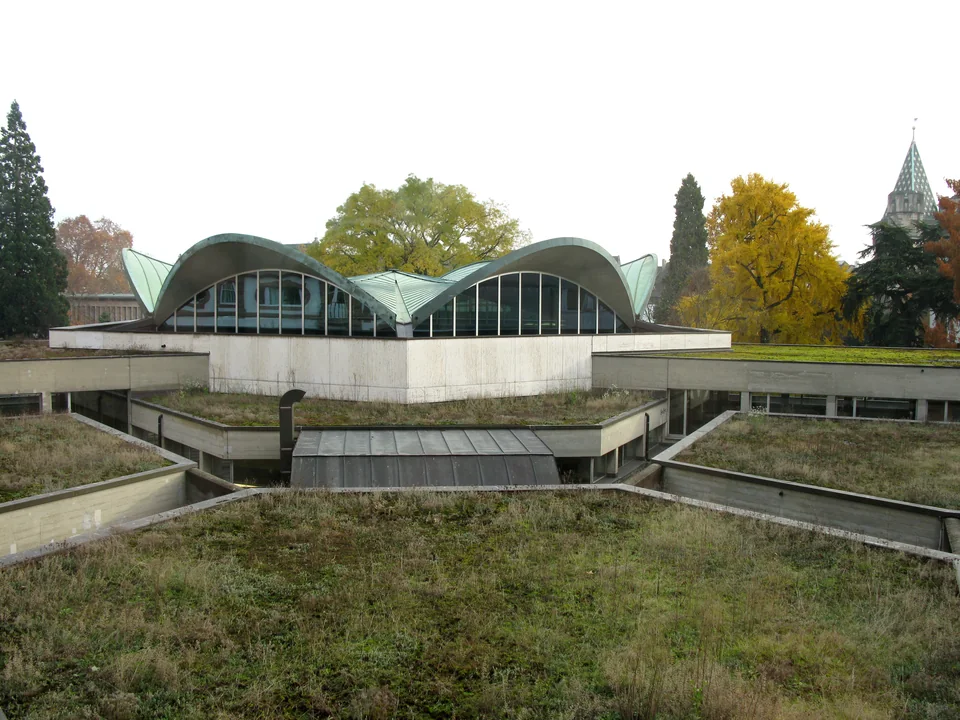
Universität Basel is not the same institution as the University of Applied Sciences and Arts Northwestern Switzerland (FHNW), which runs its own programmes and admissions. For the wider picture, see our Switzerland study guide.
| At a glance | 2026/27 academic year |
|---|---|
| Status | public university of the cantons of Basel-Stadt and Basel-Landschaft; on the swissuniversities list of accredited institutions, institutional accreditation dated 23.09.2022 |
| Size | 13,707 students and doctoral candidates in autumn 2025, 22% of them doctoral candidates |
| Rankings (as published by the university) | QS 2027: 150; THE 2026: 120; ARWU 2026: 91 |
| Tuition | $1,020 (CHF 850) per semester for everyone, no international surcharge |
| Application fee | $120 (CHF 100); late bachelor's applications add $180 (CHF 150) |
| Russian, Kazakh, Belarusian certificate | + 2 years of successful study at a recognised university + current admission letter for the same subject |
| Language | bachelor's mostly German; the university advises C1 |
| Deadlines | 30 April (autumn), 30 November (spring) |
| Funds for the permit | from $28,750 (CHF 24,000) in a FINMA-recognised bank, in your own name |
Who Basel suits
Basel works for students who want a public, research-led university with strong life sciences, chemistry, pharmaceutical sciences, medicine and computer science, and who will either study in German or join an English-taught master's. On tuition alone it is one of the cheapest options in Switzerland for non-Swiss students.
| A good fit if | Compare alternatives if |
|---|---|
| You have completed two years of the same subject at home | You are still finishing secondary school |
| You want low tuition as a non-Swiss citizen | Raising CHF 24,000 in your own name is difficult |
| You are interested in sciences, data, or business and technology in English | You want medicine: it is closed to applicants without Swiss residence status |
| You are ready for German, or for an English-taught master's | You need a fully English-taught bachelor's |
Nearby options include the University of Bern, which has the same certificate rules but charges international students a surcharge, and the University of Zurich. See also universities in Switzerland.
Bachelor's admission with a foreign certificate
Basel's 2026/27 admission regulations set conditions by the country that issued the school certificate:
| Country | Requirement |
|---|---|
| Russia | Attestat o srednem (polnom) obshchem obrazovanii + 2 years of successfully completed university-level study at a recognised university + current confirmation of admission to the chosen subject at a recognised Russian university |
| Kazakhstan | Attestat + the same 2 years + admission confirmation from a recognised Kazakh university |
| Belarus | Attestat + the same 2 years + admission confirmation from a recognised Belarusian university |
| Uzbekistan | a bachelor's degree |
The certificate must be general-education according to the subject catalogue in the regulations, and the admission letter must name the same subject you choose in Basel.
German. The regulations do not prescribe one certificate. German is the main language of bachelor's teaching and examinations, and the university advises reaching C1 before you start; students carry the responsibility, and exam failures cannot be excused by weak language skills. Programme-specific language conditions appear on the programme page. Our guide to German tests: TestDaF, DSH and Goethe helps you choose an exam.
Medicine and sport. Medicine and dental medicine applications go through swissuniversities by 15 February. Under the 2020 recommendation of the Swiss Higher Education Council, non-Swiss applicants are admitted only with a qualifying Swiss status, such as a settlement permit, five years of residence with employment or a Swiss Matura. Applicants coming directly from Russia or Kazakhstan are not eligible. Sport, Exercise and Health also closes on 15 February.
The route via two years at a home university is explained in applying to Swiss universities and bachelor's degrees in Switzerland.
English-taught master's programmes
Basel teaches in German and English. Master's programmes listed with English as the language of instruction include:
- MSc Computer Science (90 ECTS);
- MSc Business and Technology;
- MA Critical Urbanisms.
The Computer Science bachelor's runs in German and English. Each programme states its language in the online catalogue, and the university recommends C1 English for English-taught master's. You need a recognised bachelor's degree; foreign grades are converted to the Swiss scale using the university's formula. See master's degrees in Switzerland for the general process.
Deadlines and application steps
| Programmes | Autumn semester | Spring semester |
|---|---|---|
| Bachelor's and master's without admission restrictions | 30 April | 30 November |
| Late bachelor's application (CHF 150, if approved) | until 31 July | until 5 January |
| Late master's application | Swiss degree holders only | Swiss degree holders only |
| Medicine, dental medicine, Sport, Exercise and Health | 15 February | none |
For visa-required applicants the late bachelor's window rarely helps, because the university asks for autumn visa applications by the end of July. You may apply to only one programme at a time. Online applications for spring 2027 open on 15 October 2026.
After admission you receive a letter from the Student Administration Office, apply for the visa and, once in Basel, register in person with the cantonal migration office.
How much does Basel cost?
| Fee | Amount |
|---|---|
| Tuition per semester (bachelor's and master's) | $1,020 (CHF 850) |
| Doctoral studies | $420 (CHF 350) per semester |
| Leave of absence | $180 (CHF 150) per semester |
| Application or change of programme | $120 (CHF 100) |
| Late application | additional $180 (CHF 150) |
| Bachelor's beyond 12 semesters without a completion agreement | $2,040 (CHF 1,700) per semester |
The fee regulations contain no surcharge for international students. A three-year bachelor's costs about $6,110 (CHF 5,100) in tuition, a two-year master's about $4,070 (CHF 3,400). Living in Basel, not tuition, is the main cost. Compare with other universities in the cost of studying in Switzerland.
Housing and living costs
The university does not run residences. The main student housing agency is WoVe, which has let furnished and unfurnished rooms in shared flats and houses in and around Basel since 1970. Its published list shows rooms at roughly $510–950 (CHF 428–795) a month. At the start of the autumn semester WoVe warns that it is almost fully booked; its registration fee is charged only when a lease is signed. Beyond WoVe, students rent shared flats on the private market.
The migration benchmark of CHF 24,000 a year works out at about $2,400 (CHF 2,000) a month for rent, food, insurance and transport. Swiss health insurance is compulsory and arranged separately. Part-time work of up to 15 hours a week is possible from six months after the start of studies, with a permit requested by the employer.
Visa and residence permit
- Where to apply. Russian citizens apply for a national D visa at the visa section of the Swiss Embassy in Moscow (moscow.visa@eda.admin.ch, fee RUB 8,700), which also handles residents of Belarus and Uzbekistan. Residents of Kazakhstan apply in Astana.
- Timing. The university asks visa-required students to apply by the end of July for autumn and by mid-December for spring; processing takes four to six weeks or longer.
- Documents. Admission letter, a written statement of reasons, total length of stay, intended degree and future plans, a CV, proof of funds and a signed undertaking to leave Switzerland after your studies.
- Funds. Generally at least CHF 24,000 in an account in your name at a FINMA-recognised bank, a declaration of support from a Swiss resident with a B or C permit, or an official scholarship letter. Blocked accounts and funds in parents' names are not accepted.
- After arrival. Register in person with the Migrationsamt of Basel-Stadt or the Basel-Landschaft office. Permits run for a maximum of one year; extensions are requested by post with an original enrolment confirmation and your latest transcript.
- Changing programme. Report it to the migration office immediately; for non-EU students, extensions after a change of subject are usually not approved.
The cantonal migration authorities decide on the permit. Step-by-step guidance is in our Swiss student visa guide and in studying in Switzerland for Russian citizens.
Sanctions and payments for Russian citizens
Article 20 of the Swiss Ordinance on Measures in connection with the Situation in Ukraine (SR 946.231.176.72, version of 21.09.2026) prohibits banks from accepting deposits above CHF 100,000 from Russian nationals and residents of Russia and limits some payment services. Holders of a Swiss, EEA or UK residence permit are exempt. The Basel visa sum is below the threshold, yet each bank sets its own conditions for opening an account before a permit is issued. For legal payment routes, see how to pay for studies abroad from Russia.
Scholarships
The university states that study costs are primarily covered by parents and cantonal grant offices, and advises international students to look for funding in their home country. The federal Swiss Government Excellence Scholarships are mainly for researchers who already hold a master's degree, plus arts master's places for a limited list of countries. More options are collected in scholarships in Switzerland.
Basel, Bern and FHNW
| University of Basel | University of Bern | FHNW | |
|---|---|---|---|
| Type | research university | research university | university of applied sciences |
| International tuition | CHF 850 per semester | CHF 2,609 per semester from autumn 2026 | set by FHNW |
| German for bachelor's | C1 advised | C1 certificate or Bern test required | per programme |
| Russian certificate | + 2 years of university + admission letter | same | own rules |
| Funds for permit | from CHF 24,000 | CHF 18,000 a year | per canton |
Common mistakes
- Mixing up Basel institutions. An agency page that says "Basel" may describe FHNW, not Universität Basel.
- Applying to two programmes at once. Basel processes one application at a time.
- Showing money in a parent's account. The permit needs an account in the student's name or a Swiss resident's declaration of support.
- Relying on the late deadline. You can still apply by 31 July, but a visa for September is then unlikely.
- Skipping German because no certificate is required. Bachelor's exams are in German, and weak language skills are no excuse for failing.
- Switching subjects casually. For non-EU students it can block the permit renewal.
Timeline for an autumn 2027 start
- October–December 2026. Make sure you will have two successful years in the same subject by summer 2027; start preparing for German C1.
- January–March 2027. Get the admission letter from your home university, translations and certified copies.
- By 30 April 2027. Apply online and pay CHF 100.
- May–July 2027. After admission, open an account with CHF 24,000 at a FINMA-recognised bank or arrange a declaration of support, apply for the visa by the end of July and look for a room through WoVe.
- September 2027. Arrive, register with the migration office and pay the semester fee.
FAQ
How much does the University of Basel cost for international students?
The same as for Swiss students: $1,020 (CHF 850) per semester at bachelor's and master's level plus a one-off CHF 100 application fee. Basel's fee regulations include no extra charge for non-Swiss students.
Can I apply with a Russian school certificate?
Only together with two successful years at a recognised university and a current letter confirming admission to the same subject in Russia. Basel's Student Administration Office checks the file and makes the admission decision.
Do I need a German certificate?
The regulations do not name a specific certificate. Lectures and exams in bachelor's programmes are in German, though, so studying without C1 is very hard, and language problems cannot be used to excuse a failed exam.
Does Basel teach in English?
Mostly at master's level: Computer Science, Business and Technology and Critical Urbanisms are examples. English appears less often in bachelor's programmes, such as computer science alongside German, so check each programme in the catalogue.
How much money do I need for the Swiss permit?
Usually at least CHF 24,000 (about $28,750) in the student's own account at a FINMA-recognised bank, a sponsor's declaration from a Swiss resident or a scholarship letter. The embassy issues the visa, and the cantonal migration office decides on the residence permit.
Can an international student study medicine in Basel?
Not if applying from Russia or Kazakhstan without Swiss status. Medicine and dental medicine admit non-Swiss applicants only with a qualifying status such as a settlement permit or a Swiss Matura, and applications go through swissuniversities by 15 February.
Sources
- University of Basel: admission, admission regulations 2026/27 (PDF)
- Application and deadlines
- Tuition fees, fee regulations (PDF)
- Visa and residence permit
- Special provisions for non-Swiss applicants to medicine
- Programmes: Computer Science MSc, Business and Technology, Critical Urbanisms, Computer Science BSc
- Rankings, student figures, funding
- WoVe student housing, properties and rents
- swissuniversities: accredited institutions, Swiss Accreditation Council: 2025 activity report
- SERI: Swiss Government Excellence Scholarships
- Swiss Embassy in Russia: where to apply for a D visa, fees; Swiss Embassy in Kazakhstan
- Fedlex: SR 946.231.176.72, Article 20, version of 21.09.2026
Dollar amounts use the ECB reference rate of 30.09.2026 (€1 = $1.1355 and CHF 0.9478, so CHF 1 ≈ $1.1980), rounded to $10. The embassy charges the visa fee in roubles. Information checked on 1 October 2026.
If you want to work through your route to Basel, send a request: document preparation and submission are provided under an agreement with StudyU, and the University of Basel makes the admission decision.
During the free initial consultation, we clarify your goal, profile, timing, and budget and identify the next realistic step.
Next steps
- University of Bern (Universität Bern): Admission, 2026 Fees and Requirements for International Students
- Studying in Switzerland as a Russian Citizen: D Visa, Sanctions, Payments and Degree Recognition
- Scholarships in Switzerland for International Students: What Is Really Available for 2027/28
- Studying in Switzerland for international applicants
- University of Zurich (UZH): Admission, Fees and Requirements for International Students
- Universities in Switzerland: Types, Fees and Admission Routes for International Students
