
Hanze University of Applied Sciences (Hanzehogeschool Groningen) is a publicly funded Dutch university of applied sciences (a hogeschool, the HBO tier) in Groningen, with its main Zernike campus in the north of the city. Most English-taught four-year bachelor's programmes admit students with a diploma at the level of the Dutch HAVO, and Nuffic rates the Russian 11-year school certificate (attestat) as at least HAVO, so school leavers from Russia can apply directly. Non-EU students pay $10,890 (€9,639) a year in 2026/27; the 2027/28 rate has not been published yet. Applicants who need a visa must apply by 1 June and, before the immigration procedure starts, transfer a $27,680 (€24,500) upfront deposit to Hanze.
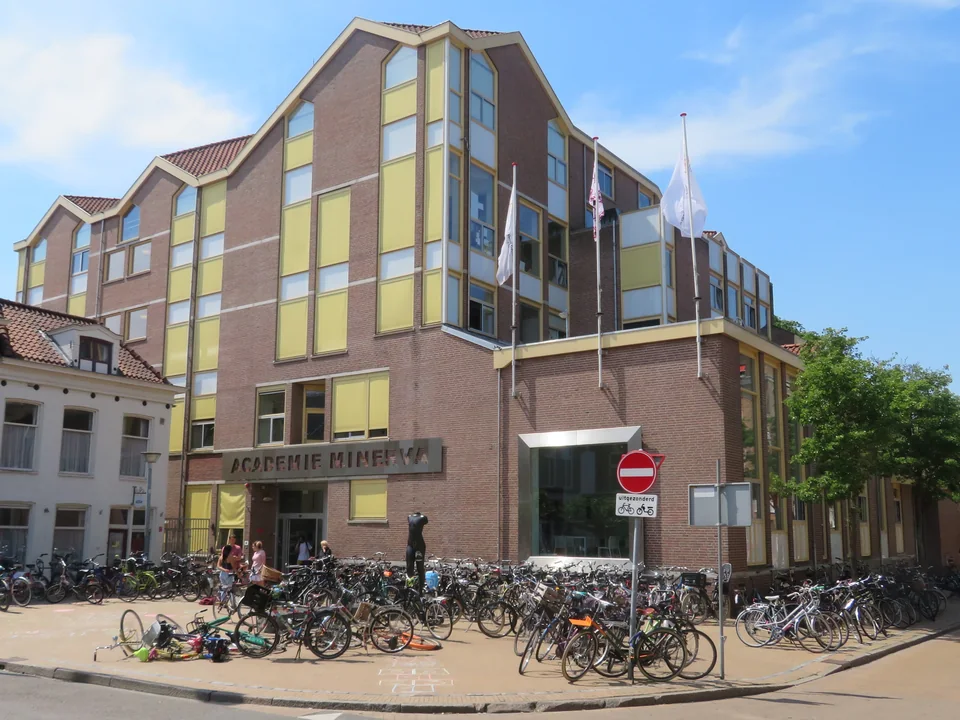
Hanze and the University of Groningen are two separate institutions in the same city. The University of Groningen is a research university (WO) where direct bachelor's entry with the Russian attestat alone is unlikely. Hanze is a university of applied sciences with company projects from year one and a professional bachelor's degree. Students of both use SSH Student Housing, but admission rules, deadlines and fees differ.
| At a glance | Details |
|---|---|
| Type | Public university of applied sciences (HBO), Groningen |
| Entry after secondary school | Four-year programmes: HAVO level; three-year tracks (International Business 3-year, Mechanical Engineering): VWO level |
| English | Usually IELTS Academic 6.0; International Business needs no band below 5.5 |
| Non-EU tuition | $10,890 (€9,639) in 2026/27; 2027/28 not yet published |
| Upfront deposit | $27,680 (€24,500) by 1 July, covering tuition, insurance and the IND fee, with the remainder refunded |
| Non-EU deadline | 1 June for September |
| Scholarships | Hanze Scholarship of €10,000 a year for selected master's programmes; no entry scholarships for business or IT bachelor's students |
| Housing | SSH rooms for about a quarter of new students, contracts of up to 12 months |
Who Hanze suits
| Strengths | Limitations |
|---|---|
| Direct entry after school to four-year programmes | Professional degree; a research master's may require a pre-master |
| 2026/27 non-EU fee below NHL Stenden and The Hague University of Applied Sciences | The 2027/28 fee is not known yet |
| Groningen is a large student city, and English-taught programmes share one campus | Housing is tight: SSH can offer rooms to only some newcomers |
| International Business includes a year abroad with an exchange semester and an internship | No entry scholarships for business and IT bachelor's students |
| Dedicated art academy (Minerva) and conservatoire (Prince Claus) | The deposit must be paid in a single transfer |
Hanze suits applicants who want international business, marketing, finance, communication, game technology or engineering taught in a hands-on way over four years. If an academic degree matters more, compare it with the University of Groningen. Other universities of applied sciences with a similar model are NHL Stenden in nearby Leeuwarden, The Hague University of Applied Sciences, Fontys and Saxion; all profiles are listed on our Netherlands page.
English-taught programmes
| Programme | Length | Entry with a Russian attestat |
|---|---|---|
| International Business | 4 years (240 ECTS) | Yes, HAVO level; IELTS 6.0 with no band below 5.5 |
| International Business, fast track | 3 years | VWO level needed; the Russian attestat alone usually falls short |
| International Communication | 4 years | Yes, HAVO or MBO-4 level |
| International Facility Management | 4 years, September or February start | Yes, HAVO level |
| Creative Media and Game Technologies | 4 years | Yes, HAVO level; a compulsory Dutch language module in year two |
| International Finance & Control, Marketing Management | 4 years | HAVO level; English requirements on the programme page |
| Mechanical Engineering | 3 years (180 ECTS) | VWO level with advanced mathematics and physics |
| Minerva Art Academy, Prince Claus Conservatoire | 4 years | Artistic selection set by the academy or conservatoire |
On the four-year International Business programme, students learn a second foreign language (Spanish, French, German, Dutch or Mandarin) and spend the third year abroad, combining an exchange semester (more than 120 universities to choose from) with an internship at an international company. Non-Dutch students may take a minor at Hanze instead of the exchange semester. Mechanical Engineering graduates move directly into Hanze's European Master in Renewable Energy or Smart Systems Engineering, so a master's can take four and a half years in total. Undecided students can take the Orientation Year, a year of applied study that ends with a first-year (propaedeutic) certificate and guidance on choosing a degree.
English-taught master's programmes include International Business and Management, Interdisciplinary Business Professional, Data Science for Life Sciences, Smart Systems Engineering, Energy for Society and the Minerva and conservatoire masters. For general rules, see master's degrees in the Netherlands.
Entry requirements
Diploma level. Four-year programmes need a diploma comparable to the Dutch HAVO or MBO-4 (NLQF/EQF 4). Hanze checks unfamiliar foreign documents with Nuffic, which places the Russian attestat at least at HAVO level and a Russian vocational college diploma at HAVO level for its general-education part. The three-year tracks need VWO level, which the attestat alone usually does not reach; the admissions office decides.
English. Hanze accepts IELTS Academic, TOEFL iBT, Cambridge, TOEIC and LanguageCert results less than two years old, but not IELTS Online or the TOEFL Home Edition. International Business requires IELTS 6.0 with no band below 5.5; Mechanical Engineering requires 6.0 with no band below 5.0 and no more than two bands at 5.5. TOEFL iBT taken before 12 January 2026 counts from 80, and from 4.5 on the new scale after that date.
Study Check. Some programmes run a study-choice check. It is optional if you apply before 1 May and compulsory after that date; the resulting advice is not binding.
Applicants aged 21+. Some programmes admit older applicants without the required diploma if they pass an admission test; conditions are set per programme.
Deadlines and steps
- Studielink. Register on the national portal and select your programme with a start date of 1 September 2027, which is how Hanze describes the International Business application.
- Hanze Apply. After Studielink, Hanze opens its own document portal.
- 1 June is the deadline for applicants who need a visa or residence permit (1 May for a few nationalities, not including Russia). Programmes with limited places require conditions to be met by 1 July.
- Immigration instructions arrive from March, and Hanze files with IND from June.
- 1 July is the deadline to upload all immigration documents and transfer the deposit (1 December for a February start).
Our guide to applying to Dutch universities covers Studielink and national deadlines.
Fees and the upfront deposit
| Item, 2026/27 | Amount |
|---|---|
| Tuition, non-EU student | $10,890 (€9,639) per year |
| Upfront deposit for bachelor's and master's students | $27,680 (€24,500) |
| Deducted from it: insurance | about $770 (€680) |
| Deducted from it: IND fee | $290 (€254) |
| Refunded to your Dutch bank account after arrival | the remainder, which is your first-year living money |
In 2025/26 the rate was €9,302 ($10,510), so it rose by about 3.6% in one year. Hanze has not yet published the 2027/28 non-EU rate, so plan for a similar increase. Students paying in instalments are charged a €24 administration fee, but non-EU first-years pay the full year within the deposit.
If you change your mind, Hanze refunds the full deposit when you withdraw in Studielink before 1 September and no immigration procedure has started; once it has started, the IND fee is kept. Transfer costs are deducted in all cases. When paying in a currency other than euros, Hanze asks you to choose the "OUR" charge option so the full amount arrives.
Living in Groningen. Hanze estimates $1,130–1,690 (€1,000–1,500) a month, including $510–1,020 (€450–900) for rent. IND's minimum for students in 2026 is €1,130.77 a month. For a national budget, see our cost of studying in the Netherlands guide.
Scholarships
Hanze's scholarships are targeted, and most bachelor's students are not eligible:
- Hanze Scholarship: €10,000 ($11,300) a year, paid as €1,000 a month, for non-EEA students on listed master's programmes. In the 2026 round, applications ran from 1 March to 30 April with results by 10 June. It lowers the deposit you must transfer, but not the tuition fee.
- Hanze Minerva Scholarship: €1,666 ($1,880) a year for four years for Minerva Art Academy bachelor's students, based on motivation and financial need.
- Hanze Music Scholarship: up to €5,500 ($6,210) once for Prince Claus Conservatoire students.
- NL Scholarship: at Hanze in 2026, only for the Master in Fine Art and Design and the Master of Music.
Hanze publishes the 2027 conditions separately, and the university selects recipients. For other options, see scholarships abroad in 2026.
Housing in Groningen
Hanze has no halls of its own and says openly that finding a room in Groningen is difficult. The main first-year option is SSH Student Housing, a non-profit provider where Hanze reserves furnished rooms in international houses. About 25% of new students manage to book one, and contracts last at most 12 months, after which you find your own place. SSH registration for the spring semester opens on 28 October 2026, with bookings from 4 November 2026 at 10 am; September dates are published in spring.
Without an SSH room, Hanze points to Room.nl, host-family stays through Hospi Housing and At Home in Groningen, which lists reliable landlords and warns about scams. The Goin' app helps you meet future classmates and search for a flat together. Our University of Groningen profile covers the same rental market.
Visa and residence permit
Hanze's Team Immigration in the International Office applies to IND for your residence permit and, where needed, the MVV entry visa; you cannot apply for a study permit yourself. Russian citizens collect the MVV at the Dutch embassy in Moscow within three months of the IND decision, with passports returned within ten working days; the consulate-general in St Petersburg is temporarily closed. Nationals of Russia, Belarus and Kazakhstan are exempt from the tuberculosis test. International students can collect their residence card at the IND desk in Utrecht.
To keep the permit you must show study progress and sufficient funds every year. The full procedure is in our guide to the Dutch student residence permit, and Russia-specific details are in studying in the Netherlands for Russian citizens.
Knowledge-security screening. No screening law exists. On 11 June 2026 the education minister told parliament that the broad bill was unworkable and that a narrower version for researchers and PhD candidates is under analysis. It is not a factor for Hanze bachelor's admissions, which the university decides.
English-taught programmes and the internationalisation bill. On 2 October 2026 the Internationalisation in Balance bill was still before the House of Representatives. Hanze is already recruiting for English-taught programmes starting on 1 September 2027; check your programme in Studielink before applying.
Paying from Russia
The deposit goes to Hanze's Rabobank account in one transfer, with the code IMMIFG, your name and student number in the payment reference. Before sending money, confirm the account details, accepted payment method and arrival date with Team Immigration or student administration, and check with your bank that a euro transfer to this recipient will go through. Hanze starts the visa procedure only after the full deposit arrives. For lawful options, see how to pay for studies abroad from Russia.
Recognition in Russia
Dutch universities of applied sciences are not on Russia's list of foreign institutions whose degrees are recognised without a procedure (Order No. 186-r); the University of Groningen is on it. A Hanze degree is recognised by Rosobrnadzor on application through Gosuslugi or the National Information Centre portal, with a state fee of 6,500 roubles.
Common mistakes
- Confusing Hanze with the University of Groningen. They are separate institutions; Hanze admits attestat holders to four-year programmes, while UG generally does not admit them on the attestat alone.
- Applying to the three-year International Business or Mechanical Engineering with only the attestat. These tracks are designed for VWO-level applicants.
- Expecting an entry scholarship for a business or IT bachelor's. None is offered, so budget without discounts.
- Missing the SSH booking window. Only about a quarter of newcomers get a room, and contracts end after a year.
- Sending the deposit on the last day. International transfers take days, and 1 July is the deadline for both documents and payment.
- Planning with the 2025/26 rate. The 2026/27 rate is already €9,639, and the 2027/28 rate is still to come.
Timeline for a September 2027 start
| When | What to do |
|---|---|
| October–December 2026 | Choose a programme, sit IELTS Academic or TOEFL iBT at a test centre, register on Studielink |
| By spring 2027 | Upload documents to Hanze Apply, complete the Study Check, receive an admission decision |
| Spring 2027 | Register with SSH and book a room on opening day |
| By 1 June 2027 | Non-EU application deadline |
| By 1 July 2027 | Upload immigration documents and transfer the deposit |
| July–August 2027 | IND decision, embassy appointment in Moscow, MVV visa, arrival in Groningen |
FAQ
Can I apply to Hanze straight after secondary school?
Yes, to the four-year English-taught bachelor's programmes, which require HAVO level; Nuffic rates the Russian attestat at least at that level. The three-year tracks need VWO level. The Hanze admissions office makes the final decision on each diploma.
How much does Hanze cost for international students?
Non-EU students pay €9,639 ($10,890) in 2026/27. Before the visa procedure, Hanze asks for a €24,500 deposit; tuition, insurance and the IND fee are deducted from it, and the rest is paid back to you after you arrive.
What is the difference between Hanze and the University of Groningen?
They are independent institutions. Hanze is a university of applied sciences with practical four-year programmes and HAVO-level entry. The University of Groningen is a research university awarding academic degrees, and the Russian attestat alone is usually not enough for direct bachelor's entry.
What IELTS score does Hanze require?
Usually IELTS Academic 6.0. International Business requires no band below 5.5, and Mechanical Engineering no band below 5.0 with no more than two bands at 5.5. Hanze does not accept IELTS Online or TOEFL Home Edition, and results must be under two years old.
Does Hanze provide student accommodation?
Hanze owns no halls. It reserves rooms with the non-profit SSH Student Housing, but these cover only about a quarter of new students, and contracts last up to 12 months. Everyone else rents privately, and the lease is signed with the landlord rather than the university.
Are there scholarships for Hanze bachelor's students?
Not for business, IT or engineering entrants at present. Art students can apply for the Hanze Minerva Scholarship and conservatoire students for the Hanze Music Scholarship, while the €10,000-a-year Hanze Scholarship is for master's students. The university decides who receives each award.
Sources
- Hanze: application and deadlines, enrolment requirements, paying tuition, 2026/27 fee calculator
- Hanze programmes: International Business, 4 years, Mechanical Engineering, International Communication, International Facility Management, Creative Media and Game Technologies
- Hanze: immigration FAQ and deadlines, scholarships, cost of living, housing
- Study in NL (Nuffic): Hanze International Business, 2026/27 fees and 2027 deadlines; Hanze 2026/27 brochure with 2025/26 fees
- Nuffic: Russian qualifications compared
- IND: required amounts 2026, fees, TB test exemption; NetherlandsWorldwide: MVV in the Russian Federation
- Minister's letter on knowledge-security screening, 11 June 2026; Senate: bill 36 555
- Russian Government Order No. 186-r; Rosobrnadzor: recognition of foreign education
Dollar amounts use the ECB reference rate of 1 October 2026 (€1 = $1.1298), rounded to $10. Facts checked on 2 October 2026.
If you want to work through your route, send a request: document preparation and submission are provided under an agreement with StudyU, and the university makes the admission decision.
During the free initial consultation, we clarify your goal, profile, timing, and budget and identify the next realistic step.
Next steps
- NHL Stenden University of Applied Sciences: Admission, 2027/28 Fees and Housing in Leeuwarden
- The Hague University of Applied Sciences (THUAS): Admission, Fees and Housing for International Students
- Studying in the Netherlands for international applicants
- University of Groningen (Rijksuniversiteit Groningen): Admission and Fees
- Fontys University of Applied Sciences
- Saxion University of Applied Sciences
