
Eindhoven University of Technology (TU/e) is a public research university focused on engineering, located in the Brainport Eindhoven tech region alongside ASML, Philips and NXP. All bachelor's programmes are taught in English (two partly in Dutch), but a Russian school certificate is not enough for direct bachelor's entry: TU/e requires at least a completed first year at an accredited technical university in a relevant programme, with an average of 75% or higher. For non-EEA students, 2027/28 tuition is $25,440 (€22,400) a year for both bachelor's and master's. Russian nationals do not transfer the application fee, because sanctions prevent TU/e from accepting Russia-related payments; they fill in the requested details in the application form instead.
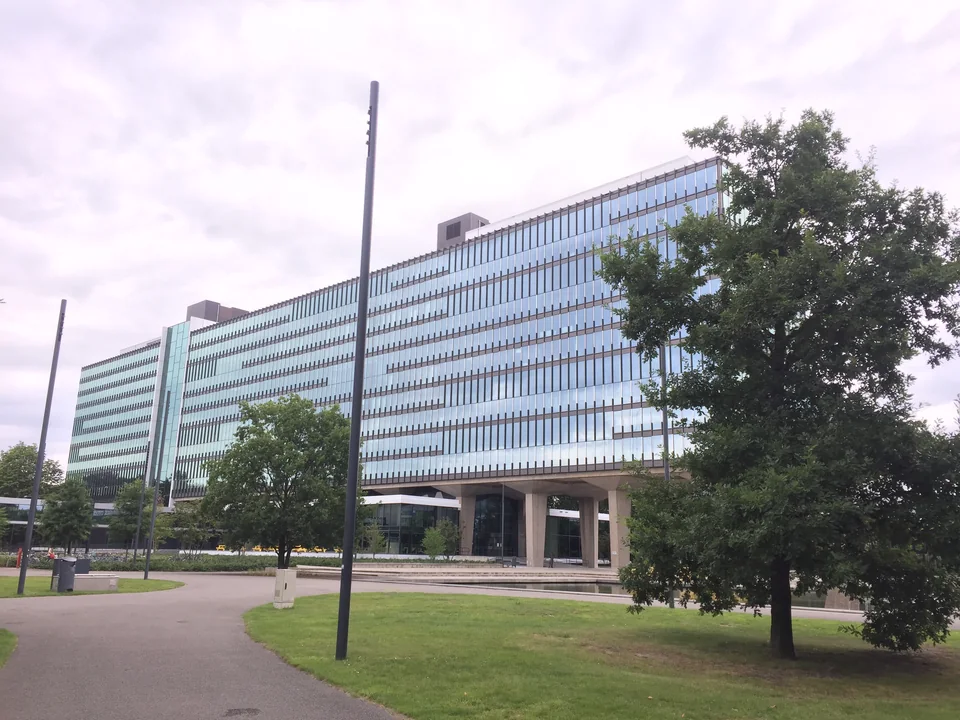
| At a glance | Details for 2027/28 entry |
|---|---|
| Status | Public university of technology; TU/e awards its own bachelor's, master's and PhD degrees |
| Location | Eindhoven, compact campus next to the central station |
| Ranking | THE World University Rankings 2027: joint 180th |
| Russian school certificate | Completed first year at an accredited technical university, average 75%+ |
| Master's with a Russian degree | Specialist or bakalavr degree from an accredited university, CGPA 4.0/5 at the time of application |
| Non-EEA fee | $25,440 (€22,400) a year for bachelor's and master's; 2026/27 was $21,120 (€18,600) and $24,640 (€21,700) |
| Selection programmes | Architecture, Urbanism and Building Sciences; Computer Science and Engineering; Mechanical Engineering; Chemical Engineering and Chemistry (English track) |
| Deadlines | Selection programmes 15 January; other bachelor's and all master's 1 May; Excellence scholarship 1 January |
| Application fee | $110 (€100); Russian nationals do not transfer it |
Who TU/e suits
TU/e is the choice for electrical engineering and microelectronics, mechanical engineering, applied physics and mathematics, computer science and data science, chemical and biomedical engineering, industrial design, architecture and the built environment. Teaching is built around team projects, and regional industry partners provide internships and thesis topics.
Eindhoven also has Fontys University of Applied Sciences, a practice-oriented HBO institution with different requirements and degrees; see our Fontys profile. If you want a larger technical university with a broader catalogue, compare TU/e with TU Delft.
Bachelor's entry from Russia and Kazakhstan
Russia: TU/e's 2027/28 page for Russian applicants sets one condition. You must have completed at least your first year at an accredited technical university (accreditation is checked against the Rosobrnadzor register) in a relevant programme with mathematics, plus physics or chemistry for some programmes, at Dutch VWO level. Your first-year average must be at least 75%. The school certificate alone does not qualify.
Kazakhstan: TU/e asks for a secondary diploma equivalent to the Dutch VWO with at least mathematics; equivalence and subjects are checked on a complete application.
Required subjects by programme:
| Programme | Required subjects |
|---|---|
| Applied Mathematics, Computer Science and Engineering, Data Science, Industrial Engineering, Psychology and Technology, Sustainable Innovation | Mathematics |
| Applied Physics, Architecture, Automotive Technology, Electrical Engineering, Industrial Design, Mechanical Engineering | Mathematics and physics |
| Chemical Engineering and Chemistry, Biomedical Engineering, Medical Sciences and Technology | Mathematics, physics and chemistry |
Biomedical Engineering and Medical Sciences and Technology are taught partly in Dutch. For school-leaver routes, see bachelor's in the Netherlands.
Selection and bachelor's deadlines
Four programmes have capped places. Applications in Studielink run from 1 October 2026 to 15 January 2027, and taking part in selection is compulsory. Computer Science and Engineering shows how it works:
- By 15 January 2027: complete application in Studielink and OSIRIS.
- By 5 February: email with instructions; by 14 February: motivation and capacities questionnaire.
- 6 March: online selection day (Mechanical Engineering and Architecture on 13 March, Chemistry on 20 March; Architecture also holds a campus day on 3 April).
- 15 April: ranking number through Studielink; 14 days to respond to an offer.
The ranking combines at least two criteria. For Computer Science and Engineering, for example, your school grade average weighs only 10%, the maths test 10% and the logical-reasoning test 40%, so preparing for the online tests matters more than your certificate. Even if your number falls outside the cap, you may still receive an offer until mid-August as others decline. You may join selection for two capped programmes a year and for the same programme no more than three times.
Other bachelor's programmes close on 1 May. TU/e processes applications as they arrive and replies within four weeks. Every admitted first-year completes a compulsory study-choice check questionnaire; it does not affect admission, but you cannot start without it.
Master's programmes
For a Russian degree, TU/e requires:
- a specialist or bakalavr degree from an accredited university;
- a CGPA of at least 4.0 out of 5, already achieved when you apply (no conditional acceptance on grades);
- programme-specific subject knowledge.
Data Science and Artificial Intelligence, for example, expects a bachelor's in data science, AI, computer science or mathematics, plus at least 5 ECTS each in data structures and algorithms, programming and software development, and machine learning and data mining. Small gaps (up to two subjects, 10 credits) can be remedied in the first two quarters.
Deadlines: 1 May for all master's programmes, or 1 January if you want to be considered for the Excellence scholarship. National rules are in master's in the Netherlands.
Tuition fees
| Category | 2026/27 | 2027/28 |
|---|---|---|
| Statutory fee (EU/EEA, Swiss, Surinamese) | $3,060 (€2,694) | $3,150 (€2,771) |
| Bachelor's, non-EEA | $21,120 (€18,600) | $25,440 (€22,400) |
| Master's, non-EEA | $24,640 (€21,700) | $25,440 (€22,400) |
| Data Science bachelor's (JADS), non-EEA | $21,120 (€18,600) | Not yet published |
| Data Science master's (JADS), non-EEA | $27,140 (€23,900) | Not yet published |
The 2027/28 increase for new bachelor's students is steep: $4,320 (€3,800) a year more. Students who started a bachelor's in 2024/25 or earlier keep a lower rate until 31 August 2028, which does not apply to newcomers.
For the visa procedure TU/e asks you to transfer an advance deposit (covering first-year tuition and the IND fee) plus living funds at the IND norm, $15,410 (€13,569) for a year in 2026. This is the main practical hurdle for Russian citizens: TU/e states that it cannot accept direct or indirect transactions involving Russia. Ask the International Office which payment method it can accept in your case before the visa deadline, not after admission: without the deposit the visa procedure does not start. General options are in how to pay for studies abroad from Russia, and budget comparisons in cost of studying in the Netherlands.
Private rents in Eindhoven, according to TU/e: a room with shared facilities costs $454–653 (€400–575) a month, and self-contained accommodation for one $852–1,140 (€750–1,000).
Scholarships
- Bachelor's: TU/e offers no scholarships of its own.
- Master's: the TU/e Scholarship for Excellence covers selected microchip-related programmes in Applied Physics, Electrical Engineering, Mechanical Engineering, and Mathematics and Computer Science. There is no separate application; submit a complete programme application by 1 January and tick the scholarship option.
- NL Scholarship: $5,680 (€5,000) for the first year; TU/e takes part in the 2026/27 round.
- External funds, such as the ASML Technology Scholarship for master's students.
If an award does not cover the full fee, you pay the rest before enrolment. TU/e or the fund decides on awards. More options: scholarships abroad 2026.
Visa, sanctions and residence permit
TU/e files the IND (Dutch immigration service) application itself after admission. From April you receive a form for uploading a signed antecedents certificate and, if your nationality requires it, a tuberculosis test form. The procedure starts only once the deposit and living funds have arrived; it takes about four weeks, plus roughly two more for the MVV embassy appointment. What happens at the Moscow appointment is covered in our Dutch student residence permit guide.
Sanctions matter more here than at a humanities-focused university. EU Regulation 833/2014 prohibits technical assistance related to dual-use goods for persons in Russia or for use in Russia. If your programme, internship or thesis touches semiconductors, electronics or other sensitive technology, ask the International Office how the rule applies to you before you apply. The Dutch knowledge-security screening law has not been passed, and the draft under discussion covers researchers and PhD candidates rather than students, which matters more for future TU/e PhD applicants than for bachelor's students.
TU/e decides on admission and the IND on the visa and residence permit.
Housing
TU/e helps only first-year international master's students: a limited number of furnished rooms and studios is allocated by lottery, mostly off campus. Bachelor's students and everyone else search independently, through Vestide (a waiting list, so register early), Plaza Resident Services on campus, and platforms such as Kamernet and Pararius. Minimum contracts usually run 6 to 12 months. Never transfer money before signing a contract and verifying the landlord.
TU/e compared with other technical options
| Criterion | TU/e | TU Delft | Fontys |
|---|---|---|---|
| Type | Research university of technology | Research university of technology | University of applied sciences (HBO) |
| Russian school certificate | First year at a technical university, 75%+ | See the TU Delft profile | Its own certificate rules |
| Bachelor's language | English (two programmes partly Dutch) | English and Dutch | English and Dutch |
| Non-EEA fee, 2027/28 | $25,440 (€22,400) | See the TU Delft profile | See the Fontys profile |
Other technical and applied-science institutions are listed in universities in the Netherlands; general country information is on study in the Netherlands.
Timeline for September 2027
- By September 2026: finish a first year at a relevant technical university with a 75%+ average (bachelor's) or confirm your degree CGPA (master's).
- From 1 October: apply in Studielink and OSIRIS; Russian nationals enter the requested details instead of paying the fee.
- By 1 January 2027: master's applicants aiming for the Excellence scholarship.
- By 15 January: selection programmes; February to April: questionnaire and online tests.
- By 1 May: other bachelor's and all master's programmes.
- From April: visa form, deposit and funds; summer: MVV and housing.
Common mistakes
- Applying with a school certificate only. Russian applicants need a completed year at a technical university.
- Transferring the $110 (€100) fee from a Russian account. TU/e asks Russian nationals not to pay and to fill in the form instead.
- Expecting conditional admission on grades. The 4.0/5 CGPA for a master's must already be achieved.
- Budgeting with 2026/27 fees. New bachelor's students pay $25,440 (€22,400) from 2027/28.
- Confusing TU/e with Fontys, which is a different type of institution with different degrees.
- Expecting university housing as a bachelor's student. Support covers first-year master's students only.
FAQ
Can I enter TU/e straight after Russian school?
No. With a Russian school certificate, TU/e requires at least a completed first year at an accredited technical university in a relevant programme with an average of 75% or higher. Kazakh applicants need a VWO-equivalent diploma with at least mathematics.
How much does Eindhoven University of Technology cost?
Non-EEA students pay $25,440 (€22,400) a year for both bachelor's and master's programmes in 2027/28, up from $21,120 (€18,600) and $24,640 (€21,700) in 2026/27. EU/EEA nationals pay $3,150 (€2,771).
Are all TU/e programmes taught in English?
Almost all. Every master's and most bachelor's programmes are in English; the Biomedical Engineering and Medical Sciences and Technology bachelor's are taught partly in Dutch.
How do Russian nationals pay the TU/e application fee?
They do not. Because of sanctions, TU/e cannot accept Russia-related payments and asks Russian nationals and residents to skip the transfer and provide the requested details in the OSIRIS form. Agree how to pay tuition and the deposit with the International Office early.
Does TU/e offer scholarships to international students?
Not for bachelor's students. For master's, the TU/e Scholarship for Excellence covers selected microchip-related programmes and requires an application by 1 January. TU/e also takes part in the $5,680 (€5,000) NL Scholarship.
How is TU/e different from Fontys in Eindhoven?
TU/e is a research university of technology (WO) awarding academic degrees, with strict prior-education requirements. Fontys is a university of applied sciences (HBO) with practice-oriented programmes, different admission rules and its own fees.
Can StudyU help with an application to TU/e?
StudyU's paid service covers planning the first-year-at-university route, checking your subjects and grade average against TU/e's rules, preparing for selection tests, the application and the visa steps. TU/e decides on admission and scholarships, and the IND on the residence permit.
Sources
- TU/e: tuition fees 2026/27 and 2027/28, application fee and sanctions
- TU/e: Russia, Computer Science and Engineering bachelor's, Russia, Data Science and AI master's, Kazakhstan bachelor's, required subjects
- TU/e: selection programmes 2027/28, application and deadlines
- TU/e: scholarships, housing, visa and residence permit
- European Commission: FAQs on sanctions against Russia; minister's letter on screening, 11 June 2026
- Study in NL: NL Scholarship; IND: study amounts 2026; NetherlandsWorldwide: MVV in Russia; THE World University Rankings 2027: TU/e
- TU/e: selection timeline 2027/28 (PDF), Computer Science and Engineering selection
Facts checked on 1 October 2026. Dollar amounts use the ECB reference rate of 30 September 2026 (€1 = $1.1355), rounded to $10.
If you are choosing between TU/e, TU Delft and other European technical universities, send us a request.
During the free initial consultation, we clarify your goal, profile, timing, and budget and identify the next realistic step.
Next steps
- Erasmus University Rotterdam (EUR): Admission and Fees
- University of Groningen (Rijksuniversiteit Groningen): Admission and Fees
- Studying in the Netherlands for international applicants
- Fontys University of Applied Sciences
- Delft University of Technology (TU Delft)
- Bachelor's in the Netherlands for International Students: 3 or 4 Years, Entry Routes and the Cost of a Degree
