
A year at a German public university with no tuition costs roughly $13,800 (€12,200) in an affordable city with a residence-hall room, and about $21,000 (€18,600) in Munich with a room in a shared flat. Tuition itself is free in most states: you pay only a semester contribution of $110–512 (€97–453). The real money goes on rent, health insurance (around $167, or €148, a month) and everyday living. Tuition is added in Baden-Württemberg ($3,389, or €3,000, a year for non-EU students), at the Technical University of Munich (TUM) and at private universities, where a year starts at around $26,900 (€23,850).
This page builds the whole annual budget line by line. Which universities charge non-EU students and who is exempt is covered in free university education in Germany; how the visa's blocked account works is covered in our blocked account guide. For the overall picture, see the Germany country guide.
| First-year scenario | Total for 12 months |
|---|---|
| Public university outside Baden-Württemberg, average residence-hall rent, transport pass in the semester fee | ≈ $13,800 (€12,200) |
| Public university in Baden-Württemberg (Tübingen as the example), shared-flat room at the national median | ≈ $19,200 (€17,000) |
| LMU Munich, shared-flat room at the Munich median | ≈ $21,000 (€18,600) |
| TUM, bachelor's | ≈ $25,600–27,800 (€22,600–24,600) |
| Constructor University (private, Bremen), tuition and mandatory fees only | ≈ $28,800 (€25,490) plus housing and living |
The calculation for each line follows. Dollar figures use the ECB reference rate of 1 October 2026 and are rounded.
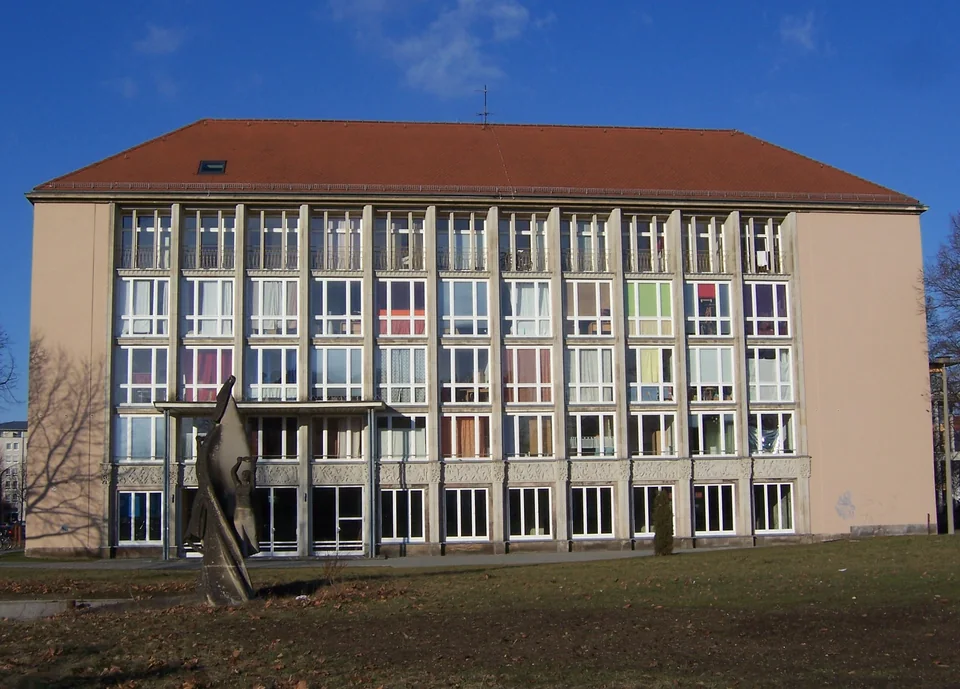
What a student budget is made of
| Item | Amount | How often | Notes |
|---|---|---|---|
| Tuition | $0 at most public universities; $1,695 (€1,500) in Baden-Württemberg; $2,260–3,389 (€2,000–3,000) for TUM bachelor's | Per semester | Non-EU students; private universities set their own prices |
| Semester contribution | $110–512 (€97–453) | Per semester | Paid by every student; sometimes includes a transport pass |
| Housing | $359 (€318) average residence-hall rent; $576 (€510) national median for a shared-flat room | Per month | A shared-flat room in Munich is about $960 (€850) |
| Health insurance | ≈ $167 (€148) | Per month | Statutory student insurance up to age 30 |
| Food, clothing, phone, study materials | ≈ $537 (€475) | Per month | Benchmark: the basic rate of Germany's BAföG student grant |
| Transport | $0 if included in the fee; $71 (€63) for a Deutschlandticket | Per month | The student version costs $43 (€37.80) a month |
| Broadcasting fee (Rundfunkbeitrag) | $21 (€18.36) | Per month per household | Shared among flatmates |
Tuition
At public universities in most states, neither German nor international students pay tuition. The exceptions for non-EU citizens:
- Baden-Württemberg (Heidelberg, KIT, Tübingen, Freiburg, Stuttgart and the state's other universities): $1,695 (€1,500) per semester, or $3,389 (€3,000) a year.
- TUM: usually $2,260 or $3,389 (€2,000 or €3,000) per bachelor's semester and $4,519 or $6,779 (€4,000 or €6,000) per master's semester; the exact amount is on each programme page. A Studienkolleg year does not exempt you.
- Private universities set their own fees. Constructor University in Bremen, for instance, lists $13,473 (€11,925) per bachelor's semester, a one-time enrolment fee of $1,062 (€940) for non-EU students and $395 (€350) in mandatory fees each semester, quoted for the 2027/28 academic year.
Waivers and scholarships exist in Baden-Württemberg and at TUM, but the university decides each application.
Semester contribution
Every student pays it, Germans included, and you cannot re-register without it. The difference between universities mostly comes down to whether a transport pass is included.
| University | Semester | Amount | What it covers |
|---|---|---|---|
| LMU Munich | Summer 2026 | $110 (€97) | Student services only; no transport pass |
| Tübingen | Winter 2026/27 | $220 (€194.80) | Student services with a solidarity charge for the regional pass, administration fee, student union fee |
| Hamburg | Winter 2026/27 | $454 (€402) | Including a $256 (€226.80) transport pass and a €50 administration fee |
| Hanover | Winter 2026/27 | $512 (€453.16) | Including the nationwide Deutschlandsemesterticket, $256 (€226.80) |
The Deutschlandsemesterticket costs 60% of the regular Deutschlandticket: at $71 (€63) a month, that is $43 (€37.80). If your university does not include it, budget for transport separately.
Housing
Rent is the largest and least predictable item. Residence halls run by the student services organisations (Studierendenwerke) average $359 (€318) a month including utilities, but there are not enough places: in Munich, where the average hall rent is $453 (€400.60), waiting times range from one to seven semesters.
Median rent for a room in a shared flat (WG), winter semester 2026/27:
| City | Shared-flat room, median |
|---|---|
| Munich | $960 (€850) |
| Berlin | $734 (€650) |
| Hamburg | $734 (€650) |
| Cologne | $723 (€640) |
| Frankfurt am Main | $712 (€630) |
| Germany overall | $576 (€510) |
Landlords may ask for a deposit of up to three months' rent excluding utilities, and by law you may pay it in three equal instalments. When to apply for a residence hall and how to find a room is covered in student housing in Germany.
Health insurance
Students under 30 and below their 14th semester can join statutory health insurance at the student rate. In 2026 it adds up as follows:
- base contribution: $99 (€87.38) a month;
- your insurer's additional contribution, 2.9% on average: about $28 (€24.80);
- long-term care insurance: $41 (€35.91) for childless students aged 23 and over, $35 (€30.78) for everyone else.
That is about $162–167 (€143–148) a month, or roughly $2,000 (€1,777) a year. Statutory insurance only starts after enrolment, so most students buy an incoming policy for the first weeks; after age 30 or the 14th semester, private insurance is the only option and its price depends on the plan.
Everyday living
The German state publishes its own estimate of a student's non-housing needs: the basic BAföG rate of $537 (€475) a month for food, clothing, study materials, phone and leisure. It is modest but realistic. On top comes the broadcasting fee of $21 (€18.36) a month per household, usually split between flatmates.
One-off costs in the first year
| Item | Amount |
|---|---|
| National visa fee | $85 (€75) |
| uni-assist | $85 (€75) for the first programme, $34 (€30) for each additional one in the same semester |
| Residence permit in Germany | $113 (€100) when issued, $105 (€93) when extended |
| Rental deposit | Up to three months' rent excluding utilities |
| Blocked account | Opening fee and monthly fee set by the provider; check on the day you transfer |
| Language exam, translations, apostilles, flights | At providers' rates |
| Setting up (bedding, kitchenware, small furniture) | As needed; residence halls are partly furnished |
If you need a preparatory year, add it separately. A public Studienkolleg charges no tuition, only a semester or administration fee. Private ones cost noticeably more: TUDIAS in Dresden, for example, charges $8,530 (€7,550) for two semesters including a $282 (€250) application fee. Formats are compared in our Studienkolleg guide, and course prices before university are in German language courses in Germany.
Three sample annual budgets
Each covers the first academic year without one-off costs, with insurance at €148 a month and everyday spending at the BAföG level.
1. Hanover, residence hall. Tuition $0, two semester contributions $1,024 (€906) including the transport pass, average residence-hall rent $4,311 (€3,816) a year, insurance $2,008 (€1,777), everyday costs $6,440 (€5,700). Total ≈ $13,782 (€12,199).
2. Tübingen (Baden-Württemberg), shared-flat room at the national median. Tuition $3,389 (€3,000), contributions $441 (€390), rent $6,914 (€6,120), insurance $2,008 (€1,777), everyday costs $6,440 (€5,700). Total ≈ $19,192 (€16,987).
3. LMU Munich, shared-flat room. Tuition $0, contributions $219 (€194), rent $11,524 (€10,200), Deutschlandticket $854 (€756), insurance $2,008 (€1,777), everyday costs $6,440 (€5,700). Total ≈ $21,045 (€18,627). For a TUM bachelor's, add $4,519–6,779 (€4,000–6,000) a year in tuition.
The takeaway: the visa amount of $13,449 (€11,904) is close to the budget of an affordable city with a residence-hall room, but it falls short in Munich, Frankfurt or on a fee-paying programme. The embassy checks the minimum, not the cost of your actual city.
What you must show for the visa versus what you need
A student visa requires proof of $1,121 (€992) a month for the first academic year, or $13,449 (€11,904). The figure is derived from BAföG rates (€475 for living and €380 for housing, plus insurance supplements) and excludes tuition, deposits and travel. When you extend your residence permit, the immigration office checks your means again.
A practical rule for families: take the visa amount, add a year of tuition if any, add the difference between local rent and €380 a month, and keep a reserve for the deposit, flights and fees in the first months.
Paying from Russia
Russian bank statements are not accepted for the visa, and according to the German Embassy in Moscow no Russian bank offers a qualifying blocked account. The account is opened with a provider abroad, and money is transferred only through lawful channels agreed with the provider in advance. Tuition at a private university and rental deposits are paid the same way. Options are covered in how to pay for studies abroad from Russia; other Russia-specific points are in studying in Germany as a Russian citizen.
Ways to spend less
- Choose the city, not only the university. The rent gap between Munich and the national median is about $4,610 (€4,080) a year for a shared-flat room.
- Apply for a residence hall early. Average hall rent is about a third below the shared-flat median, but big-city queues are long.
- Check whether the transport pass is included. Where it is, transport costs almost nothing; where it is not, budget $854 (€756) a year at the Deutschlandticket price.
- Check the state. The same subject in Baden-Württemberg and a neighbouring state can differ by $3,389 (€3,000) a year.
- Work within the rules. A student residence permit allows 140 full or 280 half days of work a year; see working while studying in Germany.
- Look for scholarships after enrolment. The Deutschlandstipendium pays $339 (€300) a month with no nationality condition; funders are compared in scholarships in Germany.
Budgeting mistakes
- Planning on the visa amount alone in a city where it will not stretch.
- Forgetting the deposit: with a cold rent of $678 (€600) a month, it can reach $2,034 (€1,800).
- Not checking whether the transport pass is part of the semester fee.
- Reading a TUM or private-university fee as annual when it is per semester.
- Arriving without cash for the first weeks: the blocked account pays out only after you arrive and activate it.
- Comparing prices from different years or exchange rates without adjusting.
FAQ
At most public universities tuition is zero and only the semester contribution of $110–512 (€97–453) remains. Non-EU students pay $1,695 (€1,500) per semester in Baden-Württemberg and $2,260–3,389 (€2,000–3,000) per bachelor's semester at TUM. Only the university itself can grant a fee waiver.
In an affordable city with a residence-hall room, about $1,150 (€1,020) a month including insurance and fees; in Munich with a shared-flat room, about $1,750 (€1,550). Rent is the main variable, from $359 (€318) in a residence hall to $960 (€850) for a Munich room.
No. Fees do not depend on citizenship, so Russian citizens pay the same as other non-EU students. What differs is how they pay: the blocked account is opened with a provider abroad, and Russian bank statements are not accepted. The German embassy and the immigration office decide whether your funds are sufficient for the visa and residence permit.
Almost, in an affordable city with a residence-hall place: our Hanover example came to about $13,782 (€12,199) a year. In Tübingen, Munich or on a fee-paying programme it is not — our examples show a gap of $5,700–14,400. The embassy checks only the minimum and does not assess your city's costs.
Each private university sets its own price. Constructor University in Bremen, for example, lists $13,473 (€11,925) per bachelor's semester for 2027/28 and a one-time enrolment fee of $1,062 (€940) for non-EU students. Before paying, check that the institution is state-recognised (staatlich anerkannt) and read the refund terms in your contract; the university itself decides on admission.
Often, because public tuition is free, but living costs start at about $13,800 (€12,200) a year and must be proven before the visa. Compare full budgets rather than tuition alone, and include deposits, insurance and travel when you weigh Germany against fee-charging countries.
Sources
- Tuition: Baden-Württemberg Ministry of Science, TUM, Constructor University, TUDIAS
- Semester contributions: LMU, Tübingen, Hamburg, Hanover
- Housing: German National Association for Student Affairs, Studierendenwerk München Oberbayern, Moses Mendelssohn Institut: shared-flat rents, winter 2026/27, German Civil Code, section 551 (deposits)
- Insurance and charges: AOK: student contributions, Federal Ministry of Health: 2026 rates, Rundfunkbeitrag, Federal Government: Deutschlandticket
- Visa and fees: Moscow embassy study checklist, visa fees, Residence Ordinance, section 45 (permit fees), uni-assist handling fees, BAföG Act, section 13
All sources checked on 1 October 2026. ECB reference rate of 01.10.2026: €1 = $1.1298.
If you want to work through your route, send a request: document preparation and submission are provided under an agreement with StudyU, and the university makes the admission decision.
Next steps
- German Language Courses in Germany: Formats, 2026 Prices and the Visa for Adults
- Studying in Germany as a Russian Citizen: Routes, the Moscow Visa, Money and Degree Recognition
- Studying in Germany for international applicants
- Free University Education in Germany for International Students: Where Tuition Is Zero and What You Still Pay
- Blocked Account in Germany 2026: Amount, Opening Steps and Alternatives
- Student Housing in Germany: Halls of Residence, Shared Flats or an Apartment, Prices by City and Registration
