
International students can study in Germany without tuition fees: most public universities charge no tuition to Germans or non-EU students for a first degree, bachelor's and master's included. Everyone still pays a semester contribution — from $111 (€97) in Munich to $517 (€453.16) in Hannover — and a student visa requires proof of $13,584 (€11,904) per year. The main exceptions: Baden-Württemberg charges non-EU students $1,712 (€1,500) per semester, TUM charges $2,282–3,423 (€2,000–3,000) per semester for bachelor's programmes, and private universities charge fees — Constructor University in Bremen, for example, $27,215 (€23,850) per year.
Below: where tuition applies and who is exempt, what the semester contribution covers, what a "free" year really costs, and how to reduce it.
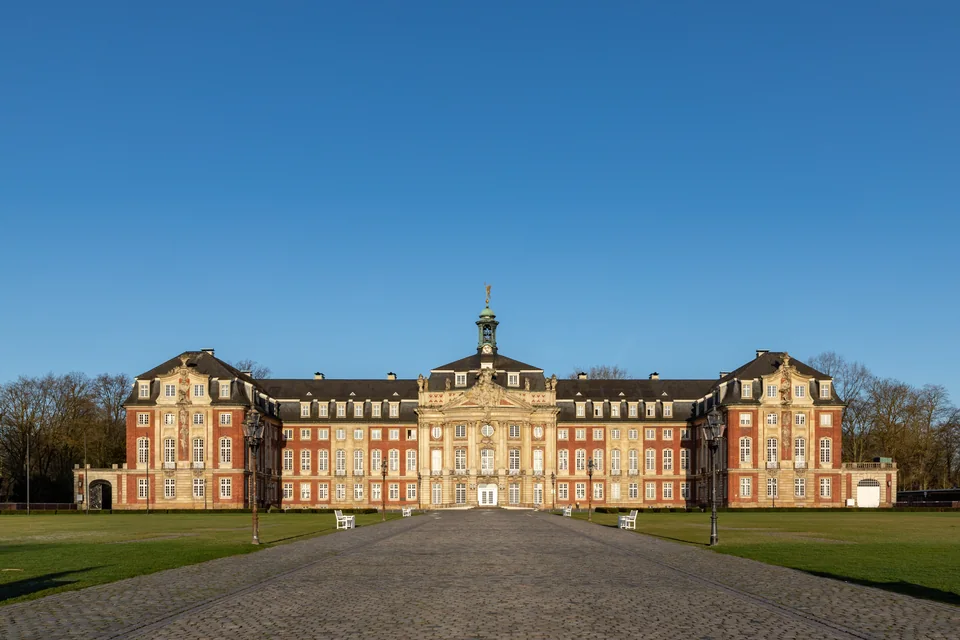
What "free" means in Germany
Free education in Germany means no tuition fee (Studiengebühren) at a public university. Students still pay for:
- The semester contribution (Semesterbeitrag). All students pay it, Germans included; LMU, for example, requires it even during a leave of absence. Without it you cannot enrol or re-register.
- Living costs, housing and insurance. For a student visa the consulate expects proof of $1,132 (€992) per month.
- The preparatory stage. For many international school leavers, a year at a Studienkolleg or at a home university.
The free route almost always means German. Bachelor's programmes at public universities are mostly taught in German; English-taught options are far more common at master's level.
Where tuition is charged
| Where | Who pays | How much | Key points |
|---|---|---|---|
| All public universities in Baden-Württemberg (Heidelberg, KIT, Stuttgart, Freiburg and others) | Non-EU/EEA citizens who came to Germany to study | $1,712 (€1,500) per semester | Since winter 2017/18, for bachelor's and master's; exemptions below |
| Baden-Württemberg, second degree | Anyone taking a second bachelor's or second master's | $742 (€650) per semester | A first bachelor's plus master's is not a second degree |
| TUM (Munich) | Non-EU students first enrolled from winter 2024/25 | Bachelor's usually $2,282 or $3,423 (€2,000 or €3,000); master's $4,564 or $6,847 (€4,000 or €6,000) per semester | The exact amount is on each programme page |
| Lower Saxony | Students who far exceed the standard study period | $571 (€500) per semester | After the standard period plus six extra semesters (Leibniz University Hannover) |
| Private universities | Everyone | E.g. Constructor University: $13,608 (€11,925) per semester | 2027/28 bachelor's rate, excluding housing |
The table does not cover every university: look for a programme's fees on its own page under Gebühren or Beiträge. LMU Munich states on its website that it has charged no tuition fees since winter 2013/14. Compare Munich's universities on our TUM and LMU pages.
Who is exempt in Baden-Württemberg and at TUM
Baden-Württemberg automatically exempts EU/EEA citizens, exchange students (such as Erasmus) and double-degree students where partners agreed on mutual waivers. Exemptions may also apply to:
- students eligible for German BAföG support (including some family-reunification and refugee cases);
- students whose disability significantly impairs their studies;
- particularly talented students, taking social criteria into account — under each university's statutes, within a quota of 5% of that university's fee-paying international students;
- students on leave of absence or in a practical semester.
The fee does not apply at the public Studienkolleg stage: HTWG Konstanz states that Studienkolleg students pay only a $220 (€192.50) administrative fee per semester. The tuition fee starts at university enrolment.
TUM does not charge EU/EEA citizens, doctoral candidates, exchange students or Studienkolleg students. Students with an "established domestic connection" under Section 8 of the BAföG are also exempt. Graduates of a German bachelor's degree are exempt in a TUM master's if they submit the degree certificate by the enrolment deadline. Completing a Studienkolleg, however, does not exempt you: TUM states that the FSP is not a German school-leaving qualification.
For fee-paying students, TUM offers a need-based waiver covering the standard study period (apply before the first semester), a two-semester merit waiver (from the first semester for master's students, otherwise from the third semester at the earliest), and one-off grants of $571–2,054 (€500–1,800) per semester. Places are limited and TUM decides.
What the semester contribution covers
Each university sets its own contribution, and the main difference is whether a transit pass is included.
| University | Semester | Amount | Breakdown |
|---|---|---|---|
| LMU and TUM (Munich) | Summer 2026 | $111 (€97) | Student services fee; no transit pass currently included |
| University of Hamburg | Winter 2026/27 | $459 (€402) | Transit pass $259 (€226.80), student services $115 (€101), administrative fee $57 (€50), student body fee $22 (€19.60) and transit-pass hardship fund $5 (€4.60) |
| Leibniz University Hannover | Winter 2026/27 | $517 (€453.16) | Student services $148 (€130), Deutschlandsemesterticket $259 (€226.80), administrative fee $86 (€75) and small levies |
| Public Studienkollegs | Per semester | $114–456 (€100–400) | Estimate by the working group of Studienkolleg directors (studienkollegs.de); varies by college |
Where the transit pass is included, you barely need a separate transport budget; where it is not, add it to your monthly costs.
What a "free" year really costs
Example first year for an international school leaver going to a public Studienkolleg and then a tuition-free public university (ECB rate, 23.09.2026):
| Item | Amount | Notes |
|---|---|---|
| Tuition | $0 | Public Studienkolleg and a university outside Baden-Württemberg and TUM |
| Proof of funds for the visa | $13,584 (€11,904) | Living money, usually in a blocked account; withdrawals of $1,132 (€992) per month |
| Semester contributions, 2 semesters | $221–1,034 (€194–906) | From Munich to Hannover |
| Health insurance | $143–171 (€125–150) per month | HTWG Konstanz estimate |
| uni-assist | From $86 (€75) | Plus $34 (€30) per additional programme |
| National visa | $86 (€75) | $43 (€37.50) for minors |
| Language exam, translations, travel | Actual cost | DSH fees range from $0 to $285 (€0 to €250) |
The visa amount is the consulate's minimum, not a budget for an expensive city. A realistic annual budget by cost item and city is in our guide to the cost of studying in Germany. For legal payment routes from Russia, see how to pay for studies abroad from Russia.
Tuition alone over a three-year (six-semester) bachelor's:
| Option | Tuition over 3 years |
|---|---|
| Public university in Hamburg, Berlin, Hannover and most other states | $0 (plus semester contributions) |
| Public university in Baden-Württemberg | $10,270 (€9,000) |
| TUM | $13,693–20,540 (€12,000–18,000) |
| Constructor University | $81,646 (€71,550) |
Can you study for free in English?
Yes, mostly at master's level. There are few English-taught bachelor's programmes at public universities (the routes to year one are covered in our bachelor's in Germany guide), and if your certificate requires a Studienkolleg you will need German, because preparation is taught only in German. English-taught master's programmes at TUM cost non-EU students $4,564–6,847 (€4,000–6,000) per semester, and Baden-Württemberg's $1,712 (€1,500) applies there too.
If you do not plan to learn German, compare Germany with other countries honestly. In Italy, for example, public universities charge income-based fees and regional grants exist: see our guide to free university education in Italy.
When a private university makes sense
A private university means paying for English-taught teaching, small groups and sometimes more flexible admission, for the whole degree, while visa requirements stay the same. Check that the university is state-recognised (staatlich anerkannt): only such institutions award degrees equivalent to those of public universities. Private universities set their own admission rules, so compare them with your certificate's anabin rating.
How to reduce costs
- Choose the state as well as the university. The same subject in Baden-Württemberg and a neighbouring state can differ by $10,270 over a three-year bachelor's.
- Deutschlandstipendium. $342 (€300) per month regardless of nationality or family income; each university selects recipients on merit.
- Waivers in Baden-Württemberg and at TUM. Apart from the automatic cases, you apply and the university decides.
- Work. A student residence permit allows up to 140 full working days per year; student assistant jobs at the university do not count towards the limit.
- Transit pass in the contribution. Hamburg and Hannover include it; in Munich you buy it separately.
More funding options are in our scholarships abroad overview.
Common mistakes
- Assuming "free" means no money upfront. The consulate still asks for $13,584 per year.
- Ignoring the state. Baden-Württemberg's fee applies at all its public universities, including Heidelberg and KIT.
- Expecting Studienkolleg to exempt you from TUM's fee. It does not.
- Comparing universities by tuition alone. A contribution with or without a transit pass differs by hundreds of dollars a year.
- Applying for waivers after the semester starts. TUM accepts applications only before the semester for which the waiver is requested.
FAQ
At most public universities, yes — non-EU students pay no tuition. The exceptions are Baden-Württemberg ($1,712, €1,500 per semester), TUM and private universities. Everyone pays the semester contribution.
You must prove $13,584 (€11,904) per year for the visa. Add semester contributions, insurance, application costs and relocation.
At most public universities, yes. Baden-Württemberg and TUM charge non-EU students; graduates of a German bachelor's are exempt from TUM's fee in a master's.
Public colleges charge no tuition, only a semester or administrative contribution. Private preparatory colleges charge fees: TUDIAS in Dresden costs $8,615 (€7,550) for two semesters including the application fee. See our Studienkolleg guide.
Mostly at master's level at public universities outside Baden-Württemberg and TUM. The choice at bachelor's level is limited.
In Lower Saxony, students who far exceed the standard study period pay $571 (€500) per semester. States and universities can change fee rules, so check them before each semester.
Yes. Under a service contract we check your certificate's rating, shortlist universities by state and fees, and prepare applications and the visa file. Universities decide on admission and waivers; the German embassy decides on visas. The application process is explained in applying via uni-assist, and the country overview is on our Germany page.
Sources
- Baden-Württemberg Ministry of Science: fees FAQ and exemptions — checked 23.09.2026
- Heidelberg University: tuition fees for international students — checked 23.09.2026
- HTWG Konstanz: Studienkolleg costs — checked 23.09.2026
- TUM: tuition fees for non-EU students, scholarships and waivers, semester fees — checked 23.09.2026
- LMU: fees and tuition fees and semester fee — checked 23.09.2026
- University of Hamburg: semester contribution 2026/27 — checked 23.09.2026
- Leibniz University Hannover: study costs and long-term fees — checked 23.09.2026
- Working group of Studienkolleg directors: costs — checked 23.09.2026
- TUDIAS: course fees — checked 23.09.2026
- Constructor University: 2027/28 costs — checked 23.09.2026
- German mission: proof of funds and visa fees — checked 23.09.2026
- Deutschlandstipendium FAQ — checked 23.09.2026
- Residence Act, Section 16b — checked 23.09.2026
- University of Hamburg: DSH exam — checked 23.09.2026
- Exchange rate: ECB, 23.09.2026, €1 = $1.1411
Next steps
- Bachelor's in Germany for International Students: Entry Routes, Language, Deadlines and Costs
- Studienkolleg in Germany: Who Needs It, How to Get In and What the FSP Exam Gives You
- Applying to German Universities: uni-assist, VPD and hochschulstart Step by Step
- Technical University of Munich (TUM)
- Ludwig Maximilian University of Munich (LMU)
- How to Pay for Studies Abroad from Russia: What Works in 2026
