
A Portuguese master's degree (mestrado) lasts three to four semesters, carries 90 to 120 ECTS credits and ends with the public defence of a dissertation, project or internship report. You apply with a bachelor's or specialist degree; unlike bachelor's admission, there is no separate competition under the international student law, and each university runs its own admission for each programme, usually in two or three phases. English-taught options are far more common than at bachelor's level: U.Porto's 2026/27 catalogue lists 17 master's programmes in English and 27 more that are bilingual or supported for English speakers. International students typically pay $3,970–6,810 (€3,500–6,000) a year at public universities and $15,040–20,670 (€13,249–18,200) for a whole programme at Lisbon business schools. Universities, living costs and visas are summarised on our Portugal page.
| At a glance | Details |
|---|---|
| Length | 3–4 semesters, 90–120 ECTS; exceptionally 60 ECTS for experienced professionals |
| Who is admitted | holders of a bachelor's or specialist degree; sometimes on professional experience |
| Language | many English-taught programmes in engineering, economics and business; the rest in Portuguese |
| Fees, 2026/27 | U.Porto median $4,540 (€4,000) a year, FEUP $6,810 (€6,000); Nova SBE $15,040 (€13,249) for 18 months |
| Admission | 2–3 phases set by each university; business schools recruit in rounds |
| When to apply | the first phase, to leave time for a visa |
| After graduation | a residence permit of up to one year to look for work or start a business |
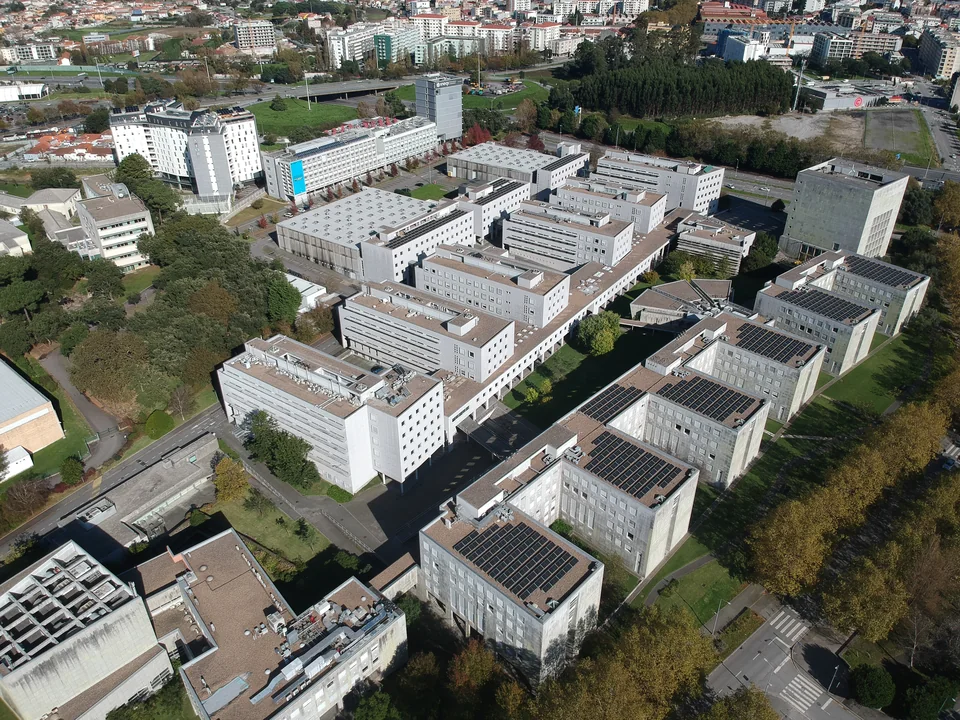
How a Portuguese master's works
Under DGES rules a master's has two parts: taught courses worth at least half the credits, and independent work for the rest, which can be a research dissertation, an applied project or a professional internship with a final report. The degree is awarded after a public defence. University programmes aim at academic specialisation and research; polytechnic programmes at professional specialisation.
The degree sits at level 7 of the European Qualifications Framework and gives access to doctoral study in Portugal and elsewhere in Europe.
A 60-ECTS master's is allowed only as an exception, for example a strongly professional programme that recruits only candidates with at least five years of experience. At U.Porto such executive programmes cost up to $11,360 (€10,000) a year.
Applying with a degree from Russia, Kazakhstan or another CIS country
The University of Lisbon lists three grounds for admitting international students to a master's, and other universities follow similar rules:
- a first-cycle degree awarded under the Bologna model;
- a foreign degree that the university's scientific council recognises as meeting the aims of a Portuguese bachelor's;
- an academic, scientific or professional record the scientific council accepts as sufficient.
Bachelor's and specialist degrees from CIS countries are assessed under the first or second ground. Under the University of Lisbon's rules, the institution's own scientific council judges the degree for admission, and no separate recognition procedure is needed before applying. Programme selection follows: FEUP, for example, only considers applicants whose final degree grade meets a minimum and sets ranking criteria for each programme.
Where to find English-taught programmes
U.Porto's 2026/27 catalogue illustrates the market well. Of 195 master's programmes, 17 are fully English-taught, five are bilingual and 22 are taught in Portuguese but marked suitable for English speakers.
| Area | English-taught examples at U.Porto | International fee per year |
|---|---|---|
| Engineering and AI (FEUP) | informatics and computing, electrical and computer engineering, artificial intelligence, mechanical, chemical, civil, materials, bioengineering, industrial engineering and management | $6,810 (€6,000) |
| Economics and management (FEP) | management, finance, economics of business and strategy, modelling and data analysis | $5,680 (€5,000) |
| Biology (Faculty of Sciences) | biodiversity, genetics and evolution | $4,680 (€4,125) |
| Health (ICBAS) | One Health, integrative and systems immunology | $4,540 (€4,000) |
In Lisbon, English-taught programmes cluster in the business schools: English is Nova SBE's official language of instruction, including for its Master in Management. At the University of Lisbon the language depends on the school and programme, so check the language field on each course page.
What a master's costs in total
International fees depend on the programme more than the university. Tuition at 2026/27 rates:
| Programme | University | Per year | Whole programme |
|---|---|---|---|
| Informatics and Computing Engineering | FEUP, U.Porto | $6,810 (€6,000) | $13,630 (€12,000) over 4 semesters |
| Management (English-taught) | FEP, U.Porto | $5,680 (€5,000) | $11,360 (€10,000) over 4 semesters |
| Data Science | Faculty of Sciences, U.Porto | $5,320 (€4,687.50) | $10,650 (€9,375) over 4 semesters |
| Data Science | Faculty of Sciences, ULisboa | $3,970 (€3,500) | — |
| Finance | ISEG, ULisboa | $9,080 (€8,000) in year one, $4,430 (€3,900) in year two | $13,510 (€11,900) |
| Aerospace Engineering | Técnico, ULisboa | $7,950 (€7,000) | — |
| Master in Management | Nova SBE | — | non-EU: $15,040 (€13,249) over 18 months; $18,450 (€16,249) over 2 years with an exchange semester |
| MSc in Business | Católica-Lisbon | — | $17,710 (€15,600) over 3 semesters, $20,670 (€18,200) over 4 |
Nova SBE's figure includes an optional $280 (€249) donation to its scholarship fund. The University of Lisbon allows schools to reduce an international fee as far as the domestic level, so ask the school before applying. Add housing, visa and living costs using the cost of studying in Portugal.
Admission: phases, documents and language
Phases. Universities admit master's students in several phases announced in an annual call: first phases usually open in February or March, the last ones in summer. FEUP explicitly advises non-European students to apply in the first phase, because the acceptance letter is needed for the visa and the consulate may take up to 60 days to decide. Business schools recruit in rounds, and Nova SBE accepts only one application per round, with no second-choice programme. Its 2026/27 admissions are closed, and 2027/28 round dates appear on the programme page.
Documents. A typical master's application includes:
- passport or ID card;
- degree certificate;
- transcript listing credits and grades for each course;
- CV;
- for some admission grounds, a portfolio or proof of professional experience.
Documents in other languages usually need an official translation; the call for each programme states which languages are accepted without translation and what the application fee is. Business schools usually also ask for a motivation letter and references.
Language. English-taught programmes require at least B2 English, and Nova SBE asks for B2 at the application stage. Portuguese-taught programmes ask for a Portuguese certificate.
Confirming a place. Non-EU students admitted to Nova SBE pay $2,670 (€2,350) on enrolment, which is non-refundable and deducted from tuition.
Scholarships for master's students
Means-tested state grants are not open to international students, so look at institutional and programme funding:
- Católica-Lisbon TOP+ — a merit scholarship covering 10–90% of tuition, available only through the master's application and awarded on a rolling basis.
- Erasmus Mundus — joint master's programmes run by several EU universities; one hosted by U.Porto lists no tuition fee for students in 2026/27.
- Fee reductions at the University of Lisbon — schools may lower the international rate.
More funding routes are listed in scholarships abroad in 2026.
After your master's
A graduate who studied on a study residence permit can obtain a residence permit of up to one year to look for work or start a business related to their qualification. AIMA asks, among other documents, for a certificate of completion or a declaration that you intend to use the job-search year. A master's also qualifies you for doctoral study.
Choosing a programme
- Decide first between a research programme with a dissertation and an applied one with an internship; the study plan on the course page shows which.
- Compare the language carefully: "English-taught" and "suitable for English speakers" are not the same.
- Check A3ES accreditation and DGES registration on the programme page.
- Budget for the whole programme: at ISEG, for example, year two costs about half of year one.
For a neighbouring market, compare with master's degrees in Spain.
Common mistakes
- Applying in the last phase. Popular programmes are nearly full by August, and a visa cannot be obtained in time for September.
- Not checking the bachelor's profile. Master's programmes in computing or finance may require specific courses on your transcript.
- Sending documents without translation. If your diploma and transcript are not in a language the university accepts as issued, an application without an official translation may not be assessed.
- Looking for a scholarship after applying. At Católica-Lisbon, TOP+ can only be requested with the application.
- Comparing prices per year. Business schools quote per programme; public universities quote per year.
FAQ
Usually three or four semesters and 90–120 ECTS, including a dissertation, project or internship. 60-ECTS programmes exist only for professionals with at least five years of experience.
Yes. The university assesses the degree itself, either as a Bologna first-cycle degree or through its scientific council, which can recognise it as equivalent to a Portuguese bachelor's. The University of Lisbon, for example, does not require separate recognition before you apply.
Public universities usually charge $3,970–6,810 (€3,500–6,000) a year: engineering at FEUP costs $6,810 (€6,000) and data science in Lisbon $3,970 (€3,500). Nova SBE and Católica-Lisbon charge $15,040–20,670 (€13,249–18,200) for the whole programme.
Yes, many more than at bachelor's level. U.Porto teaches 17 master's programmes in English, mostly in engineering, economics and management, and English is the default language at Nova SBE.
Most universities accept applications from February to August in two or three phases. Non-EU students should apply in the first phase, in February or March, to leave time for the visa.
Yes. Master's graduates can obtain a residence permit of up to one year to look for work or start a business in their field.
Sources
- DGES: the master's degree — credits, structure, qualification level
- ULisboa: master's admission for international students, 2026/27 fees
- U.Porto: FEUP master's in Informatics and Computing Engineering, FEP Master in Management
- FEUP: master's application procedures, 2nd-cycle admission 2026/27
- Nova SBE: Master in Management fees 2026/27, application requirements
- Católica-Lisbon: MSc in Business fees and scholarships
- AIMA: job-search residence permit after a master's
ECB rate of 29.09.2026: €1 = $1.1355. Rounding step: $1 below $100, otherwise $10. Facts checked on 29 September 2026.
Matching master's programmes to your profile, requirement checks, document preparation, applications and support are provided under an agreement with StudyU. The university makes the admission decision and decides on scholarships, together with the funding body where one is involved. If you want two or three master's programmes matched to your degree and budget, send an application.
During the free initial consultation, we clarify your goal, profile, timing, and budget and identify the next realistic step.
Next steps
- Cost of Studying in Portugal for International Students: Tuition, Housing and a First-Year Budget
- Scholarships abroad 2026: where international students study for free
- Master's Degree in Spain: Admission with a Non-EU Degree and 2027 Costs
- Studying in Portugal for international applicants
- Bachelor's Degrees in Portugal: Studying After School in Portuguese or English
- Applying to Portuguese Universities: How the International Student Competition Works
