
Programmers abroad are trained on degrees in Computer Science, Software Engineering, Computer Engineering, Data Science and Artificial Intelligence. A bachelor's takes three to four years and a master's one to two. Unlike medicine or civil engineering, software work almost never requires a licence: employers look at skills, projects and your right to work. So three things matter most: what the curriculum actually teaches, the full cost including living, and post-study work rules, which range from 18 months of job-search residence in Germany to a three-year PGWP in Canada.
| At a glance | What to know |
|---|---|
| Length | Bachelor's 3–4 years (usually 3 in the UK, 4 in the US), master's 1–2 years |
| Licence needed? | No; accreditation such as ABET signals quality but is not required to work |
| Fees: Germany, TUM | Bachelor's $2,270–3,410 (€2,000–3,000) per semester, master's $4,540–6,810 (€4,000–6,000) per semester for non-EU citizens |
| Fees: Estonia, University of Tartu | Computer Science MSc $8,180 (€7,200) a year for non-EU citizens |
| Fees: UK, Manchester | BSc Computer Science $52,750 (£39,700) a year for international students starting in 2027 |
| After graduation | UK Graduate visa: 2 years if applied for by 31.12.2026, 18 months from 01.01.2027; Germany: up to 18 months to look for work; Canada: PGWP up to 3 years; USA: OPT plus a 24-month STEM extension |
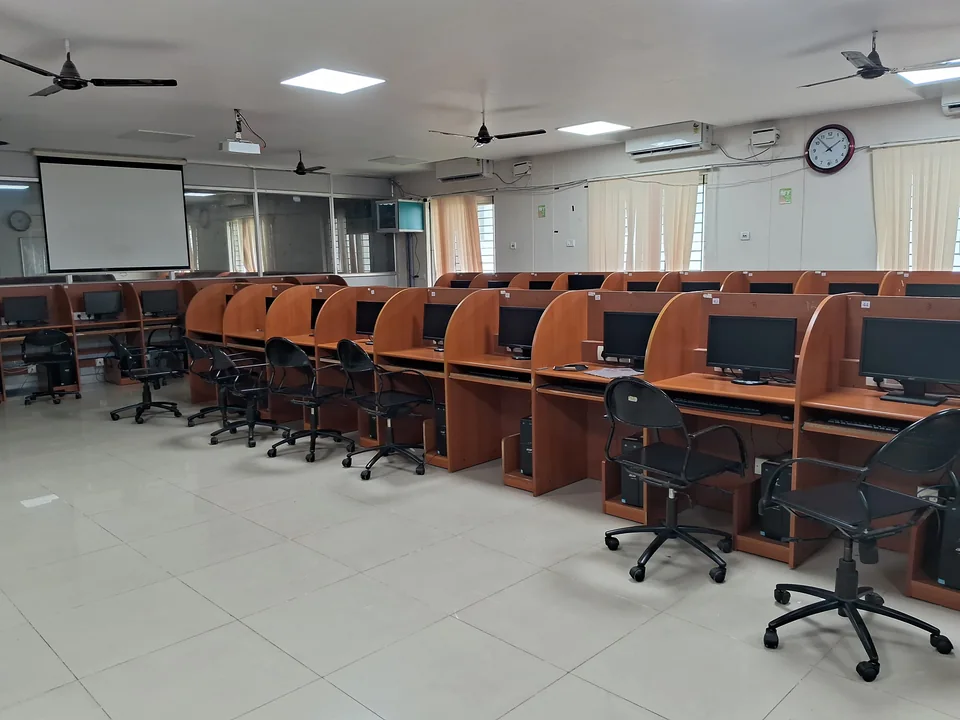
How IT degrees differ
Programme titles look alike, but course content varies. Before applying, open the curriculum and count the maths, algorithms, systems programming and project work.
| Programme | Focus | Good for |
|---|---|---|
| Computer Science | Algorithms, theory of computation, programming languages, systems | Those who want a strong base and flexibility |
| Software Engineering | Software as a process: requirements, architecture, testing, team projects | Future product developers |
| Computer Engineering | Electronics plus programming: hardware, embedded systems | Those interested in devices and low-level code |
| Data Science | Statistics, machine learning, data handling | Strong mathematicians aiming at analytics |
| Artificial Intelligence | Machine learning, neural networks, computer vision | Those ready for heavy maths; often narrower than CS |
| Information Systems / IT | Business processes, databases, administration | Those aiming at the IT–business interface |
A narrow, fashionable programme limits you if your interests change. At bachelor's level, general Computer Science usually keeps more doors open, and you can specialise in a master's. See our overviews of Computer Science, software engineering and artificial intelligence.
Degree types and formats
- BSc / BS — the standard bachelor of science: usually three years in the UK and most of Europe, four in the US, Canada and Turkey.
- BEng / MEng — an engineering bachelor's or an integrated engineering master's; a UK MEng takes four years and leads directly to master's level.
- MSc — one to two years; UK MScs usually last a year, continental ones two.
- Placement year — a year of paid work in a company between study years, common in the UK; it adds a year but gives work experience before graduation.
- Co-op — alternating study and work terms, common in Canada.
For international students a placement year is particularly valuable: it appears on your CV before any post-study visa starts.
How to evaluate a programme before applying
Rankings say little about what you will learn. Check the curriculum for:
- How many compulsory maths courses: discrete maths, linear algebra, probability.
- Separate courses on algorithms and data structures, operating systems, networks, databases.
- How many team projects, and whether there is a final project with an external client.
- Whether you can specialise in later years and which electives actually run.
- Whether the department runs an internship programme or helps students find placements.
- The city: internships and first jobs cluster where tech companies are.
Where to study: comparing countries
| Country | Language | Entry after an 11-year school certificate | Fee guide | After graduation |
|---|---|---|---|---|
| Germany | German; many master's in English | Usually via a Studienkolleg or a university course first | TUM: €2,000–3,000 per semester (bachelor's) | Up to 18 months to look for work |
| United Kingdom | English | Usually via a foundation year | Manchester CS: £39,700 a year | Graduate visa: 2 years (apply by 31.12.2026) or 18 months (from 2027) |
| Estonia | English | Depends on the university | Tartu CS MSc: €7,200 a year | EU and Estonian work rules |
| Italy | English on many master's | 12 years of schooling required | Padua Data Science: $3,350 (€2,950) a year | National rules |
| Canada | English or French | Yes, with credential review | Waterloo CS: about C$73,000 for year one | PGWP up to 3 years after a programme of 2+ years |
| USA | English | Yes | High; private universities cost more | OPT plus 24-month STEM extension |
| Turkey | English or Turkish | Yes | $1,800–43,000 a year per our guide | National rules |
Verified costs
| University | Level | Fee | Notes |
|---|---|---|---|
| Technical University of Munich (TUM) | Bachelor's / master's | $2,270–3,410 (€2,000–3,000) / $4,540–6,810 (€4,000–6,000) per semester | For non-EU citizens; one-off grants of $570–2,040 (€500–1,800) per semester by application |
| University of Tartu | Computer Science MSc | $8,180 (€7,200) a year | From 2026/27 no tuition waivers for new non-EU students; on this programme the top ten get 50% off the second semester; half the first semester must be prepaid before the visa letter |
| University of Manchester | BSc Computer Science | $52,750 (£39,700) a year | For September 2027 entry |
| University of Padua | Data Science MSc | $3,350 (€2,950) a year | Fee from the programme card on the university application portal (course code 2026); application fee $70 (€60) |
| University of Waterloo (Canada) | Computer Science bachelor's | about $51,470 (C$73,000) for the first year, two terms | University estimate for international students based on September 2026 rates, including incidental fees; books and supplies about C$1,500 more; co-op fees extra |
The Canadian example shows the scale of the gap: an international student's first year of Computer Science at Waterloo costs roughly fifteen times a year of the Padua master's. Tuition is not the full budget. Add housing, insurance, a laptop and proof of funds for your visa. At Tartu, for example, the official admission letter for the visa is issued only after the prepayment.
Accreditation: does a programmer need it?
In software, accreditation does not grant a right to work, but it helps confirm a programme meets a professional standard:
- ABET in the US accredits computing programmes at associate, bachelor's and master's level through its Computing Accreditation Commission.
- Euro-Inf is a European quality label for informatics programmes awarded by EQANIE.
If a programme is not on these lists, that is not a reason to reject it, but it is a reason to read the curriculum, faculty profiles and industry links more carefully.
Working during and after studies
Work rights are set by the country, not the university. Key rules as of 1 October 2026:
- United Kingdom. The Graduate visa gives at least 18 months after your course. If you apply by 31 December 2026 it lasts 2 years; from 1 January 2027, 18 months; PhD graduates get 3 years. See working while studying and the Graduate Route.
- Germany. Graduates can get a residence permit to look for work for up to 18 months (§ 20 of the Residence Act). See working while studying in Germany.
- Canada. After a programme of two years or more a PGWP may be issued for three years; after a shorter one, for the length of the programme. See working while studying and the PGWP.
- USA. STEM graduates may extend OPT by 24 months; after that you need an employer-sponsored work visa.
How to apply
- Pick the level. After school, a bachelor's; after a bachelor's or specialist degree, a master's. Some countries require a preparatory year after an 11-year school certificate: a Studienkolleg in Germany, a foundation year in the UK.
- Check your profile. Maths and computer science matter for school leavers; master's programmes often require a set number of programming and maths credits.
- Take an English test. IELTS or TOEFL; minimum scores are on the programme page.
- Show your skills. A GitHub repository, olympiads, projects and hackathons strengthen an application, especially for a master's.
- Meet the deadlines. European master's often take applications in winter and spring, UK bachelor's go through UCAS, Canadian universities open in autumn and winter a year ahead.
Common mistakes
- Choosing by the word "AI" in the title. Without strong maths and programming, a narrow programme gives no advantage.
- Comparing tuition without post-study work rules. A cheap degree with no route to a first job can cost more than an expensive one with a clear path.
- Expecting the degree alone to get you hired. Employers look at projects and internships; plan them from year one.
- Missing the prepayment. At Tartu and elsewhere the visa letter is issued only after the first payment.
What we do and who decides
Programme shortlisting for your profile, requirement checks, document preparation and applications are provided under an agreement with StudyU. The university decides on admission, the consulate and immigration authority on visas and work rights, and employers on hiring.
For legal payment routes from Russia, see how to pay for studies abroad from Russia. Kazakh applicants may find our guide to studying abroad from Kazakhstan useful.
FAQ
Among verified options, public European universities are cheapest: TUM charges $2,270–3,410 (€2,000–3,000) per semester for bachelor's programmes, and Padua's Data Science master's costs $3,350 (€2,950) a year. Factor in the language of teaching and local living costs.
No. Unlike medicine or civil engineering, software work does not require a licence. Employers check your skills, and the state checks your right to work through a visa, residence or work permit.
Computer Science gives a broader theoretical base and more flexibility. Software Engineering is closer to industrial development and team projects. If unsure, start with Computer Science and specialise later.
Yes, but Germany and the UK usually require a preparatory year after an 11-year school certificate. Canada, the US, Turkey and some European countries accept the certificate directly if grades and subjects meet the requirements.
In the UK, 2 years if you apply by 31.12.2026 and 18 months from 2027; in Germany up to 18 months; in Canada up to 3 years with a PGWP; in the US, OPT plus a 24-month STEM extension. Immigration authorities decide each case.
Not for studying, but often for working. Many tech companies in Germany and the Netherlands use English, yet the local language widens the job market and makes daily life easier.
Sources
- TUM: tuition fees for non-EU students
- University of Tartu: Computer Science MSc and cost of tuition
- University of Manchester: BSc Computer Science 2027
- GOV.UK: Graduate visa
- German Residence Act, § 20
- IRCC: post-graduation work permit
- USCIS: STEM OPT extension
- ABET: what programs ABET accredits
- University of Padua: Data Science MSc
- University of Waterloo: first-year tuition
ECB reference rate of 30.09.2026 (latest published on the check date, 01.10.2026): €1 = $1.1355, €1 = £0.85463, €1 = C$1.6105. Amounts rounded to $10.
Choosing a country and programme for your profile is provided under an agreement with StudyU; the university makes the admission decision. To start, send us a request.
During the free initial consultation, we clarify your goal, profile, timing, and budget and identify the next realistic step.
Next steps
- How to Pay for Studies Abroad from Russia: What Works in 2026
- Study Abroad from Kazakhstan: Where and How in 2026
- Working While Studying in the UK and the Graduate Route: 20 Hours a Week, Tax, and Two Years or 18 Months After Graduation
- Working While Studying in Canada and the PGWP: 2026 Rules During and After Your Program
- Working While Studying in Germany 2026: 140-Day Rule, Minijob, Werkstudent
- Artificial Intelligence in Turkey
