
An engineering bachelor's abroad takes three to four years and a master's one to two; the UK also offers a four-year integrated MEng. Unlike software, engineering often depends on programme accreditation: in several countries and fields it decides whether you can later become a Chartered Engineer in the UK, a licensed PE in the US or, in Russia, be entered in the national register of construction specialists. So choose the accredited programme, not just the university. Verified 2026/27 examples range from $2,270 (€2,000) per semester at TUM to $42,650 (£32,100) a year at Sheffield in the UK.
| At a glance | What to know |
|---|---|
| Length | Bachelor's 3–4 years, master's 1–2 years, UK MEng 4 years |
| International recognition | The Washington Accord (25 full signatories) and the European EUR-ACE label |
| United Kingdom | CEng is awarded by the Engineering Council via licensed institutions; an accredited degree simplifies the path |
| United States | A PE licence usually requires an EAC/ABET-accredited degree, four years of experience, and the FE and PE exams |
| Russia | Lead design or construction engineers must be in the national register: a construction degree, 3+ years in engineering posts and overall experience |
| Price examples | TUM: $2,270–3,410 (€2,000–3,000) per semester for bachelor's; Sheffield Mechanical Engineering BEng: $42,650 (£32,100) a year |
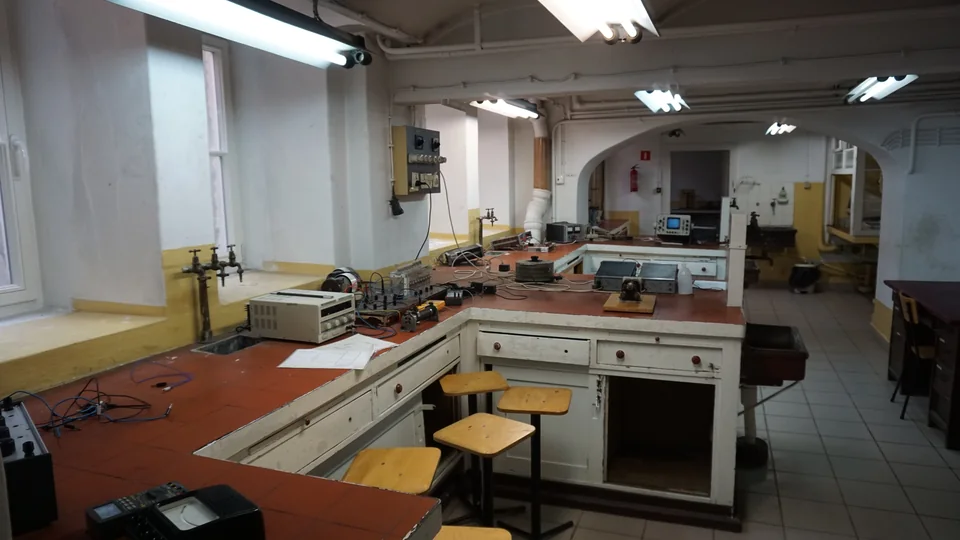
Engineering is many professions
| Field | What graduates do | Where it is regulated |
|---|---|---|
| Civil | Buildings, bridges, roads, hydraulic works | Almost everywhere: signing designs requires a title or licence |
| Mechanical | Machines, engines, manufacturing | Mostly voluntary titles (CEng, PE) |
| Electrical / Electronic | Power systems, electronics, communications | Regulation for work on power networks |
| Chemical | Processes and plants | Voluntary titles, sector permits |
| Aerospace | Aircraft and systems | Sector approvals by the aviation regulator |
| Industrial | Production organisation, logistics | Usually no licence |
If you want to sign off construction designs, a professional title is required almost everywhere. In mechanical or electronic engineering it is more often voluntary and affects your career rather than your right to work. Our field overviews: civil, mechanical, electrical and aeronautical engineering.
Accreditation: the Washington Accord and EUR-ACE
The Washington Accord is an agreement between bodies that accredit undergraduate engineering programmes; programmes accredited by one signatory are recognised by the others as substantially equivalent. According to the International Engineering Alliance on 1 October 2026 there are 25 full signatories, including ABET (USA), the Engineering Council (UK), Engineers Canada, Engineers Australia, Engineers Ireland, MÜDEK (Turkey, since 2011) and AEER, the Association for Engineering Education of Russia (since 2012). Recognition applies only to programmes a signatory has accredited within its own jurisdiction. Kazakhstan is not among the full or provisional signatories.
EUR-ACE is a European quality label for engineering programmes awarded by authorised national agencies. Where the profession is regulated, EUR-ACE-labelled programmes meet the educational requirements for registration, and they are automatically listed in the FEANI index used for the Eur Ing title.
Before applying, check that the specific programme is accredited, not just the university. Within one university some programmes may be accredited and others not.
Professional titles by country
United Kingdom: CEng
Chartered Engineer status is awarded by the Engineering Council through licensed professional engineering institutions such as IMechE. Anyone who demonstrates the competences in UK-SPEC can apply; the process is simpler with an "exemplifying" qualification, typically an accredited master's-level degree. An accredited BEng usually covers only part of the educational base for CEng, while an accredited MEng normally covers it in full.
United States: PE
To sign engineering work as a Professional Engineer, most state boards require an EAC/ABET-accredited degree, four years of verifiable experience, and passing the FE and PE exams. Boards may ask graduates of foreign programmes for a credentials evaluation.
Canada
Provincial regulators issue the P.Eng. licence. Engineers Canada has been a Washington Accord signatory since 1989. Graduates of non-accredited programmes usually go through an academic assessment and may have to sit exams.
Russia
To work as a lead design engineer or construction manager, a specialist must be in the national register. The Town Planning Code (Article 55.5-1) requires a degree in a construction field, at least three years in engineering posts and at least ten years of overall construction experience, or five with an independent qualification assessment. The national association of self-regulatory organisations decides. A foreign degree must first be recognised: where no treaty or government list applies, Rosobrnadzor decides after an expert review (Article 107 of the Federal Law on Education). Engineers who do not sign designs need only diploma recognition and whatever the employer requires.
Kazakh citizens need diploma recognition under the Ministry of Science and Higher Education rules; see studying abroad from Kazakhstan.
Where to study: comparing countries
| Country | Language | Entry after an 11-year school certificate | 2026/27 fee guide | Professional title |
|---|---|---|---|---|
| Germany | German; some master's in English | Usually via a Studienkolleg or a university course | TUM: $2,270–3,410 (€2,000–3,000) per semester bachelor's, $4,540–6,810 (€4,000–6,000) master's | EUR-ACE on some programmes; check each one |
| United Kingdom | English | Usually via a foundation year | Sheffield Mechanical Engineering BEng: $42,650 (£32,100) a year | CEng via professional institutions |
| Netherlands | English | Depends on the university and programme | See our guide to Dutch universities | Check accreditation per programme |
| Canada | English or French | Yes, with credential review | Waterloo engineering: about C$75,000 for year one | P.Eng. via the province |
| USA | English | Yes | High; private universities cost more | PE via the state board |
| Turkey | English or Turkish | Yes | $1,800–43,000 a year per our guide | MÜDEK is a Washington Accord signatory |
What it costs and what is included
Fees checked on official pages on 1 October 2026.
| University | Programme | Fee | Notes |
|---|---|---|---|
| Technical University of Munich (TUM) | Bachelor's / master's | $2,270–3,410 (€2,000–3,000) / $4,540–6,810 (€4,000–6,000) per semester | For non-EU citizens; one-off grants by application |
| University of Sheffield | Mechanical Engineering BEng | $42,650 (£32,100) a year (2026/27, year one) | Accredited by IMechE; fixed for the duration for overseas students |
| ETH Zurich (Switzerland) | Bachelor's and master's | $2,620 (CHF 2,190) per semester plus semester fees | Since autumn 2025 foreign students without Swiss residence pay the threefold rate; bachelor's mostly taught in German |
| University of Waterloo (Canada) | Engineering bachelor's | about $52,880 (C$75,000) for the first year, two terms | University estimate for international students at September 2026 rates, incl. incidental fees; books and supplies about C$1,500 more, co-op fees extra |
The spread in this table is more than twentyfold per year, and the cheap options usually mean a different teaching language: bachelor's programmes at TUM and ETH are mostly taught in German. On top of tuition, budget for lab materials and software (some universities provide licences), a laptop that can run CAD, housing and insurance. If the programme includes a placement year, ask whether a reduced fee applies that year and where you will live.
How to apply
- Check subjects. Engineering almost always needs maths and physics; chemical engineering also needs chemistry. UK universities look for A levels or equivalent, so Russian applicants usually need a foundation year.
- Choose the level. With a Russian bachelor's or specialist degree, a master's abroad is often faster and cheaper than a second bachelor's.
- Prove your language. IELTS or TOEFL for English-taught programmes; German for most German bachelor's.
- Check programme accreditation in the accreditor's database: ABET, Engineering Council, ENAEE (EUR-ACE).
- Meet deadlines. UK applications go through UCAS; German ones through the university or uni-assist.
Common mistakes
- Choosing by ranking instead of accreditation. For a civil engineer, a non-accredited degree can mean years of extra assessment.
- A BEng with no plan for the next step. If you are aiming for UK CEng, the Engineering Council treats an accredited MEng, or an accredited BEng plus an accredited master's, as the exemplifying education. A BEng alone still allows CEng, but through extra assessment.
- Assuming automatic recognition. The Washington Accord covers only programmes a signatory accredited in its own country.
- No plan for going home. Russian construction work needs both a recognised degree and the experience required for the national register.
- Ignoring the local language. Site and design-office work often happens in the local language.
Timeline
| When | What to do |
|---|---|
| 18–24 months before | Pick your field and future work country; decide whether you need a professional title |
| 12–18 months before | Shortlist accredited programmes; strengthen maths and physics |
| 9–12 months before | Take language tests; prepare certificates, translations and a statement |
| 6–9 months before | Apply; sit tests and interviews |
| 3–6 months before | Accept an offer, pay the deposit, arrange a visa and housing |
For legal payment routes from Russia, see how to pay for studies abroad from Russia.
What we do and who decides
Country strategy, shortlisting accredited programmes, requirement checks, document preparation and applications are provided under an agreement with StudyU. The university decides on admission, the consulate on the visa, the accreditor on accreditation and the regulator or professional institution of your work country on professional titles.
FAQ
Recognition comes through a treaty, a government list of universities or a Rosobrnadzor expert review. Lead design or construction roles additionally require entry in the national register, which has experience requirements.
An agreement between bodies that accredit undergraduate engineering programmes. Programmes accredited by one signatory in its own country are recognised as substantially equivalent by the others. There are 25 full signatories, including ABET, the Engineering Council, Engineers Canada, MÜDEK and AEER.
A BEng is a bachelor's, usually three years in England; an MEng is a four-year integrated master's. For UK Chartered Engineer status, an accredited MEng normally meets the educational requirements in full, while a BEng meets them in part.
Verified 2026/27 examples: $2,270–3,410 (€2,000–3,000) per semester for bachelor's programmes at TUM and $42,650 (£32,100) a year for Mechanical Engineering BEng at Sheffield. In Turkey our guide shows $1,800–43,000 a year.
Yes, but Germany and the UK usually require a preparatory year after an 11-year Russian school certificate. Turkey, Canada, the US and several European countries accept the certificate directly with suitable maths and physics grades.
To sign construction designs, almost always. In mechanical, electronic or industrial engineering the title is more often voluntary but helps your career and builds employer trust.
Sources
- International Engineering Alliance: Washington Accord and signatories
- ENAEE: the EUR-ACE system
- Engineering Council: Chartered Engineer (CEng)
- NCEES: licensure
- Engineers Canada: the Washington Accord
- Russian Town Planning Code, Article 55.5-1
- Federal Law on Education, Article 107
- TUM: tuition fees for non-EU students
- University of Sheffield: Mechanical Engineering BEng
- ETH Zurich: tuition fees
- University of Waterloo: first-year tuition
ECB reference rate of 30.09.2026 (latest published on the check date, 01.10.2026): €1 = $1.1355, €1 = £0.85463, €1 = CHF 0.9478, €1 = C$1.6105. Amounts rounded to $10.
Choosing a field, country and programme for your profile is provided under an agreement with StudyU; the university makes the admission decision. To start, send us a request.
During the free initial consultation, we clarify your goal, profile, timing, and budget and identify the next realistic step.
Next steps
- How to Pay for Studies Abroad from Russia: What Works in 2026
- Study Abroad from Kazakhstan: Where and How in 2026
- Universities in the Netherlands for International Students: Types, the 14 Research Universities and Real Entry Routes
- Aeronautical Engineering in Turkey
- Civil Engineering in Turkey
- Electrical Engineering in Turkey
