
After grade 9 a teenager from Russia or another non-EU country can study in Germany at a private boarding school leading to the Abitur or another qualification that opens universities. German law allows a residence permit for school attendance, as a rule from grade 9 and only at schools with internationally mixed classes; the German Embassy in Moscow adds that the pupil must live in the school's own boarding house and that the school or a German resident must sign a formal financial undertaking at the foreigners' office. These schools are expensive: Schloss Neubeuern charges $5,830 (€5,160) a month for boarding in 2026/27, and Louisenlund's base rate is $95,242 (€84,300) a year. Teaching is almost always in German, so language preparation starts a year or two ahead.
| At a glance | Position on 2 October 2026 |
|---|---|
| Legal basis | Section 16f(2) of the Residence Act (AufenthG): school attendance, as a rule from grade 9 |
| Eligible schools | Public or state-recognised schools with an international orientation, or mainly privately funded schools preparing for international, foreign or German-recognised qualifications; classes must mix nationalities |
| Embassy conditions | Qualification giving university access, residence in the school's boarding house, formal undertaking under Sections 66–68 AufenthG |
| Work | Not permitted on this permit |
| D visa | €75, half for applicants under 18 ($42, or €37.50); lodged via VisaMetric after registering with the embassy in Moscow |
| Boarding, 2026/27 | Neubeuern $5,830 (€5,160) a month; Louisenlund $95,242 (€84,300) a year base rate |
| Who decides | The school on admission, the German embassy on the visa, the foreigners' office on the residence permit |
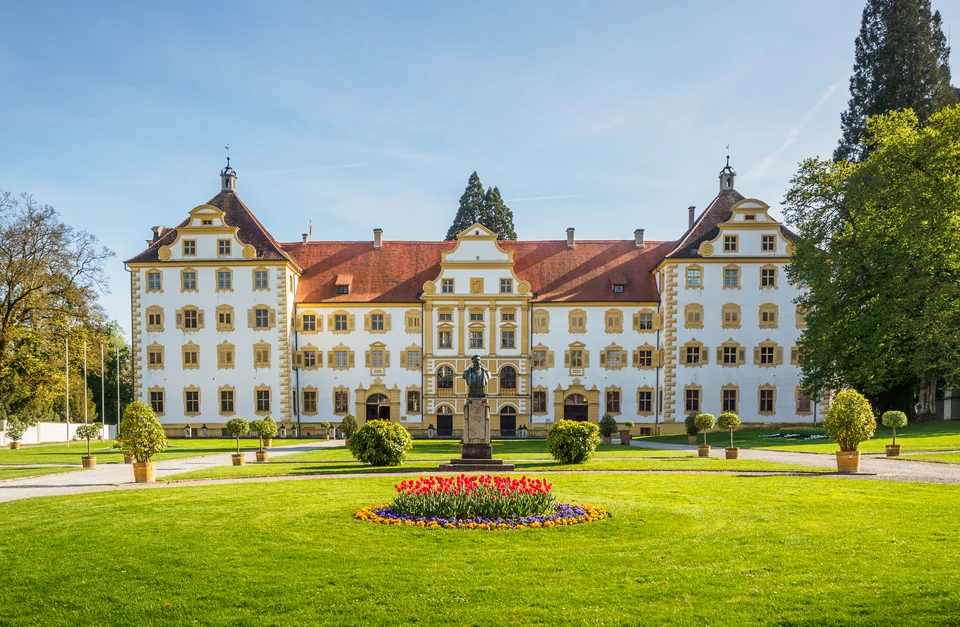
How German schooling works and where a grade 9 leaver fits
After four years of primary school (six in Berlin and Brandenburg) pupils move to different school types: the Gymnasium leads to the Abitur and university; the Realschule and Hauptschule lead to vocational training; the Gesamtschule combines tracks. The Abitur is taken after 12 or 13 years depending on the state and confers general university entrance (allgemeine Hochschulreife).
A pupil who has finished grade 9 in Russia usually joins grade 10 of a Gymnasium. In 13-year states grade 10 completes lower secondary and three years of upper school (Oberstufe) follow; in 12-year states grade 10 is already the introductory Oberstufe year. Expect two to three years to the Abitur; the school places the pupil after reviewing reports, tests and German level.
| Route | Language | Years after grade 9 | Outcome |
|---|---|---|---|
| Private boarding school with the Abitur | German | 2–3 | Abitur: German and other universities without a Studienkolleg |
| International school with A-levels or a US diploma | English | 2–3 | That system's certificate; German universities assess it under their own rules |
| Finish grade 11 at home | Russian | 2 | Russian certificate; in Germany a Studienkolleg or a year of university at home |
| Vocational training (Ausbildung) | German | After school | A profession; separate rules |
Some German boarding schools also offer the International Baccalaureate. The IB organisation is designated "undesirable" in Russia, so for Russian citizens we recommend the Abitur or an A-level route.
Which schools qualify for a visa
Section 16f(2) AufenthG provides that a residence permit for school attendance should, as a rule, be granted from grade 9 when classes mix nationalities and the school is either a public or state-recognised school with an international orientation, or a school not (or not mainly) publicly funded that prepares pupils for international, foreign or state-recognised qualifications.
The German Embassy in Moscow's information sheet on school visas (dated October 2023 and still the version on the embassy website on 2 October 2026) adds that, for long-term regular schooling, a permit is granted only when all of the following apply:
- the pupil is in grade 9 or above;
- the school awards the Hochschulreife or an equivalent qualification;
- the pupil lives in the school's own boarding house (unless the school has none);
- the school or another person resident in Germany provides a formal undertaking (behördliche Verpflichtungserklärung) to cover the pupil's costs.
The undertaking must be issued by the German foreigners' office no more than six months before the application, state the purpose "Schulbesuch" and prove the guarantor's solvency; it does not replace proof of funding. Pupils on this permit may not work, and switching to another residence purpose during schooling is generally possible only where the law grants an entitlement. An ordinary local state school is not part of this route: it requires the family to live in Germany on another basis.
What boarding costs: 2026/27 fee lists
| School | State | Boarding | Day school | Worth knowing |
|---|---|---|---|---|
| Schloss Neubeuern | Bavaria | $5,830 (€5,160) a month | $2,463 (€2,180) a month | Gymnasium; the "plus MINT" profile costs €5,460 a month |
| Louisenlund | Schleswig-Holstein | $95,242 (€84,300) a year | $31,725 (€28,080) a year | Base rate, final price set individually; Gymnasium, vocational Gymnasium and the IB; merit scholarships up to €36,000 a year for an average of 1.5 or better |
Louisenlund states that the price depends on the school track, the parents' main residence and the child's profile, and awards scholarships on the same basis. Neubeuern publishes a monthly fee, so check in the contract how many monthly payments a school year includes. Add health insurance, travel home, pocket money and the time needed for the financial undertaking, which the school either signs itself or asks the family to arrange through a private guarantor in Germany. Our guide to paying for studies abroad from Russia covers the legal transfer routes.
German language requirements
For the visa, the embassy asks for proof of the language of instruction, for example Goethe-Institut, telc, ÖSD, TestDaF, DSH or the KMK German Language Diploma; IELTS or TOEFL for English programmes. If an intensive German course is planned before school, enclose the booking with its length, starting and target level, and proof of payment. Each school sets its own entry test and places the pupil accordingly. A beginner realistically needs a year to eighteen months of intensive German; see our guide to German language courses in Germany.
The pupil visa: documents and applying from Russia
The German Embassy in Moscow processes national visas for all of Russia, including the consular districts of Kaliningrad, St Petersburg, Yekaterinburg and Novosibirsk:
- Register on the embassy's waiting list (RK-Termin), then lodge the application in person at VisaMetric with fingerprints.
- The fee is €75, half for under-18s, payable in cash roubles at the embassy rate or with a German-issued card; Russian and Belarusian cards are not accepted. VisaMetric's service fee is extra, and fees are not refunded after a refusal.
- The embassy decides; processing ranges from a few working days to several months.
The embassy's checklist for pupils includes the German-language application signed by the parents (or their written consent), passports, a birth certificate with translation and apostille, the latest school report and a certificate of enrolment with translations, language proof, health insurance from an EU insurer, notarised parental consent to unaccompanied travel and a long stay in Germany, the school's admission letter describing its international orientation, the school contract (Schulvertrag), confirmation of a boarding place, the school's confirmation that first-year fees are covered, and the formal undertaking under Sections 66–68. Translations made in Russia must be notarised; those by a sworn translator in Germany need no notarisation. After arrival the pupil registers an address and receives the residence permit from the foreigners' office. See our German student visa guide for fees and timelines. Applicants living in Kazakhstan apply at the German missions in Kazakhstan.
Supervision, guardianship and leaving Russia
The boarding school takes on day-to-day supervision under its contract, while parents keep parental rights and sign the contract. The visa requires notarised parental consent to unaccompanied travel and a long stay; the Russian border requires a notarised consent from one legal representative under Article 20 of Federal Law 114-FZ, which, as Russia's Consular Department explains, can run until adulthood and must list the countries. Both can be drawn up by one notary on the same day. Agree with the school where the pupil spends closed holidays and who represents the parents before doctors and the foreigners' office — usually by power of attorney.
After the Abitur and recognition in Russia
With the Abitur a graduate applies to German universities like any German school leaver and skips the Studienkolleg that many Russian grade 11 leavers must attend; see Studienkolleg in Germany and universities in Germany for international students. Pupils who prefer a profession can look at Ausbildung in Germany. General rules for Russian citizens are in studying in Germany as a Russian citizen; country costs and visas are on studying in Germany. Russia's ministry list of recognition agreements contains none with Germany, so for Russian university entry the Abitur goes through Rosobrnadzor's procedure under Article 107 of the Education Law.
Germany after grade 9 or after grade 11
| Criterion | Boarding school with the Abitur after grade 9 | Germany after grade 11 in Russia |
|---|---|---|
| Age of departure | 15–16 | 17–18 |
| Costs before university | 2–3 years of boarding: €5,160 a month at Neubeuern, from €84,300 a year at Louisenlund | Studienkolleg and living costs, or a year of university at home |
| Language | German for every subject | German for the Studienkolleg or university exam |
| University entry | With the Abitur, like German school leavers | Via Studienkolleg or after a year of university at home |
| Legal basis | Section 16f AufenthG, boarding and undertaking | Student visa with a blocked account |
For other countries see studying abroad after grade 9; the English-language alternative is covered in studying in the USA after 9th grade.
An 18-month plan
- 18 months out. Decide whether a German Abitur is the goal; start intensive German.
- 12 months out. Shortlist 3–4 boarding schools and confirm they meet the embassy's conditions: Abitur, own boarding house, international classes.
- 8–10 months out. School tests and interview, contract, first-year fees.
- 4–6 months out. Formal undertaking at the foreigners' office, translations and apostilles, language certificate, insurance, notarised consents.
- 3–4 months out. Embassy waiting list and VisaMetric appointment.
- After arrival. Address registration and residence permit.
Common mistakes
- Expecting a place at an ordinary state school. The visa route needs a specific type of school with boarding and an undertaking.
- Choosing a school without its own boarding house. The embassy expects pupils to live in the school's boarding house where one exists.
- Forgetting the Section 66–68 undertaking. It is issued in Germany and takes time.
- Arriving without German. The school places pupils by language level and the embassy asks for proof.
- Submitting documents without apostille or notarised translation.
- Preparing only one consent. The visa needs consent to a long stay; the Russian border needs the 114-FZ travel consent.
FAQ
Not as a pupil arriving alone. The law allows school attendance, as a rule from grade 9, only at internationally oriented or private schools with mixed classes, and the embassy requires the school's boarding house and a formal undertaking. The German embassy decides on the visa and the foreigners' office on the residence permit.
Schloss Neubeuern lists $5,830 (€5,160) a month for boarding, and Louisenlund a base rate of $95,242 (€84,300) a year that it adjusts individually. Add insurance, travel and pocket money. Discounts and scholarships, such as Louisenlund's up to €36,000 a year, are decided by the school.
There is no single threshold: each school tests and places the pupil. For the visa the embassy asks for proof of the language of instruction, such as Goethe-Institut, telc, ÖSD, TestDaF, DSH or the KMK German Language Diploma. If a German course comes first, enclose the booking and payment.
The national visa fee is €75, and applicants under 18 pay half, $42 (€37.50), in cash roubles at the embassy rate or by German-issued card, plus VisaMetric's service fee. Fees are not refunded after a refusal, and the German Embassy in Moscow makes the decision.
Yes. The Abitur confers general university entrance, so a German Gymnasium graduate applies like a German school leaver, without a Studienkolleg. Each university decides on admission to a specific programme under its own criteria, such as the grade average.
Russia's ministry list contains no recognition agreement with Germany. For Russian university entry the Abitur goes through Rosobrnadzor's recognition procedure under Article 107 of the Education Law, and Rosobrnadzor decides on each document.
Sources
- Residence Act (AufenthG), Section 16f: language courses and school attendance
- German Embassy Moscow: visa for school attendance or exchanges (PDF), long-term stays, visa fees
- VisaMetric: national visa applications for Germany
- Schloss Neubeuern: 2026/2027 school and boarding fees
- Louisenlund: 2026/27 costs and scholarships
- Russian MFA Consular Department: consent for a minor's travel
- Russian Ministry of Science and Higher Education: recognition agreements, Russian Education Law, Article 107
Sources checked on 2 October 2026. Currency converted at the ECB reference rate of 1 October 2026: €1 = $1.1298; dollar figures rounded.
If you want to work through your route, send a request: document preparation and submission are provided under an agreement with StudyU; the school makes the enrolment decision and the German embassy decides on the visa.
During the free initial consultation, we clarify your goal, profile, timing, and budget and identify the next realistic step.
Next steps
- Goethe-Zertifikat A1–C2: Levels, Modules, Fees and Where to Sit It Now
- University of Europe for Applied Sciences (UE): Programmes, Fees and Admission
- Studying in Germany for international applicants
- Studying in Germany as a Russian Citizen: Routes, the Moscow Visa, Money and Degree Recognition
- German Student Visa 2026: Documents, Timing and Where to Apply
- Studienkolleg in Germany: Who Needs It, How to Get In and What the FSP Exam Gives You
