
Economics and Finance in Turkey at a glance
Economics and Finance in Turkey is a four-year bachelor’s that joins economic theory and econometrics with corporate finance, banking and financial markets. Several private universities teach it fully in English. Dated 2026–27 international fees on this page range from $4 500 a year at Medipol to $12 000 at Bilgi, and master’s and PhD routes exist at Yeni Yüzyıl and Bahçeşehir.
- Bachelor’s: four years; English-taught at Medipol, Okan, Bahçeşehir and Bilgi, Turkish-taught at Mudanya.
- Master’s: about two years with a thesis or one year without one at Yeni Yüzyıl, where fees are charged for the whole programme.
- PhD: Bahçeşehir lists an English-taught PhD in Economics and Finance at $40 000 for the whole four-year programme.
- Selection: school grades or SAT/YÖS for the bachelor’s; a relevant degree, transcript and often an interview for graduate study.
What the bachelor’s covers
The combined title matters: a pure economics degree spends more time on theory and policy, while an Economics and Finance degree moves earlier into valuation, investments and banking. Expect a steady quantitative load. The progression below is typical; each university’s course catalogue gives the exact list.
- Principles of micro- and macroeconomics
- Mathematics for economists
- Introduction to finance and accounting
- Academic English or business communication
- Intermediate microeconomics and macroeconomics
- Statistics for economics and finance
- Corporate finance
- Money and banking
- Econometrics
- Investments and portfolio management
- Financial markets and institutions
- International finance
- Derivatives and risk management
- Public finance or development economics electives
- Financial modelling in Excel, Python or R
- Graduation project or research seminar
Ask whether the programme uses real data sets and software such as Excel, Python, R or Stata in coursework, and whether it prepares you for professional exams you may take later, for example the CFA programme; universities do not award those certifications themselves.
Entry requirements for international applicants
- School results. A secondary certificate with good maths grades. Bilgi, for example, asks for a 50% minimum average and lists the Russian, Kazakh and other CIS certificates with that threshold; other universities publish their own minimums.
- Exams. Bilgi accepts SAT 1000, ACT 18 or IB 28 as alternatives; other private universities accept SAT or YÖS results. The 2026 TR-YÖS/1 sitting was on 12 April 2026.
- English for English-taught tracks. Bilgi asks for TOEFL iBT 75 or PTE Academic 60; Bahçeşehir for TOEFL iBT 72 or PTE Academic 55 and does not accept IELTS or Duolingo. Without a valid score you sit the university’s own test or join the preparatory year.
- Turkish for Mudanya’s track. Turkish at about C1 or a preparatory year.
- Graduate applicants need a bachelor’s transcript, often a statement of purpose and references; some programmes interview candidates.
- After admission: the diploma equivalence certificate from the Ministry of National Education (for bachelor’s entrants) and a student residence permit.
How to compare economics and finance programmes
- Quantitative depth. Count the econometrics, statistics and programming courses. They are what employers in banking and analytics test.
- Finance electives. Check whether derivatives, risk management, fintech or financial modelling are actually offered each year, not only listed.
- Internship links. Istanbul is Turkey’s financial centre; ask which banks, audit firms and fintech companies have taken students.
- Language. An English-taught degree prepares you for international finance roles; Turkish-taught study is more useful if you plan to work in Turkish banking.
- Quality signals. Social-science programmes in Turkey can be accredited by FEDEK or STAR, both registered with YÖKAK. Ask whether the department is accredited or under review.
Careers and professional credentials
Graduates start as analysts in banks and investment firms, in corporate finance and treasury teams, in audit and consulting, in insurance, and in public institutions and research. Many go on to a master’s in finance or economics, or to professional qualifications such as CFA, ACCA or FRM, which are awarded by their own bodies.
Some regulated activities in Turkey, such as capital-markets advisory work, require licences from the Capital Markets Licensing and Registry organisation (SPL), and Turkish is needed for most local roles. For work in Turkey you also need a work permit after graduation. International graduates often use the degree for finance roles in their home region or for graduate study in Europe.
Who this degree suits
A good fit if you…
- like maths and want to apply it to markets and companies;
- want an English-taught business-related degree at a moderate price;
- plan a career in banking, investment, consulting or economic research.
Think twice if you…
- dislike statistics and formulas;
- want a general management degree (look at Business Administration);
- expect a finance job to follow automatically from the diploma.
Universities offering Economics and Finance
Bachelor’s, master’s and PhD options; rows with a source link show a dated 2026–27 fee.
| University | Degree | Language | Tuition |
|---|---|---|---|
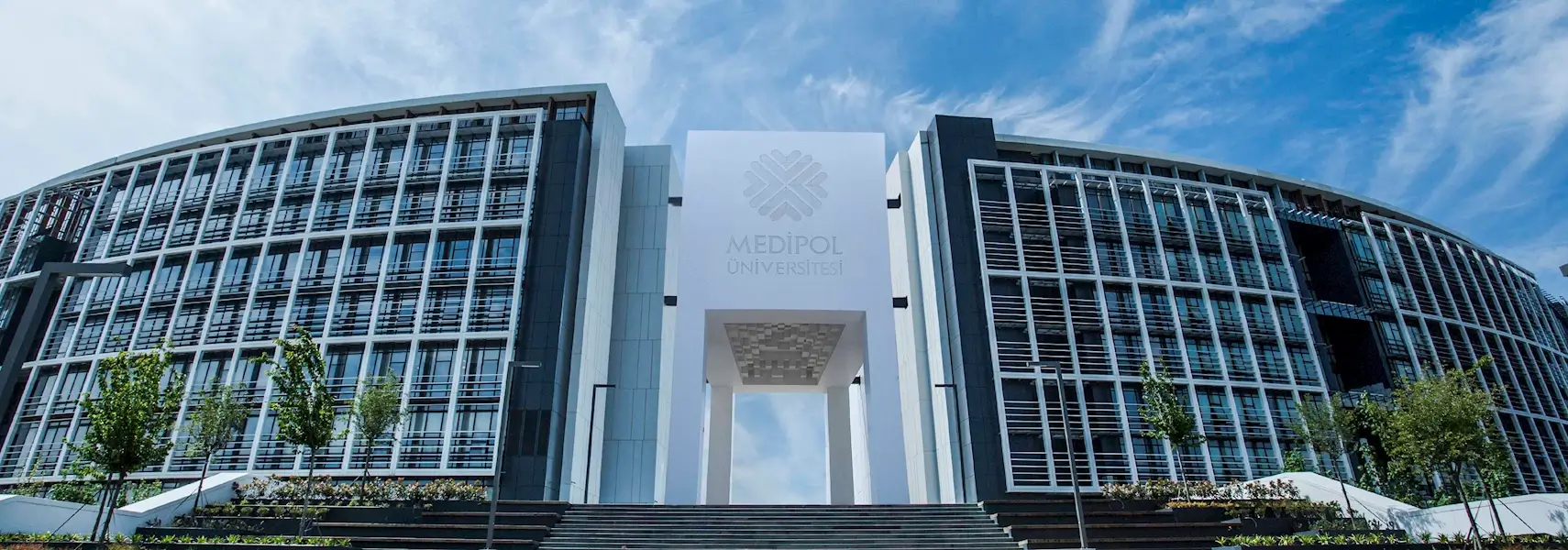
| Medipol University | Bachelor | English | $4 500/yr · fee source (2026–27) |
| Okan University | Bachelor | English | $5 000/yr · fee source (2026–27) |
| Mudanya University | Bachelor | Turkish | $6 000/yr |
| Gelisim University | Bachelor | Turkish | 2026–27 fee on request |
| Bahcesehir University | Bachelor | English | $8 500/yr · fee source (2026–27) |
| Gelisim University | Bachelor | English | 2026–27 fee on request |
| Bilgi University | Bachelor | English | $12 000/yr · fee source (2026–27) |
| Yeni Yuzyil University (thesis, 2 years) | Master | Not stated | $4 000 whole programme |
| Yeni Yuzyil University (non-thesis, 1 year) | Master | Not stated | $3 500 whole programme |
| TED University | Master | English | 2026–27 fee on request |
| Gelisim University | Master | English | 2026–27 fee on request |
| Gelisim University | Master | Turkish | 2026–27 fee on request |
| Gelisim University | PhD | Turkish | 2026–27 fee on request |
| Gelisim University | PhD | English | 2026–27 fee on request |
| Bahcesehir University (4 years) | PhD | English | $40 000 whole programme · fee source (2026–27) |
Fees are the universities’ own list prices, checked on 29 September 2026. “On request” means the university publishes no fee with a 2026–27 label; ask it for a written quote.
Budgeting for 2026–27
Dated 2026–27 bachelor’s fees: Medipol $4 500 a year (English), Okan $5 000 (English), Mudanya $6 000 (Turkish), Bahçeşehir $8 500 (English) and Bilgi $12 000 (English). Discounts are published too: Medipol shows a lower advance-payment fee of $4 050, Okan takes 5% off for payment in advance, and Mudanya charges $4 800 for early registration completed by 30 November 2026. Gelişim and TED University publish no dated 2026–27 fee for these programmes.
For graduate study, Yeni Yüzyıl charges $4 000 for the whole two-year thesis master’s in Economy and Finance and $3 500 for the one-year non-thesis version; Bahçeşehir charges $40 000 for its whole four-year PhD. Add housing, health insurance and the residence permit to every scenario.
Common questions
Yes. Medipol, Okan, Bahçeşehir and Bilgi teach the bachelor’s in English; Mudanya teaches it in Turkish.
Medipol lists $4 500 a year for its English-taught programme, with a lower advance-payment fee of $4 050. Okan follows at $5 000 a year.
It keeps the core economic theory but adds finance earlier: corporate finance, investments, banking and risk management.
Each university sets its own list, so check it before booking a test. At Bilgi the TOEFL iBT minimum is 75, at Bahçeşehir 72, and Bahçeşehir rejects IELTS and Duolingo results.
At Yeni Yüzyıl the master’s fee covers the whole programme: $4 000 for the two-year thesis track and $3 500 for the one-year non-thesis track in 2026–27.
No university awards CFA, ACCA or FRM; those bodies run their own exams. A strong finance curriculum helps you prepare for them.
You need a work permit, and most local roles require Turkish. Some capital-markets activities also need SPL licences.
Planning to study economics and finance in Turkey?
A personal strategy, requirement checks, selection of agreed options, document preparation, applications, and support are provided under an agreement with StudyU. The university decides admission; the migration authority decides the residence permit and, later, the work permit.
Official sources
- YÖK Atlas: official program catalogue — program availability, institution and stated language of instruction. International quotas and tuition require the university's own current source.
- YÖK: official international-student information — the official university search route and general international-student guidance. The chosen university still owns its admission requirements.
- ÖSYM: official TR-YÖS exam (2026) — the official calendar and application route for TR-YÖS/1 in 2026. Each university publishes whether the result is required for the selected program.
Also checked on 29 September 2026 on the institutions’ own sites:
- Istanbul Bilgi University: international admission procedure (bilgi.edu.tr) — minimum SAT 1000, ACT 18, IB 28 and 50% school GPA, including for the Russian attestat.
- Istanbul Bilgi University: admission requirements (bilgi.edu.tr) — documents and accepted English certificates (TOEFL iBT 75, PTE Academic 60).
- BAU: language proficiency scores (int.bau.edu.tr) — accepted English tests and minimum scores by programme group.
- Istanbul Medipol University: 2026–27 international tuition fee list (PDF) (mio.medipol.edu.tr) — fee basis and academic-year label used in the table above.
- Istanbul Okan University: 2026–27 tuition fees (study.okan.edu.tr) — fee basis and academic-year label used in the table above.
- Mudanya University: 2026–27 quotas and fees (Turkish) (mudanya.edu.tr) — fee basis and academic-year label used in the table above.
- Bahçeşehir University (BAU): 2026–27 tuition fees (int.bau.edu.tr) — fee basis and academic-year label used in the table above.
- Istanbul Bilgi University: 2026–27 undergraduate tuition for international students (PDF) (bilgi.edu.tr) — fee basis and academic-year label used in the table above.
- Yeni Yüzyıl University: 2026–27 master’s and PhD fees for international students (PDF) (international.yeniyuzyil.edu.tr) — fee basis and academic-year label used in the table above.
- YÖKAK: accreditation agencies with active registration (yokak.gov.tr) — which national programme accreditors are currently registered.
- SPL: Capital Markets Licensing, Registry and Training Agency (spl.com.tr) — licences for capital-markets activities in Turkey.
All fees are published in US dollars, so no currency conversion was applied. Confirm language, curriculum, quota and tuition with the university for your intake before paying.
Updated:
