
SRH University is a private university of applied sciences with its legal seat in Heidelberg, into which the SRH foundation merged its institutions in Berlin, Heidelberg, Fürth, Gera and Hamm. It is state-recognised, has held system accreditation from the German Accreditation Council since 1 October 2019, and its Heidelberg predecessor was institutionally accredited by the German Science and Humanities Council (Wissenschaftsrat). English-taught programmes for international students run mainly in Berlin, Heidelberg and Leipzig. Students from outside the EU pay per semester: the International Business Administration bachelor's costs from $5,080 (€4,500) in Leipzig to $6,210 (€5,500) in Berlin and Heidelberg, and the computer science master's $6,160–7,850 (€5,450–6,950). The fee stays the same for the whole programme.
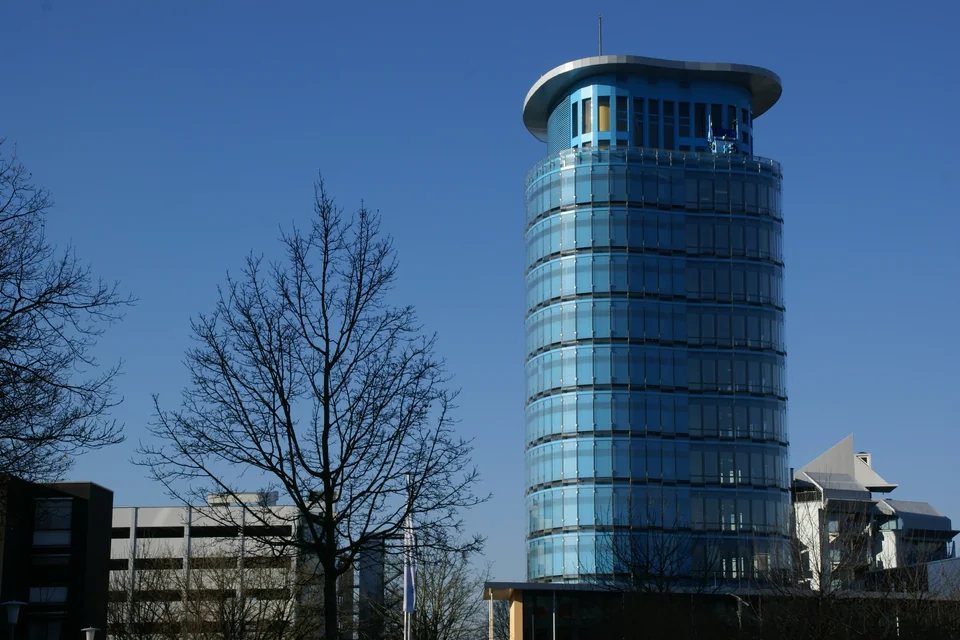
SRH University has nothing to do with the public Heidelberg University (Ruprecht-Karls-Universität), which has its own profile: Heidelberg University. Older reviews mention SRH Hochschule Berlin, SRH Hochschule Heidelberg or SRH Berlin University of Applied Sciences; these are now parts of SRH University.
| At a glance | Details |
|---|---|
| Type | private, state-recognised university of applied sciences; founded by the non-profit SRH foundation |
| Legal seat | Heidelberg (Ludwig-Guttmann-Straße 6), Baden-Württemberg |
| Campuses | Berlin, Dresden, Gera, Heidelberg, Leipzig and 13 more cities, including Hamburg, Cologne and Munich |
| Accreditation | system accreditation since 1 Oct 2019; Wissenschaftsrat accreditation of the Heidelberg and Berlin institutions |
| Intakes | 1 April and 1 October |
| IBA bachelor's, non-EU | $5,080–6,210 (€4,500–5,500) per semester depending on campus and track |
| Computer science master's, non-EU | $6,160 (€5,450) per semester in Leipzig, $7,850 (€6,950) in Berlin |
| One-time fee | $1,130 (€1,000) for non-EU/EEA citizens |
| Scholarships | partial, up to 50% of first-year tuition |
| Housing | SRH apartments in Heidelberg (382 studios); private market elsewhere |
What SRH University is today
SRH is a large German non-profit group in education and healthcare. It used to run several separate universities; five of them, in Berlin, Heidelberg, Fürth, Gera and Hamm, are now combined into one SRH University. Legally it is SRH University of Applied Sciences Heidelberg, a state-recognised private institution supervised by Baden-Württemberg.
That explains the confusion in third-party reviews: some write about "SRH Berlin", others about "SRH Heidelberg", and some even call SRH a public university. The last point is wrong: SRH is funded by tuition fees, as the university itself states on its fees pages.
SRH Mobile University (distance learning) and SRH International College, an associate college that runs the preparatory Foundation, are separate entities. Only an on-campus programme at SRH University itself is suitable for a study visa.
State recognition and accreditation
- Recognition. SRH University is a "staatlich anerkannte Hochschule": the state recognises its bachelor's and master's degrees as equivalent to those of public universities.
- System accreditation. Since 1 October 2019 SRH University has accredited its own programmes and awarded them the Accreditation Council's seal; programmes are listed in the Council's public database.
- Wissenschaftsrat. According to the Council's list of completed procedures, SRH Hochschule Heidelberg was reaccredited in 2009 for ten years and SRH Hochschule Berlin in 2015, also for ten years; the merged institutions in Hamm, Gera and Fürth went through their own procedures in 2018, 2021 and 2023.
The Council's published list does not yet show a decision on the merged SRH University: the university states that it is institutionally accredited by the Council, while the latest entries in the list concern the separate institutions before the merger.
Who SRH suits
| SRH makes sense if | Consider other options if |
|---|---|
| you want business, computer science, logistics or design in English | you need medicine, law or a research career |
| practical learning matters: five-week blocks and company projects | you want a tuition-free public university |
| you will pick a city for price: Leipzig is cheaper than Berlin | you need a Studentenwerk residence in Berlin; SRH is not part of that system |
| you hope for a partial merit scholarship | you need a full scholarship; SRH does not offer them |
For comparison, see our profiles of IU International University, Gisma, the University of Europe for Applied Sciences and Constructor University; public options are in our guide to English-taught degrees in Germany.
Teaching: the CORE principle
SRH organises study in five-week blocks: you take no more than two subjects in parallel, sit the exam or assessment for them, and move on, so there is no single exam period at the end of the semester. Expect many projects and presentations in small groups. For a visa applicant the key point is that SRH's English-taught programmes are labelled "On-campus study", which is the full-time format a Section 16b study visa (Residence Act, AufenthG) requires.
English-taught programmes
- International Business Administration (B.A.). Berlin, Heidelberg, Leipzig. Two tracks: six semesters (180 ECTS, with a 14-week internship) or the seven-semester International Experience track (210 ECTS, plus six months of study or internship abroad). Specialisations include Digital Marketing, Business Psychology, Healthcare Management and Supply Chain Management.
- Computer Science (B.Sc.) and the master's programmes Computer Science – Big Data and Artificial Intelligence, Computer Science – Cyber Security and Applied Computer Science. The Big Data and AI master's runs in Berlin and Leipzig: 120 ECTS over two years or a 90-ECTS fast track.
- Management master's: International Management (including a tripartite version), International Business and Leadership, International Business and Healthcare Management, Supply Chain Management, plus MBAs.
The German-taught catalogue is wider: psychology, social work, healthcare, hotel and tourism management, design, film and music. Use SRH's programme finder for the full list.
Fees for non-EU citizens
SRH publishes separate fees for EU/EEA citizens (monthly) and for everyone else (per semester). Russian and Kazakh citizens fall into the non-EU/EEA group. Fees checked on 1 October 2026:
| Programme | Campus | Per semester | Whole programme |
|---|---|---|---|
| International Business Administration, 6 semesters | Berlin, Heidelberg | $6,210 (€5,500) | $37,280 (€33,000) |
| International Business Administration, 6 semesters | Leipzig | $5,540 (€4,900) | $33,220 (€29,400) |
| International Business Administration, 7 semesters (International Experience) | Berlin | $5,760 (€5,100) | $40,330 (€35,700) |
| International Business Administration, 7 semesters (International Experience) | Leipzig | $5,080 (€4,500) | $35,590 (€31,500) |
| M.Sc. Computer Science – Big Data and AI, 4 semesters | Berlin | $7,850 (€6,950) | $31,410 (€27,800) |
| M.Sc. Computer Science – Big Data and AI, 4 semesters | Leipzig | $6,160 (€5,450) | $24,630 (€21,800) |
- The one-time enrolment fee is $1,130 (€1,000) for non-EU/EEA citizens. It is paid by the deadline stated after you sign the contract, and only then is your place reserved.
- The semester fee is fixed for the full length of the programme.
- Payments can be made through Flywire.
- In September–October 2026 SRH offered up to $1,130 (€1,000) off for last-minute applications; such promotions are one-off, so do not count on one for 2027.
Living funds for the visa are separate: $13,450 (€11,904) for the first year. For the wider picture see the cost of studying in Germany.
Scholarships
SRH states plainly that it offers no fully funded scholarships. Partial awards cover up to 50% of first-year tuition: Performance, Entrepreneurship, Women for Leadership, Talent (creative programmes), Future of Tech and Women in Tech. You apply after receiving your contract and invitation, within two weeks; the general reference dates are 15 January for April starts and 15 July for October starts. SRH decides who receives a scholarship. There is also the Deutschlandstipendium, $340 (€300) a month from the government and private sponsors, also allocated by the university.
Entry requirements
Bachelor's:
- a school-leaving qualification giving access to university (allgemeine Hochschulreife) or to a university of applied sciences (Fachhochschulreife);
- proof of English; without a certificate you can take SRH's own English Proficiency Certificate test;
- a CV with photo and a passport copy;
- an interview for some programmes, sometimes as a video recording.
Many non-EU school certificates, including the Russian attestat, give only indirect access in Germany. After secondary school the route is the SRH International College Foundation or a first year at university at home. The Foundation runs in Heidelberg and Berlin over two semesters, starting in October or January, with Business, Creative Studies and Engineering & IT tracks. On 1 October 2026 SRH's page still showed the 2024/25 price of $12,990 (€11,500) for the programme; the fee for a 2027 start may differ, so get the current figure from the college in writing. After passing all modules, students progress to an SRH bachelor's. Our Studienkolleg guide explains the preparatory stage.
Master's: a relevant bachelor's (for computer science: Computer Science, Information Systems or a related field), a motivation letter, proof of English, a CV and passport. The 90-ECTS fast track is designed for graduates of longer bachelor's programmes; SRH decides whether it is open to you, and SRH makes the admission decision. The general process is in our guide to a master's in Germany in English.
Application steps
- Apply online through the SRH portal at any time.
- If your documents meet the requirements, you are invited to an interview.
- Receive the acceptance letter and contract; sign it and upload it to your applicant account.
- Pay the $1,130 (€1,000) fee by the deadline in your contract and receive the official letter of admission.
- Apply for the visa, pay tuition as per the contract, attend Welcome Week.
SRH's Visa & Residence Permit Service offers limited help with visas, full support with residence permits in Berlin and, where needed, limited support in other cities.
Russian and Kazakh citizens
- Visa. Russian residents apply for the national study visa at the German Embassy in Moscow; the Consulate General in St Petersburg closed on 18 September 2026. The embassy checklist gives a usual processing time of 6–8 weeks, never less than four. A Schengen visa is not an option: it cannot be converted into a student residence permit.
- Passport. A biometric passport has been required since 1 January 2026.
- Living funds. $1,120 (€992) per month, $13,450 (€11,904) for the first year. The embassy says no Russian bank offers a suitable blocked account, and Russian bank statements are not accepted. See our blocked account guide.
- Documents. Acceptance letter, motivation letter and CV in German or translated into German; translations made in Russia must be notarised; under-18s need notarised parental consent.
- Payments. Use legal routes only; see how to pay for studies abroad from Russia.
- Kazakhstan. Kazakh citizens apply at the German mission in Kazakhstan responsible for their place of residence.
The German embassy decides on the visa together with the immigration office. Step by step: our German student visa guide and studying in Germany for Russian citizens.
Housing and work
- Heidelberg. SRH Campus Apartments in Wieblingen, next to the campus, offer 382 one-room flats for students, apprentices and staff of the SRH group.
- Berlin. SRH is not a member of the Studentenwerk, so its students cannot apply for Studentenwerk residences. The university helps with the search but does not offer specific rooms; allow one to two months.
- Hamburg and other cities. In Hamburg SRH holds a quota at the private residence The Fizz; elsewhere you rent privately.
See our guide to student housing in Germany. With a study residence permit you may work 140 full or 280 half days a year; full-time work is not allowed. After graduation you can get an 18-month residence permit to look for a job. More in our guide to working while studying in Germany.
Common mistakes
- Treating SRH as a public university. It is a private, recognised university that charges tuition.
- Confusing SRH Heidelberg with Heidelberg University. They are different institutions with different requirements.
- Reading the EU prices. Russian and Kazakh citizens pay the higher per-semester non-EU/EEA rates.
- Choosing SRH Mobile University's online format for a visa. Visas are issued for on-campus programmes.
- Expecting a Studentenwerk room in Berlin. SRH students are not eligible; start your search early.
Timeline for October 2027
- October–December 2026. Choose a programme and campus, take IELTS or TOEFL, compare Berlin and Leipzig fees.
- January–April 2027. Apply online, take the interview, receive the contract.
- By 15 July 2027. Apply for a partial scholarship and pay the $1,130 (€1,000) fee.
- April–June 2027. Open a blocked account and book the embassy appointment in Moscow.
- August–September 2027. Collect the visa, find housing, arrive by 1 October.
FAQ
Is SRH University public or private?
Private. SRH University of Applied Sciences Heidelberg is a state-recognised private university of applied sciences founded by the non-profit SRH foundation. Its degrees are recognised as equivalent to public-university degrees and its programmes are accredited; recognition abroad is decided by the receiving country or employer.
How much does SRH cost for non-EU students?
Non-EU students pay per semester: the International Business Administration bachelor's costs $5,080–6,210 (€4,500–5,500) per semester, and the Computer Science – Big Data and AI master's $6,160 (€5,450) in Leipzig and $7,850 (€6,950) in Berlin. Add the $1,130 (€1,000) enrolment fee and $13,450 (€11,904) in a blocked account for the visa.
Can I enter SRH straight after secondary school?
With a certificate that gives only indirect access in Germany, such as the Russian attestat, you will usually need the SRH International College Foundation (two semesters in Heidelberg or Berlin) or a first year at university at home. SRH's admissions team decides which route applies to you after reviewing your documents.
How is SRH University different from Heidelberg University?
Heidelberg University is Germany's oldest public research university; non-EU students there pay Baden-Württemberg's tuition charge of $1,690 (€1,500) per semester. SRH University is a private university of applied sciences with higher fees, a practical focus and English-taught programmes in several cities.
Does SRH offer scholarships?
There are no full scholarships. SRH offers partial awards of up to 50% of first-year tuition for academic performance, an entrepreneurial idea, a creative portfolio, or for women in leadership and tech. You apply after receiving your contract, and SRH decides who receives a scholarship.
Berlin, Heidelberg or Leipzig: which campus is better?
It depends on the programme and budget. Leipzig is cheaper for both tuition and rent; Heidelberg has SRH's own apartments next to campus; Berlin has a new campus and the largest internship market, but housing is harder to find and Studentenwerk residences are not open to SRH students.
Sources
- SRH University: CORE principle, confirmed quality and accreditation, about, legal notice, campuses
- SRH University: International Business Administration, M.Sc. Computer Science – Big Data and AI, applications and admissions, financing and scholarships
- SRH: SRH International College Foundation, about SRH International College, visa and residence permit, accommodation, Berlin accommodation
- Wissenschaftsrat: completed accreditation procedures (PDF), SRH Hochschule Heidelberg reaccreditation, 2009 (PDF)
- Berlin Immigration Office: studying and working
- German Embassy Moscow: study visa checklist (PDF, Russian), national visa, embassy news
- Federal Foreign Office: blocked accounts
Dollar figures use the ECB reference rate of 1 October 2026 (€1 = $1.1298), rounded to $1 below $100 and to $10 above. Facts checked on 1–2 October 2026. Other German universities are listed on our study in Germany page.
If you want to work through your route, send a request: document preparation and submission are provided under an agreement with StudyU, and the university makes the admission decision.
During the free initial consultation, we clarify your goal, profile, timing, and budget and identify the next realistic step.
Next steps
- IU International University: On-Campus Study in Germany, Fees and Visa
- Gisma University of Applied Sciences: Degrees, Fees and Admission
- University of Europe for Applied Sciences (UE): Programmes, Fees and Admission
- Studying in Germany for international applicants
- Heidelberg University
- Constructor University Bremen: Admission, Costs and Degree Status
