
For an English course in the United States, weekly hours decide the visa. A language programme of 18 or more clock hours a week counts as a full course of study: the school issues Form I-20, and you need an F-1 student visa. A short recreational course that earns no credit can be taken on a B visitor visa. Russian citizens are currently interviewed for nonimmigrant visas at the U.S. embassies in Warsaw or Astana, because the embassy in Moscow no longer processes them. In 2026 a week of intensive English at Kings in New York or Boston costs $495–615 and a homestay $465–595 a week, plus the $185 visa fee and the $350 SEVIS fee.
| At a glance | Rules and prices checked on 1 October 2026 |
|---|---|
| Course of 18+ hours a week | F-1 visa on a Form I-20 from an SEVP-certified school |
| Short recreational course with no credit | B visitor visa |
| Where Russian citizens interview | U.S. Embassy Warsaw or U.S. Embassy Astana |
| Fees | $185 for an F or B visa; $350 SEVIS I-901 fee for F-1 |
| Entry timing | F-1 visas can be issued up to 365 days before the start; entry no earlier than 30 days before |
| School accreditation | Required by a 2010 federal law; for language schools usually ACCET or CEA |
| Maximum stay on a language programme | 24 months plus 30 days to depart |
| Private school example | Kings New York intensive, 21 hours a week: $535 a week (2–11 weeks, 2026) |
| University programme example | UC San Diego: 4 weeks at 20 hours, $2,095 tuition plus fees (2026) |
| Work | No off-campus work; language students are excluded from OPT and CPT |
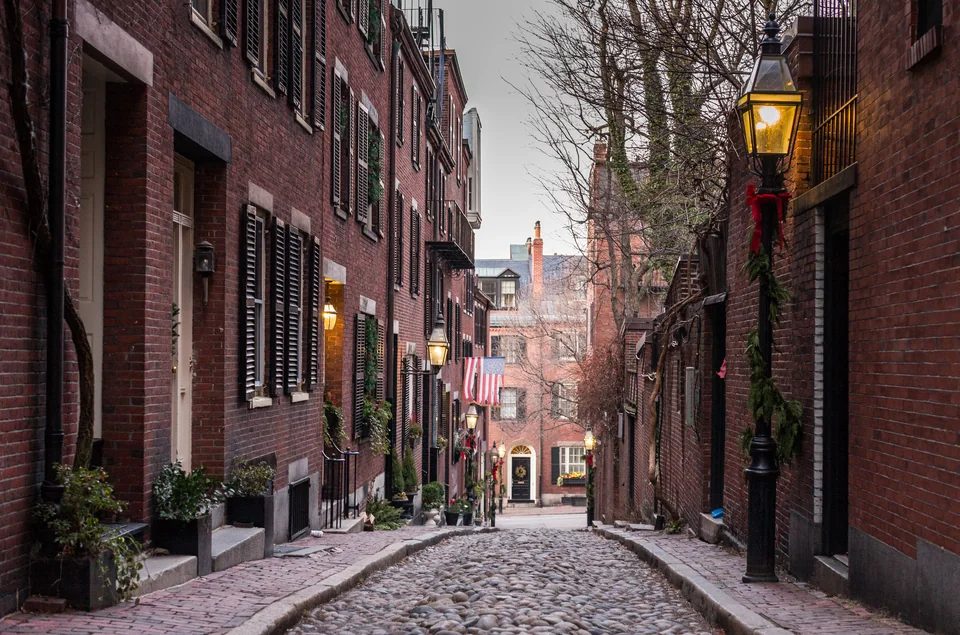
Who an English course in the USA suits
The USA makes sense when you specifically need American English: before applying to a U.S. college or university, for work with American companies, or to prepare for TOEFL. It is the most expensive English-speaking destination: a month of study and living in New York or Boston costs more than in England or Ireland, and for Russian citizens the visa step involves travelling to another country for the interview.
A course is a poor fit if you see it as a way to move to the USA. A language programme gives no off-campus work rights and no OPT, and the consular officer assesses whether you will return home. If your goal is a degree, go straight to our guides on universities in the USA for international students and applying to U.S. universities; the country overview is on Study in the USA.
F-1 or B: which visa for a language course
A consular officer at the U.S. embassy decides on the visa; the school only issues the enrolment documents.
F-1 visa: courses of 18 hours a week or more
Federal regulations (8 CFR 214.2(f)(6)) define a full course of study in a language programme as at least 18 clock hours of attendance a week where classroom instruction dominates, or 22 hours where laboratory work dominates. For such a programme, an SEVP-certified school issues Form I-20. The sequence is:
- The school admits you and asks for proof of funds for the course and living costs; each school sets its own amount.
- You receive the I-20 and pay the $350 SEVIS I-901 fee.
- You complete Form DS-160, pay the $185 visa fee and book an interview.
- Before the interview, you set your social media accounts to public: the State Department requires this of F, M and J applicants.
An F-1 visa can be issued up to 365 days before the course starts, but you cannot enter the USA on it more than 30 days before the first class. Online classes do not count towards a full course of study for language students, so the whole programme must be in person.
Under the current text of 8 CFR 214.2(f)(5), F-1 students are admitted for a fixed period based on the dates on the I-20, and English language training programmes are capped at 24 months plus 30 days to depart. You cannot plan several years of language courses on one F-1 visa; after the cap you need an academic programme or must leave.
B visa: a short course for personal interest
A B visa allows enrolment in a short recreational course that earns no credit towards a degree or certificate. Schools usually offer such students programmes of under 18 hours a week: at UC San Diego, for example, the 15-hour course does not qualify for an I-20 and is open to tourists. If you plan more hours or a long programme, you need an F-1: full-time study on a visitor visa breaches its conditions.
Where applicants from Russia and Kazakhstan interview
The U.S. Embassy in Moscow no longer offers nonimmigrant visa services, and the consulates in Yekaterinburg and Vladivostok remain suspended. Russian nationals should book interviews at the U.S. Embassy in Warsaw or Astana unless they reside elsewhere. Poland requires a Schengen visa, while Russian citizens can enter Kazakhstan visa-free. Citizens of Kazakhstan apply at the embassy in Astana or the consulate general in Almaty. Visa fees are non-refundable and non-transferable.
Documents, financial requirements and interview questions are covered in our F-1 student visa guide.
How to check a school
Only SEVP-certified schools can issue Form I-20; you can check them in the school search on the Study in the States website. In addition, since 2010 federal law (Public Law 111-306) allows F-1 visas only for language training programmes accredited by an agency recognised by the U.S. Secretary of Education. For language schools that usually means:
- ACCET, the Accrediting Council for Continuing Education and Training, which accredits, for example, the Kings schools in Boston and New York;
- CEA, the Commission on English Language Program Accreditation, which specialises in English language programmes.
University-based programmes (Intensive English Programs or English Language Institutes) operate under the university's own accreditation. They can close, though: Boston University's language centre, CELOP, shut down on 31 August 2026. Confirm that the programme is open for your dates before paying.
What English courses in the USA cost: price-list examples
Kings New York and Kings Boston (private schools on college campuses)
The New York school is in Riverdale on the campus of the University of Mount Saint Vincent; the Boston school is on the Fisher College campus in Beacon Hill. Kings General English has 20 lessons, or 15 hours, a week, which is too few for an F-1 visa. Intensive English has 28 lessons, or 21 hours, and qualifies for an I-20. The minimum age is 16, and U.S. classes have at most 15 students.
| Weekly price, 2026 | Kings New York | Kings Boston |
|---|---|---|
| General English, 15 hours, 2–11 weeks | $425 | $480 |
| Intensive English, 21 hours, 2–11 weeks | $535 | $615 |
| Intensive English, 12–23 weeks | $495 | $555 |
| Homestay single room, half board | $550 low season, $595 high season | $465 low season, $500 high season |
| Enrolment fee | $175 | $175 |
| Host family placement fee | $135 | $135 |
| School insurance, per week | $65 | $65 |
The homestay high season runs from 21 June to 15 August 2026. Homestays are booked for at least four weeks; two- or three-week stays are on request with a $70 weekly supplement. In 2027 the 2–11 week intensive course rises to $585 a week in New York and $645 in Boston. The New York school also has an on-campus residence for students aged 17–30, where a twin room with breakfast and lunch costs $690 a week.
UC San Diego Extended Studies (university programme)
| Four-week Academic English programme, 2026 | Cost |
|---|---|
| Application fee (non-refundable) | $225 |
| Tuition, 15 hours a week, no I-20 | $1,795 |
| Tuition, 20 hours a week | $2,095 |
| Tuition, 25 hours a week | $2,345 |
| International student services fee | $250 |
| University medical insurance | $240 |
| Books, bought on arrival | $80–100 |
The minimum age is 18; a 17-year-old may be admitted with an accompanying adult guardian and a parental letter. For an I-20 on the 20-hour programme the university asks for proof of at least $4,897 per four-week session in 2026, and $5,057 in 2027.
What it adds up to
| Scenario | Tuition and school fees | Housing | Total before flights and visa |
|---|---|---|---|
| Kings New York, 12 weeks intensive, homestay in low season | $6,115 | $6,735 | $12,850 |
| UC San Diego, one four-week session at 20 hours, no housing | $2,810 | — | from $2,910 with books |
| Kings Boston, 4 weeks General English on a B visa, homestay | $2,095 | $1,995 | $4,090 |
For an F-1 visa add the $185 visa fee and the $350 SEVIS fee, plus travel to Warsaw or Astana for the interview if you apply from Russia.
Where to live
- Homestay. The usual choice at private schools: a room, breakfast and dinner, internet and one laundry load a week. From $550 a week with Kings in New York.
- On-campus residence. More expensive and often age-restricted, but next to classes and American students.
- Private rental. Possible for a long course, but short lets in big cities are expensive, and the visa application needs a clear address.
Housing options for students are covered in our guide to student housing in the USA.
Paying from Russia
U.S. schools accept dollar bank transfers or cards. From Russia, use only lawful routes: a transfer from a bank that can send dollars, or payment by a relative from an account abroad with a documented source of funds. Payment records and statements are needed both for the I-20 and for the consular interview. See our guide on how to pay for studies abroad from Russia.
Step-by-step plan for an F-1 visa
- 6–8 months ahead. Define the goal, length and budget; shortlist two or three ACCET- or CEA-accredited, SEVP-certified schools.
- 5–6 months ahead. Apply to the school, gather statements and sponsor letters, and receive the I-20.
- 4–5 months ahead. Pay SEVIS, complete DS-160, pay the fee and book Warsaw or Astana; arrange a Schengen visa in advance if you go to Poland.
- 2–3 months ahead. Attend the interview with the original I-20 and financial documents.
- 2–4 weeks before the course. Book flights so that you enter no more than 30 days before the start, and arrange housing and insurance.
Common mistakes
- Choosing a 15-hour general course and expecting an F-1. An I-20 is issued only for a full programme of 18 hours a week or more.
- Studying full-time on a tourist visa. It breaches B visa conditions and can affect future travel.
- Booking the interview without spare time. Wait times in Warsaw and Astana change, and the $185 fee is not refunded.
- Comparing only weekly tuition. Enrolment, homestay placement, insurance and school fees add hundreds of dollars.
- Going for the job market. Off-campus jobs and practical training are closed to language students, so the course cannot be financed by work.
FAQ
A programme of 18 hours a week or more requires an F-1 student visa: the school issues an I-20, you pay SEVIS and attend an interview. A short holiday course can be taken on a B visa. Whether a visa is issued is decided by the consular officer.
At the U.S. Embassy in Warsaw or Astana, which are the designated posts for Russian nationals. If you live permanently in another country, you can apply there. The embassy in Moscow does not process nonimmigrant visas.
Twelve weeks of intensive English at Kings New York with a homestay cost about $12,850 before flights and visa. A month of General English in Boston with a homestay is about $4,090. A four-week university programme at UC San Diego costs from $2,810 including fees but without housing.
Not off campus. Federal regulations explicitly exclude English language training students from OPT and CPT. On-campus work of up to 20 hours a week is formally open to F-1 students, but private language schools rarely have such jobs.
Private schools such as Kings accept students from 16, while university programmes such as UC San Diego's start at 18. Teenagers can join summer camps on college campuses. A minor's visa is also decided by the consular officer after the interview.
No, the school sets your level with its own test. TOEFL matters if you go on to a college or university; you can also consider the Duolingo English Test, which many U.S. universities accept.
Yes. Kazakh citizens book the U.S. Embassy in Astana or the consulate general in Almaty. The 18-hour rule, fees and I-20 requirements are the same, and the consular officer makes the visa decision.
Sources
- U.S. Department of State: student visas (F and M, study on a B visa, entry timing, $185 fee) — checked 01.10.2026
- U.S. Department of State: visa fees — checked 01.10.2026
- U.S. Embassy in Russia: visa services, Warsaw and Astana for Russian nationals — checked 01.10.2026
- ICE: SEVIS I-901 fee — checked 01.10.2026
- eCFR: 8 CFR 214.2(f) — full course of study, 24-month cap and practical training for language programmes — checked 01.10.2026
- Public Law 111-306: accreditation of English language training programmes for F-1 visas (2010) — checked 01.10.2026
- U.S. Embassy in Kazakhstan: visa services in Astana and Almaty — checked 01.10.2026
- Kings Education: 2026–2027 prices, General English and Intensive English — checked 01.10.2026
- UC San Diego Extended Studies: 2026–2027 dates and prices, Academic English and minimum age — checked 01.10.2026
- Boston University: CELOP closure — checked 01.10.2026
All prices are in U.S. dollars as published by the schools, so no conversion was needed.
If you want to work through your route, send a request: document preparation and submission are provided under an agreement with StudyU, the school makes the enrolment decision, and the consulate decides on the visa.
During the free initial consultation, we clarify your goal, profile, timing, and budget and identify the next realistic step.
Next steps
- Arizona State University (ASU): Admission for International Students
- Brown University: Admission and Financial Aid for International Students
- Studying in the USA for international applicants
- Universities in the USA for International Students: Types, 2026/27 Costs and How to Build Your List
- Applying to US Universities: Step-by-Step Plan, Documents and 2027 Deadlines
- F-1 Student Visa for the USA in 2026: I-20, Fees, Where to Interview and the New Fixed Period of Stay
