
Brown University is a private Ivy League research university in Providence, Rhode Island. For international applicants, its financial policy comes first: since the 2025 entry year, Brown has admitted international first-year students on a need-blind basis and meets 100% of demonstrated need for those admitted, without loans. Getting in is very hard: 5.6% of applicants were admitted to the Class of 2030. For autumn 2027, Early Decision closes on November 1, 2026 and Regular Decision on January 5, 2027. The SAT or ACT is required, and without aid a year costs close to $100,000.
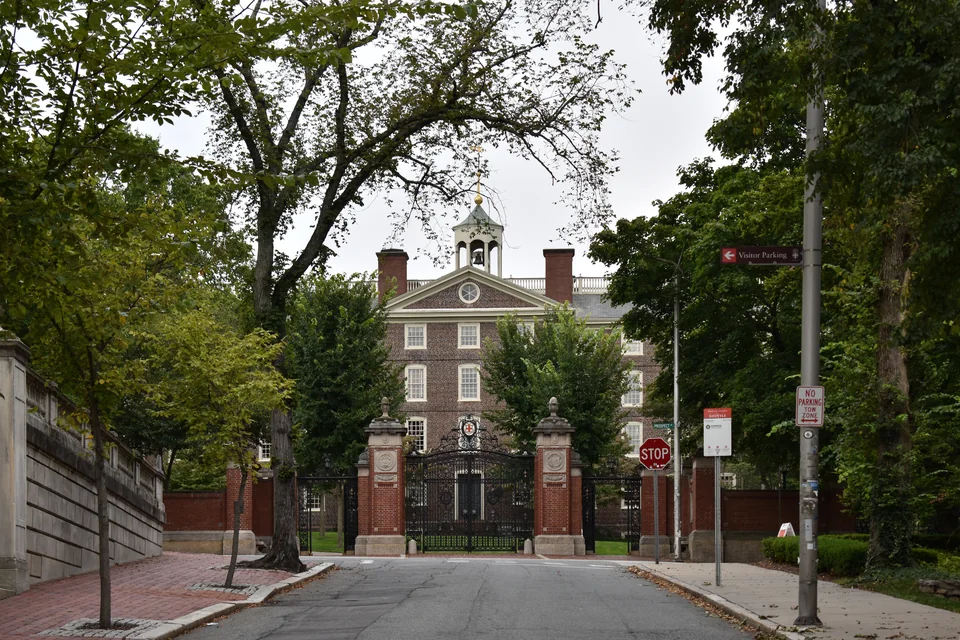
Do not confuse Brown University with Boston University: some directories, including Russian-language ones, abbreviate Brown as "BU", the usual short name of Boston University. Boston University is a separate private university in Boston, and we have a separate profile for it.
| At a glance | Details |
|---|---|
| Location | Providence, Rhode Island |
| Type | private, Ivy League |
| Class of 2030 | 47,944 applicants, 2,688 admitted (5.6%), 1,742 enrolled |
| International students | about 14–15% of the student body |
| Autumn 2027 deadlines | Common App: ED November 1, 2026; RD January 5, 2027; $80 fee |
| Decisions | ED by mid-December; RD by early April |
| SAT/ACT | required since the 2024–25 cycle |
| English | expected minimums: TOEFL iBT 105 or 5.5 on the new scale, IELTS 8.0, Duolingo 130 |
| 2026–27 cost of attendance | $99,994 before health insurance |
| Aid for international students | need-blind first-year admission, 100% of demonstrated need met |
| Rankings | THE 2027: 73; ARWU 2026: 101–150 |
Is Brown a good fit?
| Strengths | Limitations |
|---|---|
| The Open Curriculum: no general core requirements | You design your own program, working with advisers |
| Need-blind admission for international first-year students and no-loan aid | Admit rate around 5–6%, with high SAT and English expectations |
| Any course can be taken satisfactory/no credit | No English as a Second Language courses for undergraduates and no provisional admission |
| Small classes and a 6:1 student-to-faculty ratio | Providence is a small city; the nearest large internship markets are Boston and New York |
| PLME (combined undergraduate and medical education) and the Brown–RISD Dual Degree are open to international applicants | Aid is based on demonstrated need; Brown's admission pages list no academic merit scholarships |
Brown suits a strong applicant who wants to shape an interdisciplinary education and is ready for intense competition. For a family with modest income, it can end up more affordable than a public university that gives international students nothing. Our guide to Ivy League admissions explains how the group works; among our profiles you will also find Cornell and the University of Pennsylvania.
The Open Curriculum
To graduate from Brown, you complete at least 30 courses, fulfil the requirements of at least one concentration (Brown's word for a major), demonstrate writing competence and enrol for the equivalent of eight full-time semesters. There are no general education requirements.
Three features make this freedom workable:
- Satisfactory/no credit. Any course, except those an instructor designates as mandatory S/NC, can be taken for a grade or for S/NC.
- No grade point averages. Brown does not calculate GPAs or class rankings internally, and students can request narrative course performance reports from instructors.
- Concentrations rather than majors. There are nearly 80, and you can design an independent concentration or take independent study for credit.
The flip side is responsibility. Brown says the Open Curriculum works together with its advising system, and it is up to you to seek advice. A student used to a fixed curriculum can spend the first year drifting between unrelated courses.
How to apply
There is no separate application for international students: everyone uses the Common App with Brown's member section, under the same requirements, standards and deadlines.
Application file
- Common App and the $80 fee. Brown has widened automatic fee waivers, but most criteria relate to US low-income programs.
- Four Brown essays for the 2026–27 cycle: how you will approach the Open Curriculum (150–250 words); how an aspect of your upbringing has shaped you and what you will contribute (150–250); what class you would teach (100–150); and something that brings you joy (100–150). PLME and Brown–RISD applicants write additional essays.
- Secondary School Report form for students at schools outside the US, plus the school report, transcript and teacher recommendations through the Common App.
- Documents in English or official translations together with the originals. A teacher may write in their own language if a school official sends an English translation.
- SAT or ACT and an English test result.
If the application and fee are submitted by the deadline, supporting materials such as transcripts and recommendations may arrive within the following week.
SAT and ACT
Since the 2024–25 cycle, Brown has again required the SAT or ACT from all first-year applicants. There is no minimum score, and results are read in the context of your school and access to testing. Brown superscores both tests. For ED, testing must be completed by the last October test date; for RD, by the last December date. If you could not test, explain the circumstances in the Additional Information section and submit other results, such as predicted international exam grades. The middle 50% of admitted students in the Class of 2030 scored 1470–1550 on the SAT and 34–36 on the ACT. Our SAT or ACT comparison helps you choose.
English requirements
Brown strongly recommends an English test for applicants whose first language, home language or language of secondary instruction is not English. Expected minimums:
| Test | Brown minimum |
|---|---|
| TOEFL iBT taken before January 2026 | 105 |
| TOEFL iBT taken from January 2026 | 5.5 |
| IELTS | 8.0 |
| Duolingo English Test | 130 |
| PTE | 75 |
| Cambridge C1 Advanced or C2 Proficiency | 191 |
An English test does not replace the SAT, and vice versa. Brown offers no ESL courses for undergraduates and no provisional admission: you need to follow rapid classroom English before you enrol. Our Duolingo English Test guide covers one of the accepted tests.
Autumn 2027 timeline
| Step | Early Decision | Regular Decision |
|---|---|---|
| Common App deadline | November 1, 2026, 11:59 p.m. your local time | January 5, 2027 |
| Last SAT/ACT sitting | October | December |
| CSS Profile for financial aid | November 2, 2026 | February 1, 2027 |
| Decision | by mid-December 2026 | by early April 2027 |
Early Decision is binding. While your ED application is pending, you may not apply to another institution under early decision, single-choice early action or restrictive early action. If admitted, you withdraw all other applications, including regular and open early action ones. Brown states that ED does not improve your chances: the Board of Admission makes the same decisions it would make in Regular Decision. There are three outcomes, admission, deferral to Regular Decision or denial, and a student denied in ED cannot reapply in Regular Decision the same year.
Cost for 2026–27
| Item | Amount |
|---|---|
| Tuition | $74,568 |
| Fees (including a $100 academic record fee for new students) | $3,084 |
| Housing | $10,710 |
| Food | $8,754 |
| Personal expenses | $2,878 |
| Total | $99,994 |
Health insurance is not included: it is mandatory, and if you do not waive the university plan with your own policy, the charge is added. Students on university scholarship receive books and required course materials through the Book/Course Materials Support program; others should budget $1,300. Flights, clothing for the New England climate and a computer are extra. The 2025–26 total was $97,284. Our guide to the cost of studying in the USA helps you build the full budget.
Financial aid for international students
Starting with the Class of 2029, admitted in the 2024–25 cycle, Brown reviews international first-year applicants on a need-blind basis, so asking for aid does not affect the admission decision. Brown meets the full demonstrated need of every admitted student who applies for aid, with scholarships that do not have to be repaid; loans are not packaged. For most families earning under $60,000 a year the parent contribution is zero, and for most families under $125,000 the minimum scholarship equals full tuition, $74,568. In the Class of 2030, 51% of students received need-based aid.
What to do:
- Indicate on your application that you are applying for financial aid.
- Complete the CSS Profile (Brown code 3189) by November 2, 2026 for ED or February 1, 2027 for RD. It opens on October 1, 2026; Brown does not provide CSS Profile fee waivers. Divorced or separated parents each complete one.
- Respond to IDOC if requested: 2025 parental tax returns or, where tax returns are not filed, an employer statement of annual earnings. Not every family receives a request.
Aid is not paid in cash but credited toward tuition, fees, housing and food; it covers books and some personal expenses but not vacations or summers. The policy applies to first-year applicants: Brown still considers financial need when admitting transfer students. A provisional aid decision arrives with the admission decision only if all financial documents are submitted on time.
Brown's Office of Financial Aid sets the award from your CSS Profile; the MyinTuition estimator gives an early indication. See also our overview of financial aid for international students in the USA. If part of the cost is paid from Russia, our guide to paying for studies abroad from Russia covers lawful routes.
Housing
The budget assumes a standard residence hall room ($10,710) and a full meal plan ($8,754). The aid office applies the same allowances whether a student lives on or off campus. For later years, see our guide to student housing in the USA.
F-1 visa
Brown issues the I-20 after admission and enrolment confirmation, counting university aid among your sources of funding. Then come the SEVIS fee ($350), the visa fee ($185) and the interview. The US Embassy in Moscow does not issue routine visas, so Russian citizens book interviews in Warsaw or Astana; Russians need no visa for Kazakhstan. Kazakh citizens interview in Astana or Almaty. F-1 applicants must make their social media profiles public. The immigrant-visa pause introduced in January 2026 never extended to nonimmigrant visas such as the F-1. The consulate decides on the visa. Our F-1 visa guide and the guide to working while studying and OPT cover the details.
Notes for applicants from Russia and Kazakhstan
- Eleven years of school. In its international FAQ, Brown says its first-year students will have completed 12 years of schooling. The site has no specific rule for an 11-year certificate; the committee reviews documents in the context of each education system. Our guide to US universities after 11 years of school covers the options.
- The SAT is mandatory. For students at ordinary schools, it takes the longest to prepare.
- IELTS 8.0. The expected minimum is higher than at most US universities.
- The aid application. If you need aid, submit the CSS Profile with your application so the provisional package arrives with your decision.
- Translations. Transcripts and recommendations in Russian or Kazakh need official translations alongside the originals.
Common mistakes
- Not applying for aid "to protect your chances". First-year admission is need-blind, so asking for aid does not affect the decision.
- Treating ED as a way to improve your odds. Brown makes the same decisions in ED as in RD.
- Missing the CSS Profile deadline. Without it, there is no provisional aid decision.
- Applying with IELTS 7.0. That is well below the expected minimum.
- Confusing Brown University with Boston University. They are different institutions.
Brown in the rankings
| Ranking | Position |
|---|---|
| THE World University Rankings 2027 | 73 |
| ARWU 2026 | 101–150 |
A smaller, undergraduate-focused university scores lower in research-volume rankings. For an undergraduate, other figures are more telling: 69% of classes have fewer than 20 students, and all faculty teach undergraduates.
FAQ
Where is Brown University?
In Providence, the capital of Rhode Island in the northeastern US. It is not Boston University, which is a separate institution in Boston.
Does Brown give financial aid to international students?
Yes. Since the 2025 entry year, Brown has admitted international first-year students need-blind and meets 100% of demonstrated need without loans. Brown's Office of Financial Aid sets the award from the CSS Profile.
How much does Brown cost?
The 2026–27 cost of attendance is $99,994, made up of $74,568 tuition plus fees, housing, food and personal expenses. Health insurance and flights are extra.
Does Brown require the SAT?
Yes. Since the 2024–25 cycle, Brown has required the SAT or ACT from all first-year applicants; it superscores and sets no minimum score.
What English score does Brown expect?
The expected minimums are TOEFL iBT 105 (or 5.5 for tests from January 2026), IELTS 8.0, Duolingo 130, PTE 75 or Cambridge 191. Brown offers no provisional admission and no ESL courses for undergraduates.
Can I apply Early Decision to Brown and elsewhere?
You may not apply under another early decision or restrictive early plan at the same time, and if admitted under ED you withdraw all other applications. Brown's admission office releases ED decisions by mid-December.
What is PLME?
The Program in Liberal Medical Education is an eight-year program combining undergraduate study and Brown's medical school. International first-year applicants are eligible; last year it drew 4,867 applicants and enrolled 50 students, with the admission office making the decisions.
Sources
- Brown Admission: First-year applicants
- Brown Admission: Early Decision
- Brown Admission: How to apply (2026–27 essays, fee, deadlines)
- Brown Admission: International applicants FAQ
- Brown Admission: Standardized tests
- Brown Admission: Admission by the numbers, Class of 2030
- Brown Admission: Financial aid information for applicants
- Brown Financial Aid: First-year international applicants
- Brown Financial Aid: Cost of attendance 2026–27
- Brown Financial Aid: Undergraduate financial aid
- The College at Brown: Open Curriculum
- U.S. Embassy & Consulates in Russia: Visas
- U.S. Embassy & Consulate in Kazakhstan: Visas
- ICE: I-901 SEVIS fee
- eCFR, 22 CFR 22.1: Schedule of consular fees
- THE World University Rankings 2027
- ShanghaiRanking ARWU 2026
All amounts are in US dollars as published by the university, so no currency conversion is needed; checked on October 1, 2026. More US universities are listed on our study in the USA page. If you want to work through your route, send a request: document preparation and submission are provided under an agreement with StudyU, and the university makes the admission decision.
During the free initial consultation, we clarify your goal, profile, timing, and budget and identify the next realistic step.
Next steps
- Arizona State University (ASU): Admission for International Students
- University of Southern California (USC): Admission for International Students
- Studying in the USA for international applicants
- Boston University
- Ivy League Admissions for International Students: The Eight Universities, Admit Rates, Costs and How to Apply for Fall 2027
- Cornell University
