
Boston University (BU) is a large private research university in Boston, Massachusetts, and a member of the Association of American Universities. It is 94th in the QS World University Rankings 2027, 86th in the THE World University Rankings 2027 and in the 101–150 band of ARWU 2026. International students make up 21% of the entering class, and their admit rate in fall 2025 was 16%. BU does not offer need-based aid to international students, but they can receive the Presidential Scholarship, worth half of tuition, if they apply by December 1. The 2026–27 cost of attendance is $98,419. For fall 2027 entry, Early Decision closes on November 2, 2026, and Early Decision 2 and Regular Decision on January 5, 2027. The SAT and ACT are optional through fall 2028 entry.
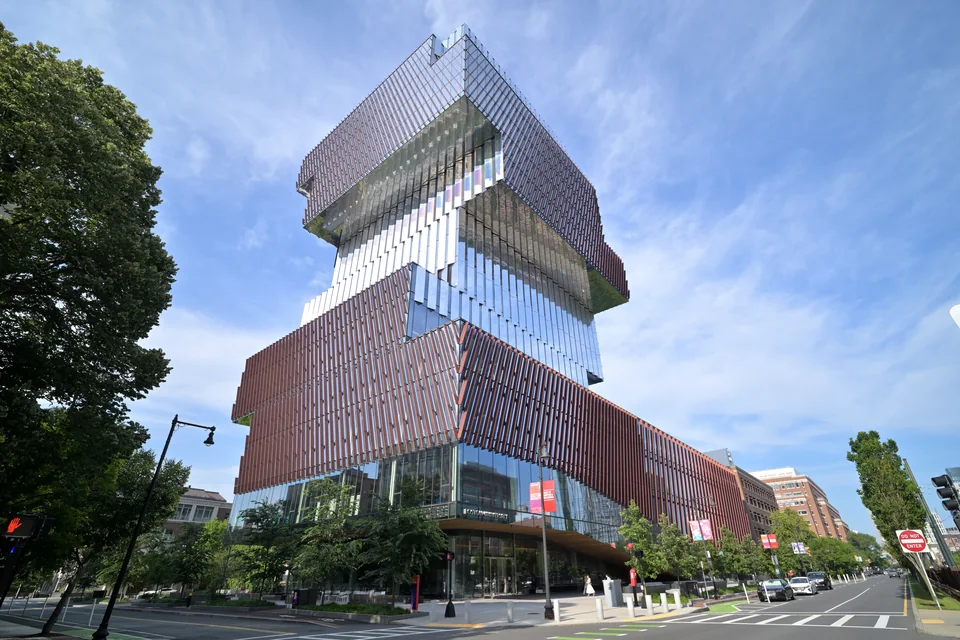
Do not confuse BU with other Boston universities: Boston College is a separate private university, and UMass Boston is a public university. Our guide to universities in Boston compares the city's options; this profile covers Boston University only.
| At a glance | Details |
|---|---|
| Location | Boston, Massachusetts |
| Students (fall 2025) | 36,977, including 18,289 undergraduates |
| International share | 21% of the Class of 2029 |
| Rankings | QS 2027: 94; THE 2027: 86; ARWU 2026: 101–150 |
| Undergraduate schools | ten schools and colleges; you choose one on the application |
| Application | Common App, $80 fee |
| Fall 2027 deadlines | ED: November 2, 2026; ED2 and Regular Decision: January 5, 2027; Presidential Scholarship: December 1, 2026 |
| SAT/ACT | optional through fall 2028 |
| English | required: IELTS 7 satisfies the requirement; TOEFL iBT 5.0+ on the new scale; Duolingo 125–135 |
| Cost of attendance 2026–27 | $98,419 including $73,024 tuition |
| Aid for international students | no need-based aid; Presidential Scholarship worth half of tuition |
| Admit rate (fall 2025) | 12.8% overall; 16.0% for international applicants |
Who Boston University suits
| In BU's favor | Things to weigh |
|---|---|
| International students are eligible for a half-tuition scholarship with no separate application | Need-based aid and the BU Promise are for US citizens and permanent residents only |
| The Common Data Set shows a higher admit rate for international applicants (16%) than overall (12.8%) | Early Decision is binding, and more than half the class enrolls through the early rounds |
| Test-optional, including for scholarships | You cannot change your testing choice after submitting |
| An urban campus in Boston with ten schools and colleges | The annual budget is close to $100,000, with no need-based aid for international students |
| The Kilachand Honors College, with its own essay | You may be offered the College of General Studies instead of the school you chose |
BU suits applicants who want a large university in a city full of other universities and who can fund most of the budget. If you need need-based aid, compare BU with universities that offer it to international students, such as Northwestern or Johns Hopkins. For a wider comparison with strong private universities in the region, see our Harvard profile.
Choosing a school within BU
Your application names one BU school or college. If you are undecided, BU suggests the College of Arts & Sciences as "Undeclared" or the College of General Studies. Note how selection works: you are considered for the school you chose, but you may instead be offered a place in the College of General Studies or another program you qualify for. The College of Fine Arts is the exception; applicants there are considered only for the program they applied to.
Subject expectations depend on the school. For most programs BU recommends three to four years of mathematics (ideally precalculus or calculus), laboratory science and history or social science. The College of Engineering requires a year of calculus, and the Questrom School of Business requires either a year of calculus or a year of precalculus plus AP Statistics. Russian schools cover introductory calculus in the last two years, which usually meets the expectation, but your transcript needs to show it.
If you indicate interest in the Kilachand Honors College and write its extra essay, BU first decides on admission to your chosen school and then considers you for Kilachand.
What the application includes
Core materials
- Common App and the $80 fee; waivers follow Common App guidelines.
- Two essays: the Common App personal statement and the BU supplemental essay.
- School Report and counselor recommendation, submitted by your school.
- Teacher Evaluation through the Common App.
- Transcripts sent by a school official; for international curricula with national exams, official results as BU specifies.
- Grades: first marking-period grades as soon as available for Early Decision; first-period and first-semester grades for Regular Decision.
- English test results.
- A PDF copy of your passport photo page.
Financial documents come with the application
Students who will study on an F-1 or J-1 visa must complete the Confidential Statement for Financing Studies & Sponsorship Support Confirmation and attach proof of funds, such as bank statements or a signed bank letter. Documents must be dated within 12 months of your start date, funds must be liquid (stocks and other non-liquid assets do not count), and the account holder must match the sponsor who signs the form. For Early Decision and ED2 this is strict: the admission board will not begin an academic review until your financial documents arrive by the application deadline.
Testing is optional
BU is test-optional for first-year applicants through fall 2028 and spring 2029 entry, for every school and scholarship program. You indicate on the application whether your scores should be considered, and you cannot change that answer after submitting. If you do submit scores, BU superscores both the SAT and the ACT, recalculating an ACT composite from your best sections. In fall 2025, 44% of applicants and 45% of enrolled students submitted scores; the middle SAT range of enrolled students was 1420–1510 and ACT 33–34. See our SAT or ACT guide.
English proficiency
| Test | BU guidance |
|---|---|
| IELTS Academic | 7.0 or higher satisfies the requirement for all programs |
| TOEFL iBT from January 21, 2026 | most competitive applicants score 5.0 or higher overall |
| TOEFL iBT, previous scale | most competitive applicants score 90–100 with at least 20 per section |
| Duolingo English Test | most competitive applicants score 125–135; total and all subscores required |
BU does not accept IELTS Indicator, TOEFL ITP Plus, TOEFL Essentials or IELTS One Skill Retake. An InitialView or Vericant interview is recommended as extra evidence of English but does not replace a test. English waiver requests must arrive by the application deadline, and the admission board decides on them.
Fall 2027 deadlines
| Early Decision | Early Decision 2 | Regular Decision | |
|---|---|---|---|
| Application | November 2, 2026 | January 5, 2027 | January 5, 2027 |
| Financial documents for the visa | by the application deadline (required) | by the application deadline (required) | recommended with the application |
| Decision | December 15, 2026 | February 9, 2027 | March 28, 2027 |
| Enrollment deposit | early to mid-January | late February | May 1 |
Two more dates matter: December 1 is the last day to apply and still be considered for the Presidential Scholarship, and it is also the prescreen deadline for Theatre and several Music programs. If you are applying Regular Decision and want the scholarship, submit by December 1 rather than January 5. ED and ED2 are binding: if admitted, you enroll at BU and withdraw other applications. In fall 2025, BU admitted 2,165 of 6,907 Early Decision applicants (about 31%), and 59% of the entering class came through the early rounds.
How to spread the work:
- Summer to early fall of senior year: English test; decide whether to submit SAT or ACT scores; choose your school within BU.
- October: Common App and BU essays, recommendations, financial documents and passport copy.
- By November 2 for ED, or by December 1 for Regular Decision with scholarship consideration.
- By January 5: ED2 or Regular Decision without scholarship consideration.
- After your decision: deposit, Form I-20 and the F-1 visa.
Fall 2025 admission data
The Class of 2029 drew 76,776 applications. According to the Common Data Set 2025–26, BU admitted 9,853 (12.8%) and enrolled 3,449. International applicants submitted 15,794 applications, received 2,521 admissions (16.0%) and 714 enrolled. The class includes students from 69 countries, and 86% ranked in the top 10% of their high school class. These figures describe the applicant pool, not any individual's chances.
Cost of attendance
| Item, 2026–27 | Amount |
|---|---|
| Tuition | $73,024 |
| Housing (varies by type) | $13,170 |
| Food (most dining plans) | $7,570 |
| Fees | $1,570 |
| Total billed | $95,334 |
| Books and supplies | $1,000 |
| Personal expenses | $1,455 |
| Local transportation | $630 |
| Total cost of attendance | $98,419 |
Massachusetts law requires health insurance. Students without a qualifying plan must buy the university plan, which is billed with first-semester charges. Flights and visa costs are extra. Our guide to the cost of studying in the USA helps you compare budgets.
Scholarships and aid for international students
Need-based aid. BU meets full demonstrated need without loans only for US citizens and permanent residents through the BU Promise. For international students it states plainly that need-based aid is not currently available.
Presidential Scholarship. This is the main opportunity for international applicants. From fall 2026 entry it is worth half of tuition each year, international students are eligible, and the only requirement for consideration is to apply for admission by December 1. There is no separate application. BU makes the decision, and awards are limited.
Scale. According to the Common Data Set 2025–26, 231 international undergraduates received merit aid, averaging $56,639 a year. The scholarship is real, but not everyone gets it, so plan a budget without it too.
If you cannot manage without need-based aid, add universities that offer it to international students; our guide to financial aid for international students in the USA explains how to find them. Families paying from Russia should read our guide on how to pay for studies abroad from Russia, which covers legal routes only.
Graduate study
Graduate admissions are handled by individual BU schools and colleges, each with its own requirements and fees. If you are considering business school later, our MBA in the USA guide explains the route.
Housing, visa and work
BU's budget allows $13,170 for housing and $7,570 for food per year; your actual cost depends on your room type and dining plan. For renting later, see our guide to student housing in the USA.
The financial documents you submit with your application also matter for the visa, and BU advises keeping copies for the consulate and US border officers. After admission BU issues Form I-20. Next come the SEVIS fee ($350) and the visa application fee ($185); these amounts are as of September 30, 2026, so confirm them on the embassy site before paying. The US Embassy in Moscow does not issue routine visas, so Russian citizens interview in Warsaw or Astana and must set their social media profiles to public first. The consulate decides whether to issue the visa. Our F-1 visa guide explains the process, and our guide to working while studying and OPT covers employment rules.
Key points for applicants from Russia and Kazakhstan
- Apply by December 1 if you are counting on the Presidential Scholarship; it is the only large award open to international students.
- Prepare financial documents early. Early Decision applications will not be reviewed without them, and statements must be recent and show liquid funds.
- Check the maths on your transcript. Engineering and business require calculus or its equivalent, so make sure it is visible.
- Pick the right English test. IELTS Indicator and TOEFL Essentials are not accepted.
- Keep the names straight. BU is not Boston College or UMass Boston, on forms, in emails or on payments.
School selection within BU, scholarship strategy, essay work and financial and visa documents are provided under an agreement with StudyU. Boston University decides on admission and scholarships, and the US consulate decides on the visa.
Common mistakes
- Applying on January 5 and expecting a scholarship. The Presidential Scholarship deadline is December 1.
- Leaving out financial documents in ED. Your application will not be reviewed.
- Sending IELTS Indicator or a One Skill Retake result. BU does not accept them.
- Changing your testing choice after submitting. The answer on the application is final.
- Counting on need-based aid. It is not available to international students, and the BU Promise does not apply.
- Being surprised by a College of General Studies offer. It is standard BU practice, so plan for it.
Rankings
| Ranking | Position |
|---|---|
| QS World University Rankings 2027 | 94 |
| THE World University Rankings 2027 | 86 |
| ARWU 2026 | 101–150 |
BU's positions in the three tables are close to one another, but subject rankings are a better guide to specific programs.
FAQ
Where is Boston University located?
In Boston, Massachusetts. It is a separate private university, not Boston College and not the public UMass Boston.
How much does Boston University cost per year?
The 2026–27 cost of attendance is $98,419: tuition $73,024, housing $13,170, food $7,570, fees $1,570 and other expenses. Health insurance is required by state law unless you have a qualifying plan.
Does Boston University give scholarships to international students?
Need-based aid is not available to international students, but they can receive the Presidential Scholarship, worth half of tuition. To be considered, apply for admission by December 1.
Is the SAT required at Boston University?
No. BU is test-optional through fall 2028 entry, including for scholarships. You decide on the application whether scores are considered, and that choice cannot be changed later.
What English test score does BU require?
IELTS 7.0 satisfies the requirement for all programs. For TOEFL iBT, competitive applicants score 5.0+ on the new scale, and for Duolingo 125–135 with all subscores reported.
When should I apply to Boston University?
For fall 2027 entry, apply Early Decision by November 2, 2026, and ED2 or Regular Decision by January 5, 2027. To be considered for the Presidential Scholarship, submit your application by December 1.
What is the College of General Studies?
It is a BU college where the university may offer you a place if you are not admitted to the school you chose. This substitution does not apply to College of Fine Arts applicants.
Sources
- BU Admissions: Important Deadlines
- BU Admissions: First-Year Applicants
- BU Admissions: International Applicants
- BU Admissions: Cost of Attendance 2026/2027
- BU Admissions: Scholarships & Financial Aid
- BU Admissions: Merit Scholarship for First-Year Students
- BU Admissions: Financial Aid (BU Promise)
- BU Admissions: Class Profile
- BU Admissions: Facts and Rankings
- BU Common Data Set 2025–2026
- US Embassy in Russia: Visas
- ICE: I-901 SEVIS Fee
- US Department of State: Visa Fees
- QS World University Rankings 2027
- THE World University Rankings 2027
- ShanghaiRanking ARWU 2026
Amounts are in US dollars as published by BU; checked on September 30, 2026. Other US universities are covered on our study in the USA page. If you are deciding between a December 1 application for the scholarship and an early round, send us a request.
During the free initial consultation, we clarify your goal, profile, timing, and budget and identify the next realistic step.
