
A master's at an Austrian public university usually takes 4 semesters (120 ECTS) and costs a non-EU student $850 (€752.92) per semester including the students' union fee — about $3,420 for the whole programme at 2026/27 rates. The key requirement is a related bachelor's of at least 180 ECTS: the university compares its content with its own curriculum and may admit you on condition that you pass extra courses. German is not always needed: the University of Vienna alone runs 38 master's programmes entirely in English, and TU Wien runs 26.
This guide explains how your degree is assessed, where to find English-taught programmes, when to apply for 2027/28, what a master's costs across different institutions, and how a regular master's differs from a fee-based continuing-education "Master". More country guides are collected on our Study in Austria page.
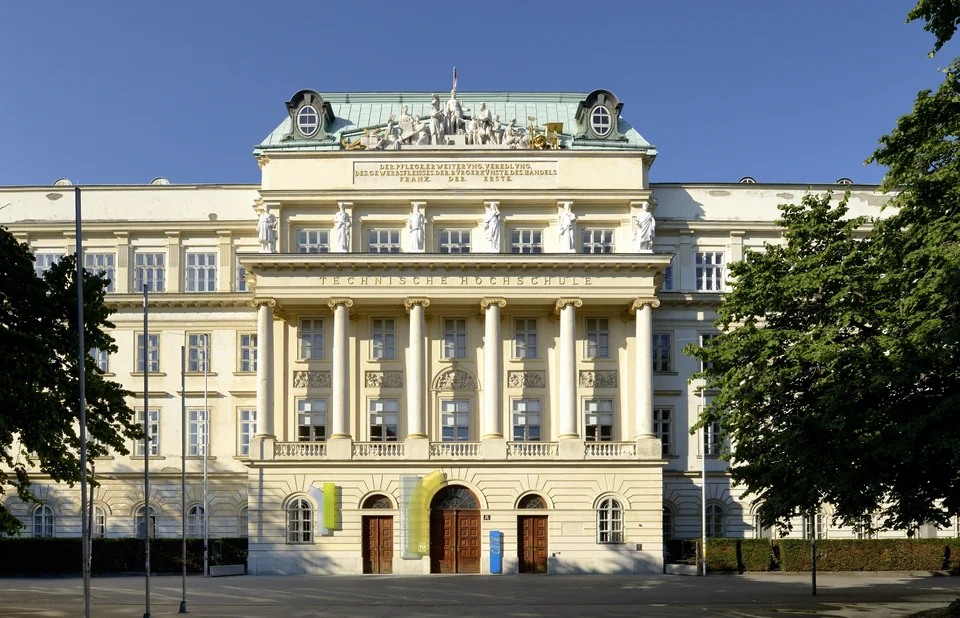
Key facts (checked 30 September 2026)
| Question | Answer |
|---|---|
| Length | 4 semesters and 120 ECTS for most university programmes |
| Degree | MA, MSc; technical universities often award Dipl.-Ing. (at TU Wien internationally comparable with an MSc) |
| Public university fee | $830 (€726.72) per semester + ÖH fee of $30 (€26.20) in 2026/27, the same for every subject |
| Degree requirement | Related bachelor's of 180+ ECTS; gaps are closed with supplementary exams |
| Language | German C1 for German-taught programmes; English B2 or C1 for English-taught ones |
| Non-EU application | At the University of Vienna the winter 2026/27 window ran from 22 June to 3 August; programmes with selection take applications once a year in spring |
| Work | Up to 20 hours a week with a permit the employer obtains |
| After graduation | 12 months to look for work, then a Red-White-Red Card without a labour market test |
How Austrian universities assess your bachelor's
You do not need a separate state recognition of your degree to apply; the university itself evaluates it. TU Wien spells out a logic that most universities share:
- your previous studies must comprise at least 180 ECTS;
- if they largely correspond to the relevant TU Wien bachelor's, you are admitted without conditions;
- if gaps are identified, you are admitted on condition that you complete specific bachelor's courses during the master's;
- if the gaps exceed 30 ECTS, admission is not possible.
For a four-year bachelor's (typically 240 ECTS) the formal threshold is not an issue; content is. The admissions office looks at course titles, contact hours, ECTS and grades in your transcript or diploma supplement. If you are switching fields — from economics to data science, say — compare your transcript with the curriculum of the university's own bachelor's programme, which each university publishes. It shows exactly which subjects you are missing.
Graduates holding a five-year specialist diploma or a master's from their home country can also apply, for example to change field; the university assesses the document by the same rules.
Where to study in English
| University | Master's taught entirely in English | Examples |
|---|---|---|
| University of Vienna | 38 | Data Science, Business Analytics, Banking and Finance, Neuroscience, Computer Science, Applied Economics |
| TU Wien | 26 (including two double-degree programmes) | Data Science, Logic and Artificial Intelligence, Software Engineering, Biomedical Engineering |
| TU Graz | 23 (several jointly with the University of Graz as NAWI Graz) | Computer Science, Data Science, Biomedical Engineering, Advanced Materials Science |
| WU Vienna | 9 | Quantitative Finance, Marketing, Economics, International Management / CEMS, Supply Chain Management |
| University of Klagenfurt | 11 | Artificial Intelligence and Cybersecurity, International Management, Game Studies and Engineering |
The University of Vienna's English-taught programmes usually require B2 — IELTS Academic 6.5 or TOEFL iBT 94, no older than three years at the time of application — and C1 for the English studies programmes. For universities of applied sciences and private universities, see our guide to English-taught degrees in Austria.
German-taught master's programmes require C1. Without it, TU Wien may admit you on condition of a supplementary German exam taken at the VWU preparatory programme; until you pass it you are a non-degree student and pay course fees. See our guide to the Vorstudienlehrgang.
When to apply for 2027/28
Most master's programmes start in October; many university programmes also admit for March. Non-EU application windows close earlier than the statutory 5 September and 5 February, so rely on your programme's own page.
| University and programme | Application window | Note |
|---|---|---|
| University of Vienna, programmes without selection | Winter 2026/27 was 22 June–3 August 2026; summer 2027 is 16 November 2026–7 January 2027 | Winter 2027/28 dates are set by a separate decision; plan around early summer |
| University of Vienna, programmes with selection | Once per academic year; for 2026/27, 2 March–7 April 2026 | No second chance in the same year |
| WU Vienna, 9 English-taught master's | 1 September 2026–8 March 2027 for winter 2027/28 | International Management / CEMS closes on 8 January 2027 |
| TU Wien | For non-EU applicants, complete applications recommended 16 January–15 July (winter) and 16 July–15 January (summer) | Processing takes 10–12 weeks; Building Sciences and Environment, Digital Civil Engineering Science and Green Chemistry have a selection procedure |
| Universities of applied sciences | Often spring; at FH Technikum Wien the 2027/28 deadline is 31 March 2027 for degrees obtained outside the EU | Competitive, limited places |
Apply for the "Residence Permit – Student" as soon as you are admitted: the first application is made in person at the competent Austrian embassy or consulate, not through an external service provider. See our guide to the student visa and residence permit in Austria.
Documents to prepare
Requirements differ by programme, but the core set is similar. TU Wien asks holders of a foreign bachelor's for:
| Document | How to prepare it |
|---|---|
| Bachelor's certificate or confirmation of completion | Legalised copy (an apostille for Russia and Kazakhstan) plus an official translation |
| Diploma supplement or transcript with subjects, hours and ECTS | Same: legalisation first, then a translation attached to the original |
| English B2 certificate | For English-taught programmes |
| German A2 and/or C1 certificate | For German-taught programmes |
| Portfolio | For architecture |
Programmes with selection often add a motivation letter, CV and references; the programme page lists them. Have documents translated only after the apostille, otherwise the translation must be redone. TU Wien warns that express-courier shipments from outside the EU may be refused because of customs charges, and that missing documents after the set deadline lead to rejection.
What a master's costs
Tuition only, 2026/27 rates, without living costs.
| Option | Semesters | Tuition for the full programme |
|---|---|---|
| Public university | 4 | $3,420 (€3,011.68), ÖH fee included |
| FH Technikum Wien master's, third-country nationals | 4 | $13,630 (€12,000) + ÖH fee |
| Modul University Vienna, MSc | 4 | $31,790 (€28,000) or $36,340 (€32,000) depending on the programme |
| Modul University Vienna, MBA | 3 | $37,470 (€33,000) |
For the residence permit in 2026 you must show $820 (€722.58) per month if you are under 24 and $1,490 (€1,308.39) from age 24 — $17,830 (€15,700.68) for a year at the higher rate, and more if your rent exceeds $440 (€386.43) a month. Private universities revise their rates: Modul University Vienna indexes them every January and June. See the full breakdown in cost of studying in Austria and payment options in how to pay for studies abroad from Russia.
There is no tuition-free master's for citizens of Russia or Kazakhstan at public universities: fee waivers apply to citizens of a closed list of least-developed countries, and neither country, nor any other CIS state, is on it. The Erhard Busek scholarship used to fund complete two-year master's programmes, but OeAD says no further call is planned after the 2025/26 round; its country list included Kyrgyzstan and Uzbekistan but not Russia or Kazakhstan. Other options are covered in scholarships in Austria.
Regular master's vs. fee-based continuing-education "Master"
Besides regular degree programmes (Masterstudium), universities run fee-based continuing-education programmes — Universitätslehrgang, Executive MBA, LL.M. for professionals. The rules differ:
| Regular master's | Continuing-education programme | |
|---|---|---|
| Target group | Graduates of a related bachelor's | Professionals with work experience |
| Format | Full-time, on campus | Often part-time and modular; WU Executive Academy's LL.M. programmes, for example, run 12–16 months |
| Fee | Set by law, $830 per semester in 2026/27 | Set by the programme as a separate paid product |
| Status | Degree student | Non-degree student (außerordentlich) |
| Student residence permit | Qualifies | According to OeAD, only if the programme has at least 40 ECTS and is not purely a language course |
If moving to Austria and working there afterwards is the goal, a regular master's is the safer route: it costs less and gives you full student status. For the graduate Red-White-Red Card, the immigration authority lists a completed bachelor's, master's, second-stage diploma or doctoral programme.
Studying, working and what comes next
The standard duration is four semesters, but you set your own pace. To renew the residence permit you must show 16 ECTS or 8 semester hours every academic year. Part-time jobs of up to 20 hours a week are allowed; your employer requests the permit from the AMS employment service, and no labour market test applies. See working while studying in Austria.
Once you graduate, the student permit can be renewed for a final twelve months dedicated to job hunting or founding a business. A job offer matching your qualification and paying at least the usual salary for Austrian graduates qualifies you for a Red-White-Red Card with no points system and no labour market test. A master's also qualifies you to apply for doctoral studies.
Common mistakes
- Applying to the University of Vienna in late August because of the 5 September deadline, when the non-EU window closed on 3 August.
- Missing the spring window for programmes with selection and losing a year.
- Assuming WU is the only English-taught option in Vienna, when the University of Vienna, TU Wien and TU Graz offer more.
- Not comparing your transcript with the university's bachelor's curriculum and being rejected for a gap above 30 ECTS.
- Choosing a fee-based executive master's and expecting the same status and price as a regular master's.
- Sending documents to TU Wien in August: 10–12 weeks of processing leaves no time for a residence permit by October.
- Budgeting around a scholarship that funds a research stay, not master's studies.
FAQ
Yes. A four-year bachelor's exceeds the 180 ECTS minimum, and the university assesses how closely its content matches the programme. Small gaps lead to admission with supplementary exams; at TU Wien, gaps above 30 ECTS rule admission out.
No. Citizens of both countries pay $830 (€726.72) per semester plus the ÖH fee at public universities (2026/27 rate). Fee waivers apply only to citizens of a closed list of countries that does not include them, and the Erhard Busek full-master's scholarship has no new call planned and did not list them.
Not for English-taught programmes, which ask for English at B2 or C1. German-taught programmes require C1; some universities admit applicants without it on condition of a German exam taken at a preparatory programme. German remains useful for daily life and jobs.
It depends on the university. Non-EU applicants to the University of Vienna had until 3 August for winter 2026/27, and programmes with selection took applications from 2 March to 7 April. WU accepts applications for 2027/28 until 8 March 2027, and TU Wien recommends sending a complete application by 15 July.
About $3,420 for four semesters at a public university including the ÖH fee, at 2026/27 rates. At FH Technikum Wien a third-country master's student pays $3,410 (€3,000) a semester; Modul University Vienna's MSc programmes cost $7,950–9,080 (€7,000–8,000) a semester at 2026 rates. For the residence permit you must also show at least $820 a month.
Yes, if the gap between your degree and the university's related bachelor's is small enough to close with extra courses. A major change of field rarely works. Compare your transcript with the bachelor's curriculum and look for programmes with broader entry requirements.
Programme selection matched to your degree, transcript checks against requirements, document preparation and support through the residence permit are provided under an agreement with StudyU. The university makes the admission decision and the Austrian immigration authority decides on the permit; neither outcome is something we can promise.
Sources
- University of Vienna: degree programmes in foreign languages, application periods, English language proficiency, tuition fee and exemptions — checked 30 September 2026
- TU Wien: admission with a foreign bachelor's degree, English-taught master's programmes, master's overview — checked 30 September 2026
- TU Graz: master's programmes overview — checked 30 September 2026
- WU Vienna: English-taught master's programmes and application periods — checked 30 September 2026
- University of Klagenfurt: English-taught bachelor's and master's programmes — checked 30 September 2026
- FH Technikum Wien: fees for third-country students, deadlines — checked 30 September 2026
- Modul University Vienna: fees per semester — checked 30 September 2026
- OeAD: Erhard Busek scholarship, Residence Permit – Student — checked 30 September 2026
- Austrian Embassy Moscow: residence permit applications — checked 30 September 2026
- Migration.gv.at: job search and Red-White-Red Card for graduates — checked 30 September 2026
- Dollar amounts are converted at the ECB reference rate published on 29 September 2026 (€1 = $1.1355)
Next steps
- Studying in Austria in English: Bachelor's and Master's Programmes, Language Requirements and Costs
- Scholarships in Austria for International Students: What Is Actually Available in 2026/27
- Studying in Austria for international applicants
- Vorstudienlehrgang (VWU): Austria's University Preparation Programme — Who Needs It, How to Enrol, What It Costs
- Austrian Student Visa and Residence Permit: Where to Apply, Proof of Funds, Timing and Renewal
- Cost of Studying in Austria in 2026/27: Tuition, the Preparation Year and Living Costs
