
Scholarships that pay for a whole bachelor's or master's in Austria barely exist — OeAD, the national agency that runs Austria's scholarship programmes, says so openly. For most international students the real saving is the low public-university fee of $830 (€726.72) per semester. The realistic funding routes are Erasmus Mundus joint master's degrees, open to every nationality; OeAD programmes for researchers and for specific countries; tuition reductions at private universities; and scholarships at universities of applied sciences. Some country-specific programmes exclude Russia and several CIS countries, so eligibility is the first thing to check.
This guide lists what is open for 2026/27, who each programme is for, what it pays and where to look for new calls. For the wider picture, start from our Study in Austria overview.
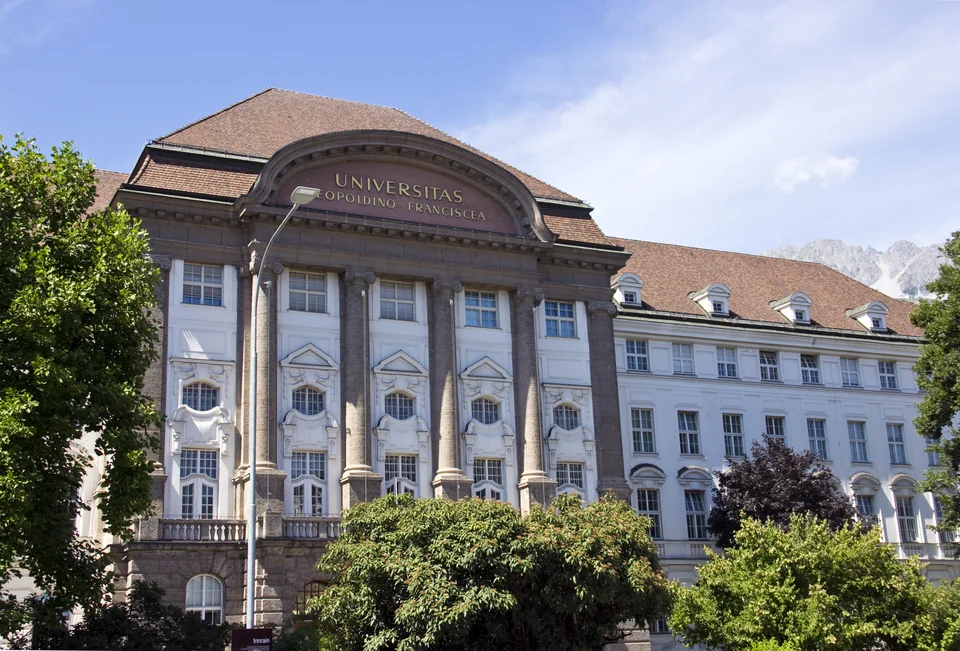
Main programmes at a glance
| Programme | Level | What it funds | Russia | Kazakhstan, Uzbekistan, Kyrgyzstan | Deadline |
|---|---|---|---|---|---|
| Erasmus Mundus Joint Master | Master's | Up to $1,590 (€1,400) a month for the whole programme for top applicants, no tuition fees | No nationality restriction | No nationality restriction | Set by each consortium |
| Ernst Mach Grant – worldwide | Doctoral candidates and postdocs based outside Austria | Research stay of 1–9 months | All countries of origin | All countries of origin | 1 December 2026 for 2027/28 |
| Ernst Mach Grant for universities of applied sciences | Bachelor's and master's students | Study period of 4–10 months at an FH | Non-European countries only — check the list | Check the country list | 1 February |
| Erhard Busek scholarship | Full two-year master's | $1,480 (€1,300) per month (2025/26 round) | Not on the list | Kyrgyzstan and Uzbekistan were eligible; no new call planned | Closed |
| CUAS TECH scholarship (Carinthia University of Applied Sciences) | Master's at an FH | $9,540 (€8,400) for the first year | Not on the list | Not on the list | 15 May 2027 |
| Private-university reductions (e.g. Modul University Vienna) | Bachelor's, master's, MBA | Up to 25% of tuition, up to 50% for the MBA; 20 anniversary awards of 40–80% for 2027/28 | No nationality condition stated | No nationality condition stated | On admission |
| University scholarships under the Student Support Act | All levels | Merit- or need-based payments | Only with status equal to Austrian citizens | Same | Per university call |
The table reflects the situation on 30 September 2026. Conditions change from call to call, so open the programme entry on grants.at or the university site before applying.
Why full-degree scholarships are so rare
OeAD states that it does not fund whole bachelor's, master's or PhD programmes and that "there are hardly any" such scholarships in Austria. The model explains it: the state keeps tuition for international students at $830 per semester (2026/27) and channels support through needs-based schemes for residents.
The main one, the state study grant (Studienbeihilfe), is open to third-country nationals only if they hold permanent residence rights (Daueraufenthalt), are family members of an EU citizen working in Austria or family members of an Austrian citizen, or are recognised refugees. A student on a "Residence Permit – Student" does not qualify.
In practice, fund your first year yourself. For the residence permit in 2026 you must show $820 (€722.58) per month if under 24 or $1,490 (€1,308.39) from age 24 anyway. See cost of studying in Austria.
OeAD programmes
Ernst Mach Grant – worldwide. For young researchers and university teachers studying or working outside Austria who want to carry out a research project at an Austrian institution. Target group: doctoral candidates and postdocs; duration 1–9 months; all countries of origin. Applications for 2027/28 close on 1 December 2026. It does not fund a master's degree.
Ernst Mach Grant for universities of applied sciences. Funds a study period of 4–10 months at an Austrian FH for bachelor's and master's students from non-European countries. Deadline: 1 February. It covers a semester or two while you remain enrolled at your home institution, not a full Austrian degree. The programme entry on grants.at lists eligible countries.
Erhard Busek scholarship. The only state programme that funded a complete two-year master's: $1,480 (€1,300) per month plus up to $1,360 (€1,200) for travel, with priority for STEM and English-taught programmes. Universities nominated candidates who already held unconditional admission. OeAD notes that the information refers to the 2025/26 round and no further call is currently planned. Eligible countries included Kyrgyzstan and Uzbekistan, but not Russia or Kazakhstan.
Scholarships of the Scholarship Foundation of the Republic of Austria for master's studies in international relations. Intended for descendants of forced labourers under the National Socialist regime and for nationals of countries that suffered particularly under it. Duration 9 months, deadline 1 April; OeAD administers it on the foundation's behalf.
Points that apply across OeAD programmes:
- the monthly rate covers living costs, and insurance and housing are paid from it; OeAD can arrange insurance and, on request, a place in a residence, which it puts at $250–620 (€220–550) per month plus a $20 (€18) monthly arrangement fee;
- once you have started studying in Austria, you can no longer apply for an OeAD scholarship;
- applications are reviewed by a selection committee; for Busek, universities pre-selected the candidates.
Erasmus Mundus and CEEPUS
Erasmus Mundus Joint Master. A single master's is delivered by several universities in different countries, and some of these partnerships include Austrian institutions. OeAD stresses that applicants of any nationality can apply for Erasmus Mundus scholarships. Under the European Commission's rules the scholarship is up to $1,590 (€1,400) a month for the length of the programme, holders pay no tuition fees, and every student completes study periods in at least two countries other than their country of residence. Russian institutions cannot join consortia, but the rules set no nationality limit for students. For citizens of Russia and Kazakhstan this is one of the few routes to a fully funded master's with part of the study in Austria. You apply to the consortium of the specific programme under its own rules and dates, and the consortium awards the scholarship.
CEEPUS. A Central European exchange network with monthly grants for students at institutions in member countries: Albania, Austria, Bosnia and Herzegovina, Bulgaria, Croatia, Czech Republic, Hungary, Kosovo, Moldova, Montenegro, North Macedonia, Poland, Romania, Serbia, Slovakia and Slovenia. Russia, Belarus and Central Asian countries are not members, so it is mainly relevant for students from Moldova and Serbia.
University scholarships: who can really get them
Many universities advertise merit-based and need-based scholarships. Most are paid under the Student Support Act (Studienförderungsgesetz), which requires status equal to Austrian citizens. At WU, for example, a third-country national must show a "Daueraufenthalt – EU" residence permit or at least five years of registered residence in Austria with a parent before enrolling. Students on a student residence permit are not eligible.
Tuition fee waivers are narrow too. The University of Vienna waives the fee entirely for citizens of a closed list of mostly least-developed countries in Africa and Asia; Russia, Kazakhstan and other CIS states are not on it. Students covered by the Personengruppenverordnung or holding a residence permit other than "Student" can apply for equal status with EU citizens.
Universities of applied sciences and private universities
CUAS TECH scholarship. A current example of a targeted programme: four scholarships of $9,540 (€8,400) for the first year of a master's ($790 (€700) per month), then, from the third semester, part-time work of up to 20 hours a week with partner companies or the university's research department where available, plus a free German course. Apply by 15 May 2027 for a start on 1 October 2027. Requirements: an excellent bachelor's, admission to one of the listed technical master's programmes, no residence in Austria and an eligible nationality. The list includes Moldova, Serbia, Turkey and Ukraine, but not Russia, Belarus or Kazakhstan. Scholarship holders still pay the tuition fee and ÖH contribution themselves.
Private universities. Reductions are awarded at admission based on academic record and interview. Modul University Vienna offers bachelor's students up to 25% off tuition and graduate students up to 25% on MSc programmes and up to 50% on the MBA; its published scale gives 5–15% for a grade average above 80–90% or a strong SAT/GMAT score. These reductions cannot be combined with other scholarships, except the small discounts for paying a year or the whole programme upfront. With a bachelor's semester at $10,220 (€9,000) at 2026 rates, even the maximum reduction leaves the degree far more expensive than a public university.
For 2027/28 Modul University Vienna has announced an anniversary scholarship: 20 new bachelor's or MSc students will receive 40%, 60% or 80% off tuition. The committee looks at financial need, academic record, motivation and extracurricular or professional engagement; applicants upload a three-minute video and a budget for studying and living in Vienna, and awards are made on a rolling basis.
To compare sectors by price and format, see our guides to bachelor's degrees in Austria and master's degrees in Austria.
If money runs out during your studies
Once every 12 months, an ÖH member in financial difficulty can ask the students' union social fund for a one-off payment — after a sudden rent increase, say, or unexpected study or childcare costs. It makes no regular payments. You must demonstrate need, not receive the full state grant, have passed 16 ECTS in the previous academic year (not required in the first semester), stay within twice the standard study duration, and study at an institution whose students' union cooperates with the fund. Processing currently takes around three months, so it is no safety net for your first semester.
Scholarships and the residence permit
OeAD lists a confirmation of a scholarship award as acceptable proof of funds for the "Residence Permit – Student". Together with your other funds, it must cover the required minimum for the permit period. A student permit also allows paid work of up to 20 hours a week once the employer has obtained a work permit. See student visa and residence permit in Austria.
How to search: step by step
- Twelve to fifteen months before your start date, open grants.at and filter by country of origin, level and field. Save each entry with its dates.
- Sort the results into three groups: funding for studies, research stays and exchanges. Only the first fits a full degree.
- For each programme, check nationality, whether admission is required before applying, and whether you may apply once already in Austria.
- Apply to universities in parallel: Busek required unconditional admission, CUAS requires admission to a listed programme.
- Keep a fallback budget without the scholarship; you need the money for the residence permit either way.
For other countries, see our overview of scholarships abroad in 2026.
Notes for applicants from Russia
- Several targeted programmes do not list Russia: Busek did not, and the CUAS TECH scholarship does not. Always start with the nationality condition.
- Erasmus Mundus and the Ernst Mach Grant – worldwide are open to all nationalities under their rules.
- Central European University (CEU) in Vienna offers its own scholarships; Russia has designated CEU an "undesirable organisation", which Russian citizens should take into account.
- WU Vienna points out that, under the EU's 20th sanctions package, its students may not receive funding from the Russian state during their studies. If you plan to rely on a Russian state support programme, check the rule at your university first.
- Scholarship payments and tuition are made by bank transfer; the legal payment routes are explained in our guide on paying for studies abroad from Russia.
Common mistakes
- Looking for a "full bachelor's scholarship in Austria": for CIS citizens such programmes practically do not exist.
- Applying for the Ernst Mach Grant – worldwide to fund a master's: it is a research stay for doctoral candidates and postdocs.
- Moving to Austria first and looking for an OeAD scholarship afterwards — you can no longer apply once your studies have started.
- Counting on a university merit scholarship while on a student permit without checking the status requirement.
- Missing the country list in the conditions and investing time in an application that cannot be accepted.
- Building your first-year budget around the ÖH social fund, which takes around three months to decide.
FAQ
Citizens of Russia, Kazakhstan and other CIS countries cannot: in 2026/27 they pay $830 (€726.72) per semester plus the ÖH fee at a public university. Full fee waivers apply to citizens of a closed list of least-developed countries, and according to OeAD, full-degree scholarships hardly exist.
By their conditions, Erasmus Mundus Joint Masters and the Ernst Mach Grant – worldwide for researchers, which have no nationality restriction, plus private-university reductions. Many targeted programmes, such as the CUAS TECH scholarship, do not include Russia in their country list.
The same general programmes apply: Erasmus Mundus, the Ernst Mach Grant – worldwide and private-university reductions. Kazakhstan was not on the Erhard Busek list and is not on the CUAS TECH list. For a study period at an FH, check the country list of the Ernst Mach Grant for universities of applied sciences.
A full one, practically not. Realistic options are a private-university reduction, such as up to 25% at Modul University Vienna, or an Ernst Mach study period at an Austrian FH while enrolled at home. The state study grant is not available to students on a student residence permit.
It depends on the programme. The Ernst Mach Grant – worldwide closes on 1 December, before many universities open admissions. Busek and CUAS required admission. OeAD's general rule is that you cannot apply once your studies in Austria have started, so plan your application early.
Yes. OeAD lists a scholarship award confirmation as acceptable proof of funds for the "Residence Permit – Student". Together with other funds it must cover the required minimum: in 2026, $820 (€722.58) per month under 24 and $1,490 (€1,308.39) from age 24.
Searching for suitable programmes, checking eligibility and preparing scholarship applications alongside university applications are provided under an agreement with StudyU. Scholarship decisions are made by the funder, OeAD or the university, and admission by the university; we do not promise the outcome.
Sources
- OeAD / Study in Austria: scholarships and funding — checked 30 September 2026
- OeAD: overview of grants and scholarships, programmes from A to Z (Ernst Mach, Scholarship Foundation of the Republic of Austria) — checked 30 September 2026
- Study in Austria: Ernst Mach Grant – worldwide, deadline 1 December 2026 — checked 30 September 2026
- OeAD: Erhard Busek scholarship — checked 30 September 2026
- Study in Austria: CUAS TECH scholarship — checked 30 September 2026
- CEEPUS: member countries — checked 30 September 2026
- Stipendium.at: Studienbeihilfe eligibility — checked 30 September 2026
- WU Vienna: merit-based and need-based scholarships — checked 30 September 2026
- University of Vienna: tuition fee and exemptions — checked 30 September 2026
- Modul University Vienna: tuition fees, undergraduate scholarship, graduate scholarship, 20th Anniversary Scholarship 2027/28 — checked 30 September 2026
- ÖH: social fund — checked 30 September 2026
- European Commission: Erasmus Mundus Joint Masters for students, programme guide — checked 30 September 2026
- OeAD: Residence Permit – Student — checked 30 September 2026
- Conversions to dollars use the ECB reference rate for 29 September 2026: €1 = $1.1355
Next steps
- Bachelor's Degree in Austria for International Students: Formats, Language, Full Cost and Timeline
- Master's Degree in Austria for International Students: Degree Requirements, English-Taught Programmes, Deadlines and Costs
- Studying in Austria for international applicants
- Cost of Studying in Austria in 2026/27: Tuition, the Preparation Year and Living Costs
- Austrian Student Visa and Residence Permit: Where to Apply, Proof of Funds, Timing and Renewal
- Scholarships abroad 2026: where international students study for free
