
A master's degree in Norway takes two years (120 ECTS credits), and most of the country's English-taught programmes are at this level. Applicants from outside the EU/EEA submit applications directly to each university in a window running from mid-October to 1 December of the preceding year. You need a relevant bachelor's degree with an average of at least a Norwegian C and English at IELTS 6.5 in each section. Tuition for 2026/27 runs from $5,220 to $30,810 (NOK 50,000–295,000) a year depending on the university and field, plus $17,790 (NOK 170,368) in living funds for the study permit. For Russian citizens it is the main realistic route, because UDI seldom issues them permits for lower-level study.
Below: deadlines and fees at leading universities, degree and language requirements, how selection works and what you can do after graduating. If Norway is still one option among several, begin with our study in Norway overview.
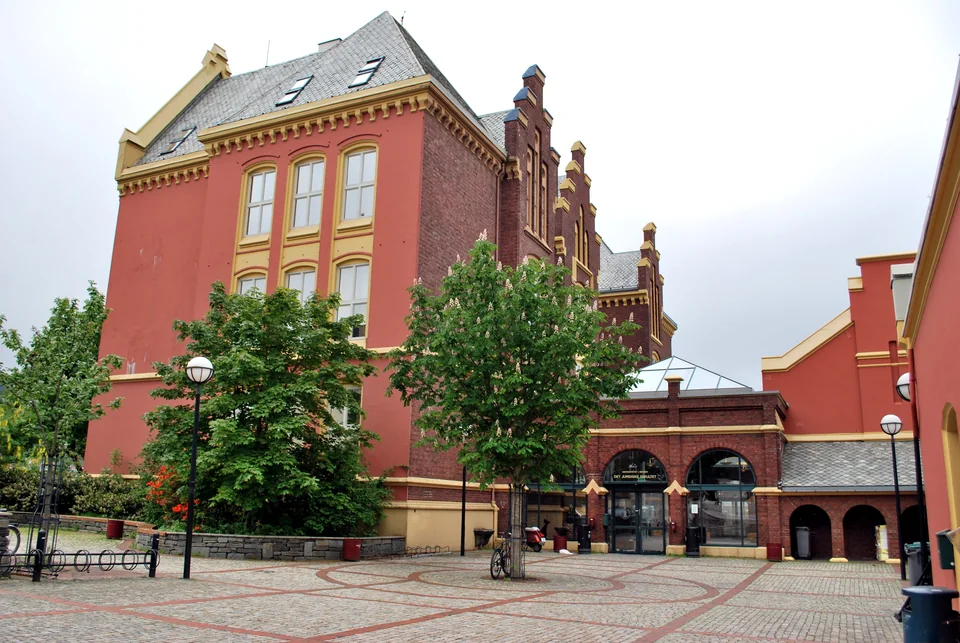
Why international students come to Norway for a master's
- Language. Public bachelor's programmes are mostly in Norwegian, while many master's programmes are in English. Finding an English-taught programme in engineering, IT, environmental science, economics or the social sciences is easiest at this level.
- The permit for Russian citizens. UDI's page for Russian nationals flags lower-level studies as a problem for the permit. Master's programmes are not affected by this restriction.
- Eligibility. For a bachelor's, a Russian school leaver needs an extra year of university, whereas a Russian four-year bachelor's degree (240 credits) usually meets the volume requirement for a master's — the question is subject fit and grades.
Deadlines and fees at leading universities
| University | Non-EU/EEA application window | Master's fee per year, 2026/27 | English |
|---|---|---|---|
| University of Oslo (UiO) | 15 October – 1 December, results by 5 April | $21,300 or $30,810 (NOK 204,000 or 295,000); 2027/28: $19,420 or $22,770 (NOK 186,000 or 218,000) | IELTS 6.5 in each section, TOEFL iBT 90, PTE 62; higher for English studies |
| NTNU, Trondheim | 1 November – 1 December, results around the end of February | $18,410 or $21,470 (NOK 176,300 or 205,600); some programmes from $2,760 (NOK 26,445) | IELTS 6.5 in each section, TOEFL iBT 90, PTE 62 |
| University of Bergen (UiB) | 1 November – 1 December, results in mid-April | $20,570 or $23,600 (NOK 197,000 or 226,000) | at least IELTS 6.5 in every module, TOEFL iBT 90, PTE 62; One Skill Retake not accepted |
| UiT, Tromsø | 15 October – 15 November 2026 (autumn 2027 intake), results by end of February | fees reduced from 2026/27; rate set per programme | IELTS Academic 6.5; IELTS Online not accepted |
| OsloMet | 15 October – 1 November | $7,000–9,920 (NOK 67,000–95,000) | per programme |
| Nord University | 1 November – 1 December | $6,270 or $8,880 (NOK 60,000 or 85,000) | per programme |
English-taught master's programmes are also offered by NMBU at $15,660 (NOK 150,000) a year, the University of Stavanger and USN at $5,220–9,400 (NOK 50,000–90,000), NHH at $21,300 (NOK 204,000), and the private BI Norwegian Business School. For institutional profiles, see the University of Oslo, NTNU and the University of Bergen.
Degree requirements
Subject background. Each programme requires a specific set of subjects in your degree. For economics at UiO, that means 90 credits in economics, including 60 in mathematics, statistics, microeconomics and macroeconomics, plus a GRE score (at least 152 in Quantitative Reasoning) or a GMAT result. NTNU's technical programmes look at mathematics, physics and core engineering courses. If you are changing field, compare the course list with the programme requirements before applying.
Grades. UiO and NTNU set a minimum average of a Norwegian C, which UiO compares to an American B or a British upper second. The threshold only makes you eligible: applicants are then ranked, and competition for popular programmes is strong.
A completed degree. UiT does not accept provisional certificates from non-EU/EEA applicants: the degree must be finished by the deadline. NTNU allows spring-semester results to follow later only for EU/EEA applicants. If you are in your final year, the realistic plan is to apply in the autumn after graduation.
English requirements
Results must be no more than two years old at the application deadline. Details applicants often miss:
- UiO does not accept TOEFL MyBest Scores or IELTS One Skill Retake;
- NTNU accepts IELTS Online, UiT does not;
- NTNU requires TOEFL scores to be sent directly by ETS (NTNU's code is 9652) as well as uploaded to the application;
- since 21 January 2026 the TOEFL iBT uses a new score scale, and universities publish a separate threshold for it: 4.5 for most programmes at UiO and NTNU.
How selection works
- Choosing programmes. In international admission at UiO and UiT you can list at most two programmes, and they cannot be changed after the deadline.
- Applying in the portal. UiO and NTNU take applications through Søknadsweb, a system used by many Norwegian institutions; at NTNU you choose the International Master's Programmes category. Documents must be uploaded by the deadline or the application is invalid.
- Document and grade assessment. The university converts foreign grades itself; NTNU does not pre-assess grade averages.
- Decision. UiT and NTNU publish results around the end of February, UiO by 5 April and UiB in mid-April. UiT ranks qualified applicants on grade average alone: motivation letters, references and work experience do not change the ranking.
- Invoice and permit. After accepting a place, non-EU/EEA students receive the first-year invoice. Payment, the living-cost deposit and the UDI application follow the timeline in our Norway study permit guide.
Besides your diploma, transcripts and test results, programmes often ask for a statement of purpose, and research-oriented ones for a research plan or statement of interests.
What a full master's costs
Two years of a master's for a non-EU/EEA citizen consist of tuition for both years plus living funds. An example at 2026/27 rates, not accounting for future changes:
| Option | Tuition for 2 years | UDI living funds for 2 years | Total |
|---|---|---|---|
| Nord, $8,880 (NOK 85,000) rate | $17,750 (NOK 170,000) | $35,580 (NOK 340,736) | about $53,340 (NOK 510,736) |
| NTNU, natural sciences and technology | $42,940 (NOK 411,200) | $35,580 (NOK 340,736) | about $78,520 (NOK 751,936) |
| UiO, sciences (2026/27 and 2027/28 rates) | $53,570 (NOK 295,000 + 218,000) | $35,580 (NOK 340,736) | about $89,150 (NOK 853,736) |
UiO and NTNU offer no tuition scholarships. Tuition is waived for Erasmus Mundus and Nordic joint degrees (for instance Nordic Five Tech at NTNU) and for the groups explained in who studies free in Norway. For a year-by-year budget, see the cost of studying in Norway.
Working during and after your studies
While you study, the permit allows 20 hours of work a week and full-time work in holidays. Graduates may remain for up to twelve months on a job-seeker permit while looking for skilled work, applying before the study permit runs out and proving their own funds. Study years are not credited towards permanent residence.
Common mistakes
- Mixing up category deadlines. 1 March and 15 April are for EU/EEA citizens and local applicants. Non-EU/EEA admission closes between 1 November and 1 December.
- Applying without the required subjects. There is no automatic reassessment: if you lack credits in the core field, the application is rejected.
- Counting on a discount. Neither UiO nor NTNU reduces tuition for individual students or awards tuition scholarships.
- Taking a test the university does not accept. Check the test format and TOEFL scale on the specific university's page.
- Budgeting for only one year. Fees are reset annually and UDI's living-cost figure rises with prices.
FAQ
In 2026/27, from $5,220 to $30,810 (NOK 50,000–295,000) a year for non-EU/EEA citizens, with some NTNU programmes from $2,760 (NOK 26,445). EU/EEA and Swiss citizens study free at public institutions and pay only the semester fee.
For non-EU/EEA citizens, in the autumn almost a year before the start. For the autumn 2027 intake, OsloMet closes first (1 November 2026), then UiT (15 November), and UiO, NTNU and UiB last (1 December).
UiO, NTNU and UiT ask for IELTS Academic 6.5; UiO and NTNU require 6.5 in every section. English studies at UiO require 7.5 overall with at least 7.0 in each section.
Yes. A Russian bachelor's degree is accepted if the subjects match the programme and your average corresponds to a Norwegian C or better. You do not need HK-dir recognition before applying: the university assesses your documents itself.
For non-EEA citizens only in special cases: Erasmus Mundus and Nordic joint master's programmes, and exempt groups such as holders of Norwegian permanent residence. A standard English-taught master's charges tuition.
Yes: before your study permit ends, apply for a job-seeker permit lasting up to twelve months. Once you have a job offer matching your qualification, you apply for a skilled-worker permit; UDI decides in both cases.
Sources
- UiO: master's admission and deadlines, English requirements, economics master's requirements, 2026/27 and 2027/28 rates — checked 29 September 2026
- NTNU: international master's admission, language requirements, tuition and exemptions — checked 29–30 September 2026
- UiB: applying for a master's and fees — checked 29 September 2026
- UiT: 2027 intake deadlines, requirements and FAQ and English requirements — checked 30 September 2026
- OsloMet: deadlines and fees; Nord: admission and fees — checked 29–30 September 2026
- NMBU, UiS, USN, NHH — non-EU/EEA rates, checked 29–30 September 2026
- UDI: study permit for Russian citizens and job-seeker permit after graduation — checked 29 September 2026
- Samordna opptak: recognition not required to apply — checked 30 September 2026
- Conversion rate: the ECB reference rate of 29 September 2026, €1 = $1.1355 = NOK 10.8735 ($1 ≈ NOK 9.58); figures under $100 are rounded to the dollar, above that to the nearest $10.
Master's programme selection, degree-fit checks, help with the statement of purpose and preparation of your application are provided under an agreement with StudyU. The admissions office decides whom to admit; UDI rules on the study permit.
Next steps
- Free Education in Norway: Who Still Studies Without Tuition in 2026
- Cost of Studying in Norway in 2026/27: Tuition, Living Costs and a Full Budget
- Norway Study Permit: Requirements and Process for Russian and CIS Applicants
- Studying in Norway for international applicants
- BI Norwegian Business School
- University of Bergen (UiB)
