
Spanish schooling consists of six years of primary school (Primaria), four years of compulsory secondary education, ESO (ages 12–16), and the two-year Bachillerato (16–18) that prepares for university. A foreign child living in Spain attends state school free of charge on the same terms as Spanish pupils. With Russian school documents the starting point depends on the grade: a pupil who has finished grade 9 joins the fourth year of ESO with no formalities, while entry to Bachillerato requires homologation to the Spanish ESO certificate. A teenager travelling without family faces stricter rules: since 20 May 2025 a study visa for Bachillerato is available only from age 18, so minors are left with pupil mobility programmes run by a Spanish school or moving with their parents. Boarding at King's College, a British school near Madrid, costs $42,995–44,943 (€38,055–39,780) for 2026/27.
| At a glance | Position on 2 October 2026 |
|---|---|
| Structure | Primaria 6 years (6–12) → ESO 4 years (12–16) → Bachillerato 2 years (16–18) |
| Compulsory schooling | 10 years, ages 6–16; free for everyone, including foreign nationals |
| Foreign children's right to school | Under 16: right and duty; under 18: right to Bachillerato and vocational training (Organic Law 4/2000, Art. 9) |
| After Russian grade 9 | Fourth year of ESO, no homologation |
| After Russian grade 10 | First year of Bachillerato after homologation to the Graduado en ESO (no fee) |
| Study visa for Bachillerato | Age 18 and over (Royal Decree 1155/2024, Art. 35) |
| For minors without family | A pupil mobility programme run by a Spanish school, which is responsible for costs; the pupil lives with a selected family or in the programme's boarding house |
| Boarding, 2026/27 | King's College Soto de Viñuelas: $42,995 (€38,055) in Year 10 to $44,943 (€39,780) in Years 12–13 |
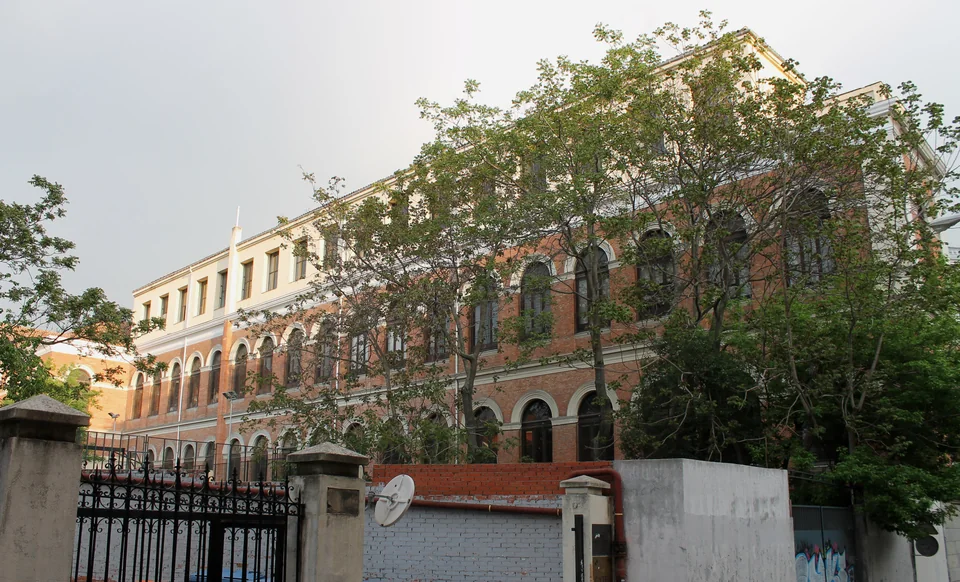
How Spanish schooling works
The Education Law (LOE as amended by LOMLOE) makes ten years of schooling, from 6 to 16, compulsory and free. After that, teenagers choose between Bachillerato for university and intermediate vocational training (FP de grado medio).
| Stage | Ages | Length | Outcome |
|---|---|---|---|
| Educación Primaria | 6–12 | 6 years | Moves to ESO without an exam |
| ESO (compulsory secondary) | 12–16 | 4 years | Graduado en ESO certificate |
| Bachillerato | 16–18 | 2 years | Título de Bachiller, then the university entrance exam |
| FP de grado medio | From 16 | Usually 2 years | Technician diploma, with a path to higher vocational training |
Bachillerato is taken in one of four tracks: science and technology, humanities and social sciences, arts, or general. The track sets the subjects later examined for university entry, so pupils choose it with a degree in mind. The school year runs roughly from mid-September to June, grades use a 0–10 scale with 5 as the pass mark, and in regions with a co-official language some lessons are taught in Catalan, Basque, Galician or Valencian.
Types of school
| Type | Who pays | Language | Suits |
|---|---|---|---|
| State (pública) | Tuition free; families pay for books and meals | Spanish plus the regional language | Families living in Spain |
| Concertada | Privately run, publicly funded; compulsory stages free, Bachillerato may be fee-paying | Spanish plus the regional language | Families living in Spain who want a private setting |
| Private Spanish | Full fees | Spanish, often bilingual | Families wanting a Spanish certificate and small classes |
| International (British, American, etc.) | Full fees | English | Pupils on A-levels or an American diploma; some offer boarding |
State and concertada places are allocated by the regional education authority based on a Spanish address (empadronamiento); private and international schools admit pupils directly after their own tests. Many international schools switch to the International Baccalaureate in the final two years. The IB organisation is designated "undesirable" in Russia, so for Russian citizens we recommend the Spanish Bachillerato, A-levels or an American diploma.
Which year a pupil with Russian documents joins
Spain's Ministry of Education publishes an equivalence table for Russia:
| Russian grade | Spanish equivalent | Procedure |
|---|---|---|
| Grade 7 | 1st year of ESO | None |
| Grade 8 | 2nd year of ESO | None |
| Grade 9 (basic general education certificate) | 3rd year of ESO | None |
| Grade 10 | 4th year of ESO | Homologation to Graduado en ESO if moving on to Bachillerato |
| Grade 11 (secondary general education certificate) | 1st year of Bachillerato | Homologation to Título de Bachiller |
In practice a pupil who has finished grade 9 in Russia starts in the fourth year of ESO: no recognition procedure is needed to join the system up to that level, and the school places the pupil by age and reports. To enter the first year of Bachillerato straight after Russian grade 10, the pupil needs homologation to the Spanish ESO certificate:
- applications go through the ministry's online portal and are accepted all year;
- you submit the certificate or transcript and reports for the last four years (grades 7–10 for Russia), apostilled and officially translated into Spanish;
- there is no fee for homologation to Graduado en ESO, unlike homologation to the Bachiller;
- the ministry decides within 3 months of a complete file, and silence counts as refusal;
- while the decision is pending, the school may enrol the pupil conditionally on the "volante de inscripción condicional" generated with the application.
A Russian certificate after grade 11 is homologated to the Spanish Título de Bachiller; for university entry see Spanish university after 11 years of school.
Visas for teenagers: the rules since 20 May 2025
Royal Decree 1155/2024, in force since 20 May 2025, governs long-term stays for study. Two of its grounds concern school pupils:
- Post-compulsory secondary education — full-time Bachillerato or intermediate vocational training at a school in the official register, leading to a Spanish qualification. Article 35, however, requires applicants on this ground to be adults, 18 or over, so this route is closed to a 16- or 17-year-old from Russia.
- Pupil mobility — ESO or Bachillerato within a school exchange or educational project run by a registered school. The pupil must be admitted to the school and the programme; the school running the programme takes responsibility for the pupil, including the cost of studies, stay and return; and the pupil lives with a family selected by the organisation or in a boarding house linked to the programme. The minimum age follows education rules for that level.
When a minor is in the care of someone other than a parent, both parents must authorise the stay in Spain, naming the school or organisation and the period. Other visa conditions include a passport valid for at least one year, living funds of 100% of the IPREM index per month (unless accommodation is prepaid), and health insurance from an insurer authorised in Spain. The visa must be requested at least 2 months before studies start. Residents of Russia apply at the Spanish consulates general in Moscow and St Petersburg; see our Spanish student visa guide.
The third lawful option is moving as a family: if a parent obtains Spanish residence, the child lives with them and attends any school, including a free state school. Rules for Russian citizens are covered in studying in Spain as a Russian citizen. The Spanish consulate decides on the visa and the school on admission; before signing, ask the school which ground of the regulation it uses for international pupils and who prepares the documents.
What boarding costs: King's College Soto de Viñuelas
King's College in Soto de Viñuelas near Madrid publishes a separate 2026/27 boarding schedule covering tuition, accommodation, three meals a day, textbooks, laundry and university guidance.
| Year group (British system) | Age | Tuition and boarding per year |
|---|---|---|
| Year 10 (start of IGCSE) | 14–15 | $42,995 (€38,055) |
| Year 11 (IGCSE exams) | 15–16 | $43,977 (€38,925) |
| Years 12–13 (A-levels) | 16–18 | $44,943 (€39,780) |
A boarding place is confirmed with a non-refundable matriculation fee of $2,034 (€1,800) and a refundable $3,389 (€3,000) deposit returned when the pupil leaves the school. Non-EU boarders must also pay for visa preparation through the school's lawyers, $1,243 (€1,100) a year, and for completing post-visa residence formalities, $1,299 (€1,150) a year. Spanish private medical insurance is mandatory and must be arranged for a calendar year before the visa application; exams, uniform, a Chromebook and pocket money are extra. A single room from Year 10 costs $8,897 (€7,875) a year subject to availability, and Induction English $2,596 (€2,298) a term. The school also runs the IB, so specify A-levels in the contract.
State schools charge no tuition, only books, meals and activities, but are available only to children living in Spain with their family. Private Spanish and concertada schools publish fees in different ways, many only on request. Our guide to paying for studies abroad from Russia explains legal payment routes.
Spanish and adaptation
In Spanish state and private schools every subject is taught in Spanish, and in Catalonia, Valencia, the Basque Country, Galicia and the Balearic Islands partly in the regional language. A pupil without Spanish should take an intensive course beforehand or in summer; see Spanish language courses in Spain. At a British or American school English is the main language and Spanish is a subject.
Leaving Russia and recognition of Spanish certificates
To leave Russia without a parent, a minor needs a passport and a notarised consent from one legal representative under Article 20 of Federal Law 114-FZ. Russia's Consular Department notes that the consent may run until adulthood and must list the countries, and that some countries require both parents' consent — Spain does so for a minor in a third party's care.
The 1990 agreement between the USSR and Spain on equivalence and mutual recognition of education documents appears in the Russian ministry's current list of international agreements. How it applies to a particular certificate for Russian university entry is decided by Rosobrnadzor under Article 107 of the Education Law.
After Bachillerato: university entry
With a Spanish Título de Bachiller the graduate takes the university entrance exam alongside Spanish pupils. Graduates of international schools with A-levels or a foreign certificate apply through UNED's accreditation (UNEDasiss); see applying to Spanish universities. Country information is on studying in Spain, and a similar system is covered in our guide to secondary school in Italy; for other countries see studying abroad after grade 9.
A 12–18-month plan
- 18 months out. Choose the route: family move, a pupil mobility programme at a Spanish school, or an international boarding school; check the child's age at the start.
- 12 months out. Start Spanish; ask 3–4 schools about conditions for international pupils and who prepares the paperwork.
- 6–9 months out. School contract, apostilles and translations, homologation application if Bachillerato is the goal.
- 3–4 months out. Health insurance, both parents' authorisation, notarised travel consent, financial documents.
- At least 2 months out. Visa application at the consulate.
- After arrival. Residence formalities and address registration.
Common mistakes
- Applying for a Bachillerato study visa at 16 or 17. Since 20 May 2025 this ground requires the applicant to be 18.
- Applying for homologation for ESO entry. Up to the fourth year of ESO no procedure is needed.
- Leaving homologation to the last minute. Decisions take up to 3 months and silence means refusal; only the conditional volante allows provisional enrolment.
- Choosing a school in Catalonia without Catalan. Part of the curriculum is taught in the regional language.
- Not checking an international school's final programme. If only the IB is offered in the last years, there is no A-level or US diploma route.
- Assuming a state school is open without moving. Free schooling is for children living in Spain with their family.
FAQ
Yes, if they live in Spain. Under Article 9 of Organic Law 4/2000, foreign children under 16 have the right and duty to education and under-18s the right to Bachillerato and vocational training on the same terms as Spaniards. Enrolment goes through the regional education authority, which allocates the school place.
The ministry's table matches Russian grade 9 to the third year of ESO, so the pupil normally joins the fourth year of ESO with no formalities. The first year of Bachillerato requires homologation to the Spanish ESO certificate, which in turn requires a completed Russian grade 10. The school decides on enrolment.
For Bachillerato on a study visa only at 18 or over, as Royal Decree 1155/2024 has required since 20 May 2025. Minors can use a pupil mobility programme run by a Spanish school that takes responsibility for costs and accommodation, or move with their parents. The Spanish consulate decides on the visa.
For 2026/27 King's College Soto de Viñuelas near Madrid charges $42,995–44,943 (€38,055–39,780) for tuition and boarding depending on the year group. Non-EU boarders also pay €1,100 and €1,150 a year for visa and residence paperwork through the school's lawyers, plus Spanish health insurance. The school sets its own fees and terms.
The ministry has 3 months from the date the file is complete, and no answer within that time counts as refusal. Homologation to the Graduado en ESO carries no fee. While the decision is pending, the school can enrol the pupil conditionally on the volante; the Ministry of Education makes the final decision.
The 1990 USSR–Spain agreement on equivalence and mutual recognition of education documents appears in the Russian ministry's list of international agreements. How it applies to a specific document for Russian university entry is decided by Rosobrnadzor under Article 107 of the Education Law.
Sources
- Education Law LOE (as amended by LOMLOE): Arts. 4, 22, 32, 34
- Organic Law 4/2000 on foreign nationals, Art. 9 "Right to education"
- Royal Decree 1155/2024, Arts. 35, 52, 53, 54: study and pupil mobility stays; in force since 20 May 2025
- Spanish Ministry of Education: homologation and validation of school studies, joining the system up to 4th ESO, homologation to Graduado en ESO and Bachiller, equivalence table for Russia (PDF)
- Spanish Embassy Education Office in Russia: recognition of Russian certificates
- King's College Soto de Viñuelas: 2026–2027 school and boarding fees
- Russian MFA Consular Department: consent for a minor's travel
- Russian Ministry of Science and Higher Education: recognition agreements, Russian Education Law, Article 107
Sources checked on 2 October 2026. Currency converted at the ECB reference rate of 1 October 2026: €1 = $1.1298; dollar figures rounded.
If you want to work through your route, send a request: document preparation and submission are provided under an agreement with StudyU; the school makes the enrolment decision and the Spanish consulate decides on the visa.
During the free initial consultation, we clarify your goal, profile, timing, and budget and identify the next realistic step.
Next steps
- Studying in Spain for international applicants
- Studying in Spain as a Russian Citizen: BLS Visa Route, Certificate Homologation, Payments and Recognition
- Spanish Student Visa in 2026: Documents, IPREM Funds, Applying from Russia and the TIE Card
- Studying in Spain After 11 Years of School: How to Apply with a Russian Certificate in 2027
- Spanish Language Courses in Spain: Accredited Schools, University Courses, Prices and the Student Visa
- Secondary School in Italy for International Students: Licei, Boarding, Visas and Guardianship
