
Higher music education abroad comes in two main forms: conservatoires and music universities built around performance, and general universities with more theory, musicology and music technology. Conservatoires admit by audition. You need a school certificate, but your playing or singing decides, and the first round is often a recorded pre-screening. Costs vary widely: at mdw in Vienna a non-EU student pays about $850 (€752.92) a semester including the union fee, the Hanns Eisler music university in Berlin charges no tuition, a Royal College of Music bachelor's costs $41,590 (£31,300) a year, and Juilliard charges $57,200 for 2026/27. Deadlines come early: RCM's main deadline for 2027 entry was 1 October 2026, after which only late applications are considered; for 2028 entry, plan for early October 2027.
| At a glance | What to know |
|---|---|
| Selection | Recorded pre-screening, then a live audition, theory and aural tests, sometimes an interview |
| Levels | Bachelor's 3–4 years, master's 1–2 years, postgraduate performance diplomas |
| Age | Set by each school; at the Paris Conservatoire (CNSMDP) each entrance exam has its own limit, counted on 1 October |
| Language | English in the UK and US; German in Germany and Austria (B2.2 for Berlin bachelor's at enrolment); French in Paris (first cycle: B1 before enrolment, B2 by 10 December) |
| Cost per year | From no tuition (HfM Berlin, fees extra) and about $1,710 (mdw) to $41,590 (RCM, 2026/27) and $57,200 (Juilliard, 2026/27) |
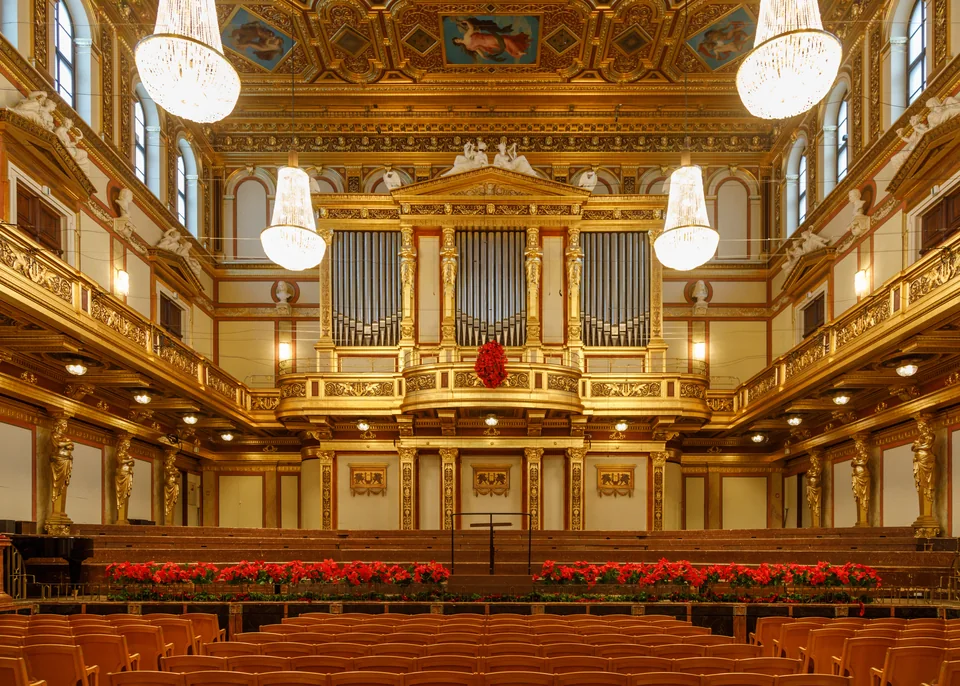
Conservatoire, university or contemporary music school?
| Type | What you get | How you get in | Who it suits |
|---|---|---|---|
| Conservatoire or music university | BMus or MMus with intensive one-to-one tuition | audition, theory, aural tests | performers, conductors and composers with pre-college training |
| University | BA/MA in music, musicology or music technology | grades, written work, sometimes a portfolio or audition | future researchers, teachers, sound engineers and managers |
| Private contemporary music school | bachelor's or diploma in production, engineering, pop or jazz performance | portfolio, recordings, interview | people building an industry career rather than an orchestral one |
For classical performers the deciding factor is the principal-study teacher, because you will work with one professor for years. Before applying, listen to their students and, if possible, take a consultation lesson or masterclass. For production and engineering, studios, equipment and industry links matter more.
If you are considering Turkey, where programmes cost less and entry is less competitive, see music in Turkey and music technology.
How auditions work
Most entrance procedures have several stages:
- Recorded pre-screening. Many schools first ask for recordings of set repertoire. HfM Berlin runs its pre-selection through the muvac platform on video, and RCM accepts bachelor's video audition submissions for 2027 entry until 26 October 2026.
- Live audition. A prepared programme, sometimes sight-reading and improvisation. Besides London, RCM holds auditions in several cities in Asia, Australia and North America.
- Theory and aural tests. Written and oral harmony and ear training. At mdw, if you pass the audition but fail the written part, you may resit it once in the same semester.
- Interview about motivation, teacher choice and plans.
Each school publishes repertoire requirements per instrument or voice type. Do not prepare one generic programme: required periods and styles differ even between schools in the same city.
Age limits
Age limits exist in music, but each school sets its own. At the Paris Conservatoire every competition has its own limit, measured on 1 October of the academic year, and exceptions can raise it by no more than two years and never beyond 30. Look for the age section in the admission rules for your specific instrument before recording anything.
Language
Language matters for lessons, not just lectures. In Berlin, international bachelor's students need German at B2.2 to enrol. At mdw the German requirement ranges from A2 to C1 depending on the programme; see our mdw profile. The Paris Conservatoire asks first-cycle students for French at B1 by 30 June before first enrolment and B2 by 10 December of the first year. UK and US schools accept IELTS or TOEFL.
Four schools compared
| School | Language | Fee | Next deadlines |
|---|---|---|---|
| mdw, Vienna | German (A2–C1 by programme) | $830 (€726.72) a semester for non-EU nationals plus a $30 (€26.20) union fee | exam registration windows by programme, usually in spring |
| HfM Hanns Eisler, Berlin | German (B2.2 for bachelor's) | no tuition; application fee $70 (€60) | winter semester 2027/28: apply 15 February – 8 April 2027, exams 7–11 June 2027; summer semester 2027: apply 1 October – 8 November 2026, exams 18–22 January 2027 |
| Royal College of Music, London | English | BMus $41,590 (£31,300) a year, 2026/27 | UCAS Conservatoires application by 1 October 2026; late applications on request |
| Juilliard, New York | English | $57,200 for 2026/27; full budget with housing $91,946 | auditions and deadlines published per discipline |
Public music universities in Germany generally charge no tuition, but in Baden-Württemberg students arriving from outside the EU have paid $1,700 (€1,500) per semester since 2017, so check the state. For what else German study costs, see tuition-free university education in Germany.
What study and living cost
| Item | Example | Amount |
|---|---|---|
| Tuition | mdw, two semesters including union fee | about $1,710 (€1,505.84) a year |
| Tuition | RCM, BMus, 2026/27 | $41,590 (£31,300) a year |
| Tuition | Juilliard, 2026/27 | $57,200 |
| Living in London | RCM estimate | at least $18,340 (£13,800) a year |
| UK visa | Student visa | $700 (£524) plus the immigration health surcharge |
| Full New York budget | Juilliard first year 2026/27, with room and meals | $91,946 |
Musicians also pay for things other students do not: an instrument and its insurance, scores, transport for the instrument, concert clothes and extra lessons. RCM lists separate charges for additional one-to-one lessons and reassessments.
Conservatoire scholarships usually follow the audition rather than a separate application. RCM says almost half its students receive some financial support and the most talented have all fees covered. For other options, see scholarships abroad in 2026.
When to start
| Before the start of study | What to do |
|---|---|
| 18–24 months | Shortlist four to six schools and teachers; list audition repertoire and age rules |
| 12–15 months | Record pre-screening videos with good sound; take your language exam |
| 9–12 months | Apply: UK conservatoires by early October, German schools for the winter semester by spring |
| 6–9 months | Attend live auditions and theory tests |
| 3–6 months | Receive the decision, pay the deposit, arrange visa and housing |
German music universities advise visa-required applicants to get a prospective-student visa (Studienbewerbervisum) early: it is issued for three months, can be extended to nine and can be converted into a study residence permit in Germany after admission.
A note for Russian citizens
Two US schools that often appear on lists of strong music programmes belong to organisations designated "undesirable" in Russia: the Yale School of Music (Yale University) and the Bard College Conservatory of Music (Bard College). Under Russian law, participating in a listed organisation's activities is an administrative offence (Article 20.33 of the Administrative Code) and, if repeated after a penalty, a criminal one (Article 284.1 of the Criminal Code), so we do not support applications from Russian citizens to these programmes. Applicants paying from Russia can read about legal routes in how to pay for studies abroad from Russia.
Common mistakes
- Preparing one repertoire for every school without checking each list.
- Recording pre-screening videos on a phone in an echoing room.
- Missing UK deadlines, which close the main round in early October, almost a year before the course starts.
- Ignoring age limits for your instrument.
- Counting tuition only and forgetting the instrument, scores and lessons.
FAQ
Usually yes: you need a school certificate and a successful audition. The school's examination panel decides on your playing or singing, theory and aural skills, so your level must meet the requirements even without a college diploma.
At public music universities in Germany such as HfM Hanns Eisler in Berlin, which charges no tuition; you pay the semester contribution and a $70 (€60) application fee. In Austria, a semester at mdw costs a non-EU student roughly $850 once the student union fee is added.
At some schools. The Paris Conservatoire sets a limit for each competition, counted on 1 October; elsewhere limits appear in the admission rules of specific instruments. Check before recording your videos.
For UK conservatoires, the main deadline for 2027 entry is early October 2026 (1 October 2026 at RCM); after that RCM considers late applications on request. HfM Berlin's window for the summer semester 2027 runs from 1 October to 8 November 2026. For HfM Berlin's winter semester 2027/28, between 15 February and 8 April 2027. Each school publishes its own exam and enrolment dates.
Often, but the first round is usually a recording. RCM auditions outside London too and accepts video auditions for some performance degrees. The school sets the format for each discipline.
A lot: Juilliard's 2026/27 tuition is $57,200 and the full first-year budget with room and meals is $91,946. The school awards scholarships based on the audition and a financial application.
Sources
- mdw: tuition fee for non-EU students
- HfM Hanns Eisler Berlin: application steps and fee, application and exam calendar, enrolment documents, German B2.2
- Royal College of Music: fees 2026/27 (PDF), 2027 application deadlines, budget and funding
- The Juilliard School: tuition and budget 2026/27
- Baden-Württemberg Ministry of Science: fees for international students (in German)
- Conservatoire de Paris (CNSMDP): admission requirements, age and language
- Russian Ministry of Justice: list of undesirable organisations (in Russian)
All sources checked on 1 October 2026. ECB reference rate of 30 September 2026: €1 = $1.1355 and €1 = £0.85463 (£1 ≈ $1.3287). Amounts are rounded to $10.
If you want to work through your route, send a request: document preparation and submission are provided under an agreement with StudyU, and the university makes the admission decision.
Next steps
- Music in Turkey
- Music Technology in Turkey
- University of Music and Performing Arts Vienna (mdw)
- Free University Education in Germany for International Students: Where Tuition Is Zero and What You Still Pay
- Scholarships abroad 2026: where international students study for free
- German Student Visa 2026: Documents, Timing and Where to Apply
