
Studying music in Turkey: the short answer
A music bachelor's in Turkey takes four years at a university conservatory or faculty of fine arts, and admission depends on an audition as much as on school grades. Most programmes teach in Turkish; Istanbul Bilgi University teaches its Music degree in English for $12 000 a year (2026–27). Turkish-taught options in our table start at $4 500 a year at Okan (2026–27).
| Question | Answer |
|---|---|
| Degree and length | Bachelor's, 4 years; master's 1.5–2 years; PhD about 4 years |
| Teaching language | Mostly Turkish; English at Bilgi |
| Selection | Audition or talent assessment set by the conservatory, plus the school certificate |
| Main streams | Instrument or voice performance, composition, musicology, Turkish music, music technology |
| Published tuition, 2026–27 | $4 500 (Okan) to $12 000 (Bilgi) per year for the bachelor's |
| Graduate study | Okan and Bahcesehir publish whole-programme master's and PhD fees |
Turkey has a strong conservatory tradition in both Western classical and Turkish art and folk music, so check which of the two a department actually teaches before you prepare repertoire.
What a music degree covers
Performance-oriented programmes centre on weekly one-to-one lessons with a principal instrument or voice teacher, ensemble work and public recitals. Theory, ear training and music history run alongside for all four years. Departments with a Turkish-music focus add makam theory, traditional instruments and repertoire; programmes described as integrated combine performance with research on music and folklore.
- Principal instrument or voice lessons
- Solfège and ear training
- Music theory and harmony I
- Piano as a second instrument
- Harmony II and counterpoint
- Chamber music and ensemble
- History of Western and Turkish music
- Introduction to music technology
- Form and analysis
- Orchestra, choir or band projects
- Pedagogy of the instrument
- Electives: composition, arranging, ethnomusicology
- Graduation recital or composition portfolio
- Advanced repertoire study
- Music business, copyright and career skills
- Final research paper in musicology tracks
A good fit if you
- have several years of serious instrumental or vocal training;
- can practise daily for hours and take criticism in masterclasses;
- are open to studying in Turkish, or have strong English for Bilgi.
Reconsider if you
- are a beginner hoping to learn an instrument from scratch;
- mainly want to produce and record, which Music Technology covers better;
- need a teaching licence for state schools abroad, which usually requires a music-education degree and national certification.
Auditions and other entry requirements
The audition is the decisive step. Conservatories publish repertoire requirements and assessment dates each year, and they may differ by instrument.
- Prepare repertoire early. Typical requirements include contrasting pieces or études, scales, sight-reading and a rhythm and pitch test. Singers are asked for songs or arias in specified languages.
- Check the audition format. Ask whether the first round accepts a video recording or whether you must attend a live audition on campus, and budget travel time if it is live.
- Submit academic documents. Passport, secondary-school certificate and transcript (the 11-year certificate for Russian and CIS applicants) with translations; the Ministry of National Education (MEB) later issues the equivalence certificate (denklik).
- Prove your language. Turkish-taught programmes ask for a Turkish certificate, often at B2, or a preparatory year; Bilgi's English programme asks for an accepted English score or its own exam.
- Graduate applicants add a bachelor's in music, a recital or portfolio and, at many institutes, an interview.
The conservatory's jury decides the audition result and the university decides admission; the Presidency of Migration Management decides the student residence permit.
How to choose a conservatory in Turkey
| Factor | What to ask |
|---|---|
| Principal teacher | Who teaches your instrument and how many hours of individual lessons you receive each week |
| Musical tradition | Whether the department focuses on Western classical, Turkish music, jazz or a mix |
| Performance opportunities | Number of concerts, orchestra projects and festival partnerships per year |
| Practice rooms and instruments | Access hours, pianos per student and instrument loans |
| Language of teaching | Turkish-taught tuition is lower in our table, but Bilgi's English programme needs no Turkish preparatory year |
Universities offering Music
Bachelor's fees are annual; master's and PhD fees at Okan and Bahcesehir are for the whole programme.

| University | Degree | Language | Tuition |
|---|---|---|---|
| Okan University | Bachelor | Turkish | $4 500/yr (2026–27) · fee source |
| Bahcesehir University | Bachelor | Turkish | $8 500/yr (2026–27) · fee source |
| Bilgi University | Bachelor | English | $12 000/yr (2026–27) · fee source |
| Nisantasi University | Bachelor | Turkish | Fee on request · fee list (academic year not stated) |
| Yasar University | Bachelor | English | Fee on request · fee page (academic year not stated) |
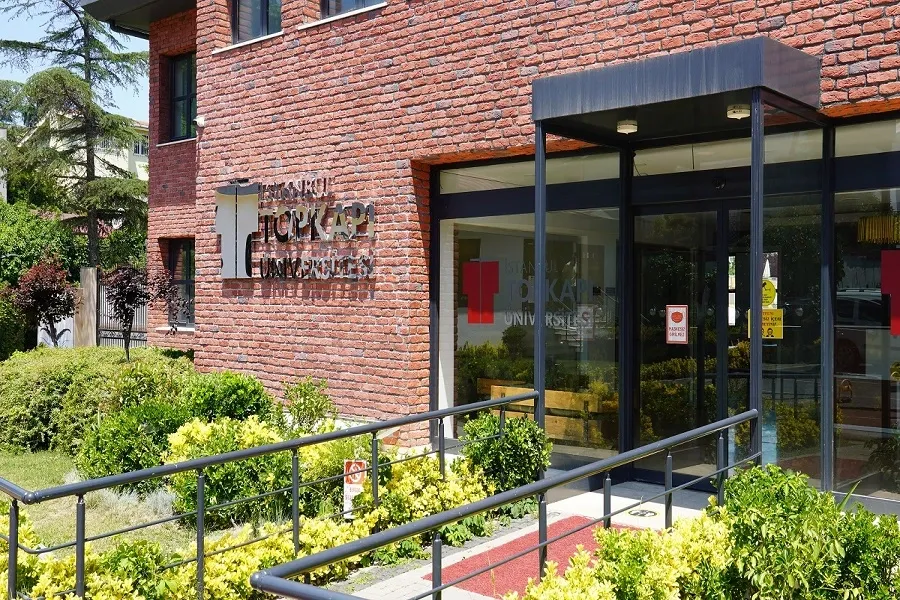
| Topkapi University | Bachelor | Turkish | Fee on request · no current fee list |
| Okan University | Master | Turkish | $4 500 whole programme, thesis (2026–27) · fee source · $3 500 non-thesis |
| Bahcesehir University | Master | Turkish | $14 000 whole programme, thesis (2026–27) · fee source · $12 000 non-thesis |
| Okan University | PhD | Turkish | $7 000 whole programme (2026–27) · fee source |
| Bahcesehir University | PhD | Turkish | $40 000 whole programme (2026–27) · fee source |
Fee basis: Okan, Bahcesehir and Bilgi publish 2026–27 international lists, checked on 29 September 2026. Nisantasi, Yasar and Topkapi show no fee labelled 2026–27, so ask for a written quote. Instruments, accompanist fees for recitals and a preparatory year are additional.
Careers after a music degree
Graduates perform with orchestras, ensembles and bands, accompany singers and dancers, teach privately or at music schools, compose for media and work in arts management. In Turkey, state orchestras, opera houses and choirs recruit through their own auditions and eligibility rules, which may differ for foreign nationals. Abroad, orchestral jobs are won at auditions rather than through diplomas, while teaching in public schools usually needs a recognised teacher qualification in that country.
A master's is useful for university teaching or specialised performance, and a PhD or proficiency-in-art degree is the path to an academic post.
Music in Turkey: questions applicants ask
Yes, at Istanbul Bilgi University, whose Music bachelor's is listed as English-taught at $12 000 a year for 2026–27. Most other conservatory programmes teach in Turkish.
Yes. Conservatories assess performance and musicianship; the format (live or recorded) and repertoire are set by each university for each intake.
Published 2026–27 bachelor's fees in our table range from $4 500 a year at Okan to $12 000 at Bilgi; Bahcesehir lists $8 500.
Yes. Several conservatories teach Turkish art or folk music, but these programmes are Turkish-taught and expect strong listening skills in makam-based repertoire.
At Okan and Bahcesehir the published master's fee covers the whole programme, for example $4 500 for Okan's thesis track.
Programme selection, document preparation and application follow-up are provided under an agreement with StudyU; the conservatory jury and the university decide on auditions and admission.
Preparing for a music audition in Turkey?
During the free initial consultation, we clarify your goal, profile, timing, and budget and identify the next realistic step. A personal strategy, requirement checks, selection of agreed options, document preparation, applications, and support are provided under an agreement with StudyU.
Official sources
- YÖK Atlas: official program catalogue — program availability, institution and stated language of instruction. International quotas and tuition require the university's own current source.
- YÖK: official international-student information — the official university search route and general international-student guidance. The chosen university still owns its admission requirements.
- ÖSYM: official TR-YÖS exam (2026) — the official calendar and application route for TR-YÖS/1 in 2026. Each university publishes whether the result is required for the selected program.
Tuition figures come from the universities’ own fee lists for international students: İstanbul Okan University: 2026–2027 tuition fees; Bahçeşehir University (BAU): 2026–2027 tuition fees; İstanbul Bilgi University: 2026–2027 tuition and fees; Nişantaşı University: international brochure (PDF); Yaşar University: tuition and scholarships. Where a list is available online, the fee cell in the table links to it. All fees are published in US dollars, so no currency conversion was applied. Fees were checked on 29 September 2026; confirm language, curriculum, quota and tuition with the university for your intake before paying.
Updated:
