
Communication Design in Turkey at a glance
Communication Design in Turkey is a four-year bachelor’s, taught in English or Turkish depending on the university, that trains designers to shape how brands, institutions and media speak visually: identity, typography, editorial and motion work, interfaces and campaigns. Universities use different names for it (Communication and Design, Visual Communication Design). For 2026–27, dated international fees on this page run from $8 500 a year at Bahçeşehir to $25 000 at Özyeğin before scholarships.
- Degree length: eight semesters; an English or Turkish preparatory year is added if your language score is below the entry level.
- Studio-based: much of the grade comes from projects, juries and a portfolio rather than written exams.
- Two families of programme: design-school programmes in faculties of fine arts or architecture and design, and communication-faculty programmes with more media and strategy.
- Portfolio or aptitude step: some universities ask for one from international applicants; others admit on school results.
What you study, year by year
Across Turkish universities the first year is a shared foundation in drawing, colour, form and design history. Specialisation starts in year two, and the last two years are organised around studio projects that increasingly look like real client work. The outline below reflects this common structure; each department’s course catalogue gives the exact sequence.
- Basic design, drawing and colour
- Typography I and visual perception
- History of art and design
- Digital tools: raster, vector and layout software
- Typography II and editorial design
- Visual identity and branding
- Photography and image making
- Communication theory
- Motion graphics and video
- Interface and interaction design
- Campaign design studio
- Summer internship at an agency or studio
- Advanced studio with an external brief
- Professional practice and portfolio
- Electives such as illustration, 3D or data visualisation
- Graduation project and jury
If you are interested in interfaces and digital products, look closely at year three: some programmes treat UI and interaction design as a core studio, others as one elective.
Entry requirements for international applicants
- School certificate. A completed secondary-school certificate with grades; universities set their own minimum average. If you hold an 11-year certificate from Russia or another CIS country, confirm that the department accepts it.
- Exams. Private universities accept school grades, SAT or YÖS results in different combinations. The 2026 TR-YÖS/1 sitting took place on 12 April 2026.
- Language. English-taught tracks ask for TOEFL iBT or a similar test; Bahçeşehir, for example, requires TOEFL iBT 72 or PTE Academic 55 for most undergraduate programmes and does not accept IELTS or Duolingo. Turkish-taught tracks ask for Turkish at about C1 or send you to a preparatory year.
- Portfolio. Prepare 10–15 pieces that show how you think: sketches, a small identity project, photographs, layouts. Even where it is optional, it strengthens scholarship decisions at universities that weigh the whole profile.
- After admission: the diploma equivalence certificate from the Ministry of National Education and a student residence permit.
How to compare communication design programmes
- Language and prep year. English-taught: Bahçeşehir (Visual Communication Design) and Özyeğin (Communication and Design). Our records list Galata and Nişantaşı as Turkish-taught, and Alanya does not state the language on its programme list, so confirm it in writing. An English degree lets you build an international portfolio from day one; a Turkish one gives better access to local agencies.
- Studio facilities. Ask about Mac labs, print and risograph workshops, photo studios, and access to current software licences.
- Staff who practise. Look up the instructors’ own work. Departments with active designers usually have stronger industry links and internship routes.
- Accreditation. Art-and-design programmes in Turkey can be accredited by SANAD or SATEAD, both registered with YÖKAK. Accreditation is still uncommon in this field, so treat it as a plus, not a filter.
- Graduation shows. Recent graduation projects tell you more about the level than any brochure.
Careers for communication designers
Graduates work as graphic or brand designers, art directors in advertising agencies, UI/UX designers, motion designers, editorial and publication designers, and in in-house creative teams of companies and media groups. Freelance and studio work is common. No licence is needed; your portfolio is the qualification that employers look at.
Istanbul has one of the region’s larger advertising and media markets, but working there after graduation requires a work permit and, for most agency roles, workable Turkish. Many international graduates use the degree and portfolio to work remotely or return to their home market.
Is communication design your field?
A good fit if you…
- draw, photograph or lay out pages in your free time;
- accept critique in front of a jury and iterate quickly;
- want a creative career where the portfolio matters more than the diploma.
Think twice if you…
- prefer written exams and fixed answers to open briefs;
- want to lead strategy rather than produce design (look at Communication Design and Management);
- cannot budget for a capable laptop and software.
Universities offering Communication Design
Five universities with a communication design bachelor’s; two publish dated 2026–27 international fees.
| University | Degree | Language | Tuition |
|---|---|---|---|
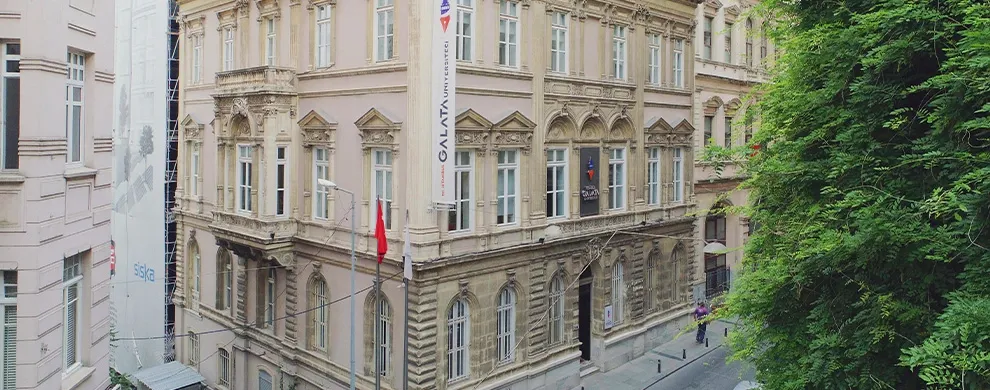
| Istanbul Galata University | Bachelor | Turkish | 2026–27 fee on request |
| Alanya University | Bachelor | Not stated | 2026–27 fee on request |
| Nisantasi University | Bachelor | Turkish | 2026–27 fee on request · university fee page (academic year not stated) |
| Bahcesehir University (Visual Communication Design) | Bachelor | English | $8 500/yr · fee source (2026–27) |
| Ozyegin University (Communication and Design) | Bachelor | English | $25 000/yr · fee source (2026–27) |
Fees are the universities’ own list prices, checked on 29 September 2026. “On request” means the university publishes no fee with a 2026–27 label; ask it for a written quote.
Budgeting for 2026–27
Among the dated 2026–27 fees, Bahçeşehir charges $8 500 a year for its School of Communication programmes, and Özyeğin lists $25 000 a year as the standard fee for Communication and Design. Özyeğin considers every applicant for a scholarship automatically and shows sample outcomes of $15 000, $12 500 and $10 000 a year at 40%, 50% and 60% scholarships; the rate is decided by the university after reviewing your file. Galata, Alanya and Nişantaşı do not publish a dated 2026–27 fee for this programme, so request a written quote.
Design students have extra costs: a laptop that runs Adobe or equivalent software, printing and model materials for juries, and sometimes photo equipment. Budget for these in addition to housing, insurance and the residence permit.
Common questions
They overlap heavily. Graphic design programmes focus on the visual craft, while communication design programmes in Turkey usually add media, branding and campaign thinking. Compare the course lists rather than the names.
Yes. Bahçeşehir’s Visual Communication Design and Özyeğin’s Communication and Design are English-taught. Galata and Nişantaşı teach in Turkish, and Alanya’s teaching language should be confirmed with the university.
Bahçeşehir lists $8 500 a year and Özyeğin $25 000 a year as the standard fee, with scholarship-reduced examples down to $10 000. Galata, Alanya and Nişantaşı have no dated 2026–27 fee online.
Some universities ask international applicants for a portfolio or aptitude review and some do not. Preparing one is worthwhile either way, because it supports scholarship decisions.
For most undergraduate programmes Bahçeşehir asks for TOEFL iBT 72 or PTE Academic 55, among other options, and does not accept IELTS, Duolingo or TOEFL Home Edition. You can also sit its own proficiency exam after registration.
Graphic and brand designer, art director, UI/UX designer, motion designer and editorial designer are the usual routes, in agencies, in-house teams or freelance.
Planning to study communication design in Turkey?
A personal strategy, requirement checks, selection of agreed options, document preparation, applications, and support are provided under an agreement with StudyU. The university decides admission and any scholarship; the migration authority decides the residence permit.
Official sources
- YÖK Atlas: official program catalogue — program availability, institution and stated language of instruction. International quotas and tuition require the university's own current source.
- YÖK: official international-student information — the official university search route and general international-student guidance. The chosen university still owns its admission requirements.
- ÖSYM: official TR-YÖS exam (2026) — the official calendar and application route for TR-YÖS/1 in 2026. Each university publishes whether the result is required for the selected program.
Also checked on 29 September 2026 on the institutions’ own sites:
- BAU: language proficiency scores (int.bau.edu.tr) — accepted English tests and minimum scores by programme group.
- Bahçeşehir University (BAU): 2026–27 tuition fees (int.bau.edu.tr) — fee basis and academic-year label used in the table above.
- Özyeğin University: 2026–27 tuition fees and scholarships (admissions.ozyegin.edu.tr) — fee basis and academic-year label used in the table above.
- Istanbul Galata University: fee page (still shows 2024–25) (international.galata.edu.tr) — fee basis and academic-year label used in the table above.
- Nişantaşı University: application portal with programme fees (academic year not stated) (apply.nisantasi.edu.tr) — fee basis and academic-year label used in the table above.
- YÖKAK: accreditation agencies with active registration (yokak.gov.tr) — which national programme accreditors are currently registered.
All fees are published in US dollars, so no currency conversion was applied. Confirm language, curriculum, quota and tuition with the university for your intake before paying.
Updated:
