
The University of Porto (U.Porto) is one of Portugal's largest public universities, and it opens almost its entire bachelor's offer to international students: for 2026/27 it set aside 712 places across all first-cycle and integrated master's programmes except two bachelor's degrees, Digital Health and Biomedical Innovation, and Drawing. Non-EU applicants enter through the special competition for international students, in three rounds between January and July, and the key requirement is Portuguese at independent-user level. In 2026/27 an international bachelor's year costs $3,970 (€3,500) at most faculties, $6,810 (€6,000) in Engineering and $18,740 (€16,500) in Medicine. Two bachelor's programmes at the School of Economics and Management (FEP) are taught entirely in English at the same $3,970 (€3,500) a year.
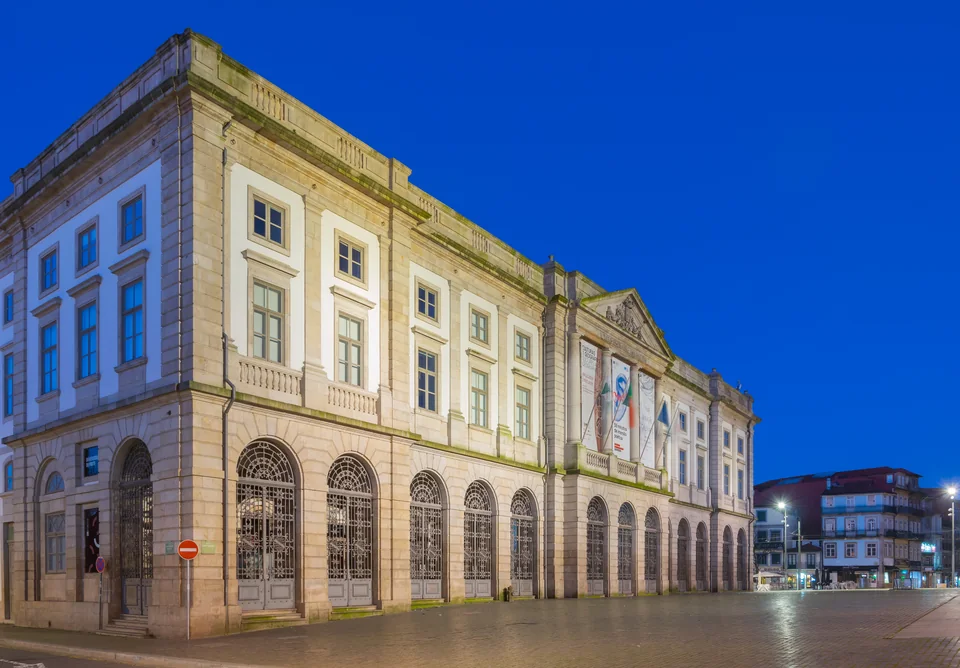
U.Porto was officially founded on 22 March 1911. Today it has 14 faculties and a business school, more than 35,800 students, and 14% of them are international.
| At a glance | Details |
|---|---|
| City | Porto, northern Portugal; faculties sit across three main city campuses and one further centre |
| Structure | 14 faculties, including the Nursing School, plus Porto Business School |
| Route for non-EU citizens | Concurso Especial para Estudantes Internacionais, applied for online at the chosen faculty |
| International places, 2026/27 | 712 across three rounds |
| Language | Portuguese at independent-user level; Economics and Business Administration at FEP are taught in English |
| International fees, 2026/27 | $3,970–18,740 (€3,500–16,500) a year depending on the programme |
| Student residences | 10 halls with about 1,200 beds; Portuguese scholarship holders come first |
How the university is organised
U.Porto is a faculty-based university. The rectorate publishes the common regulation for international students and a general calendar, while each faculty sets qualification requirements, ranks candidates and receives applications. You apply to the academic office of the faculty, not to the university as a whole.
Faculties admitting international first-cycle students include:
- FEUP (Engineering): electrical and computer, informatics, mechanical, civil, chemical, bioengineering, aerospace;
- FCUP (Sciences): biology, chemistry, physics, mathematics, computer science, artificial intelligence and data science, landscape architecture;
- FEP (Economics and Management), including two English-taught programmes;
- FMUP and ICBAS, two separate medical schools; ICBAS also teaches veterinary and aquatic sciences;
- FMDUP (Dental Medicine), FFUP (Pharmacy), FCNAUP (Nutrition);
- FLUP (Arts and Humanities): history, philosophy, languages, sociology, geography, communication;
- FDUP (Law and Criminology), FPCEUP (Psychology and Education);
- FAUP (Architecture), FBAUP (Fine Arts and Design), FADEUP (Sport);
- ESEP, the Nursing School.
Engineering, Medicine, Sciences, Sport, FEP and ICBAS run their own application calendars on top of the general one. Always check the faculty's page, not only the university portal.
Who can apply
The competition is for applicants without Portuguese or other EU nationality who hold a Portuguese secondary diploma or a qualification giving access to higher education in their own country. A Russian or Kazakh school-leaving certificate meets that condition; which grades and subjects count for a given programme is up to the faculty.
You cannot apply if you:
- have equal-rights treaty status on 1 January of the entry year;
- are a dual national and one of your nationalities is Portuguese;
- or your parents have lived legally in Portugal for more than two continuous years before 1 January of the entry year (time on a study residence permit does not count);
- are a relative of Portuguese or EU citizens, whatever your own nationality.
Language: Portuguese first, English where it is real
The competition requires Portuguese at independent-user level (B1–B2 on the European scale). If you have no certificate, the faculty may ask you to take an oral test by video call. U.Porto states plainly that most teaching is still in Portuguese.
Two FEP bachelor's programmes are taught in English:
| Programme | Language | International places, 2026/27 | International fee per year |
|---|---|---|---|
| Economics (taught in English) | English | 13 | $3,970 (€3,500) |
| Business Administration (taught in English) | English | 10 | $3,970 (€3,500) |
FEUP engineering degrees and FAUP architecture carry the label "Portuguese – suitable for English-speaking students". Teaching is in Portuguese, although staff are prepared to support English speakers. That is not an English-taught degree, and the first years are hard without Portuguese.
The Faculty of Arts and Humanities (FLUP) runs Portuguese courses for foreigners. After an online placement test you join the right level, before arrival or during your studies.
Application calendar
This is how U.Porto's general calendar for the 2026/27 intake ran:
| Step | Round 1 | Round 2 | Round 3 |
|---|---|---|---|
| Applications | 2 January – 6 February 2026 | 9 February – 2 April 2026 | 2 June – 22 July 2026 |
| Provisional results | 23 February 2026 | 28 April 2026 | 31 July 2026 |
| Final results | 13 March 2026 | 22 May 2026 | 4 September 2026 |
| Registration | 16–20 March 2026 | 25–29 May 2026 | 7–11 September 2026 |
| Unfilled places published | 30 March 2026 | 11 June 2026 | 21 September 2026 |
For visa purposes Round 3 barely works: final results arrive on 4 September, when the academic year is about to start. For 2027/28 entry, aim for Round 1, which opened on 2 January in the last cycle, and keep Round 2 as a fallback. U.Porto publishes the new calendar during the academic year.
Tuition fees
International students pay $3,970–18,740 (€3,500–16,500) a year for bachelor's and integrated master's programmes. Portuguese and EU students pay $790 (€697), a rate that does not apply to international status. U.Porto offers a reduction of up to 45% only to nationals of Portuguese-speaking (CPLP) countries; it does not cover Russia or the CIS.
| Faculty and programme | Length | International fee, 2026/27 |
|---|---|---|
| FLUP (all bachelor's), FDUP (Law, Criminology), FPCEUP (Psychology), FBAUP, FADEUP, FCNAUP, ESEP, FEP | 3–4 years | $3,970 (€3,500) a year |
| FCUP: Biology, Chemistry, Physics, Mathematics, Computer Science, AI and Data Science | 3 years | $4,330 (€3,810) a year |
| FAUP: Architecture (integrated master's); FFUP: Pharmaceutical Sciences | 5 years | $5,110 (€4,500) a year |
| FEUP: all engineering bachelor's | 3 years | $6,810 (€6,000) a year |
| ICBAS: Veterinary Medicine | 5.5 years | $7,950 (€7,000) a year |
| FMDUP: Dental Medicine | 5 years | $9,650 (€8,500) a year |
| FMUP and ICBAS: Medicine | 6 years | $18,740 (€16,500) a year |
If fees stay flat, a full FEP bachelor's costs about $11,920 (€10,500), an FEUP bachelor's $20,440 (€18,000) and six years of Medicine $112,410 (€99,000). These are 2026/27 rates; programme pages had not yet published 2027/28 fees at the time of checking.
On top of tuition, budget for faculty application and registration charges, apostilles and translations, Portuguese lessons and visa costs. Compare budgets across the country in the cost of studying in Portugal; lawful payment routes from Russia are explained in how to pay for studies abroad from Russia.
Where the international places are
Places are allocated per programme and spread over the rounds. Examples from 2026/27:
| Programme | Faculty | Places |
|---|---|---|
| Electrical and Computer Engineering | FEUP | 37 |
| Architecture | FAUP | 35 |
| Psychology | FPCEUP | 32 |
| Biology | FCUP | 29 |
| Civil Engineering | FEUP | 20 |
| Computer Science | FCUP | 12 |
| Medicine | FMUP | 12 |
| Dental Medicine | FMDUP | 12 |
| Medicine | ICBAS | 10 |
| Artificial Intelligence and Data Science | FCUP | 9 |
| Informatics and Computing Engineering | FEUP | 5 |
When five places are spread across three rounds, they are usually gone after the first. If computing is your field, weigh FEUP's five places against FCUP, which offered 12 in Computer Science and another 9 in AI and Data Science.
Master's degrees
International master's applicants apply directly to the faculty, outside the first-cycle competition. A good share of Engineering and Economics programmes are in English:
| Faculty | English-taught programmes (examples) | International fee, 2026/27 |
|---|---|---|
| FEP | Finance, Management, Economics of Business and Strategy, Modeling, Data Analysis and Decision Support Systems | $5,680 (€5,000) a year, 2 years |
| FEUP | Informatics and Computing Engineering, Artificial Intelligence, Electrical and Computer, Mechanical, Civil, Chemical, Materials, Industrial Engineering and Management, Bioengineering | $6,810 (€6,000) a year, 2 years |
| ICBAS | One Health; Integrative and Systems Immunology | $4,540 (€4,000) a year |
| FCUP | Biodiversity, Genetics and Evolution | $4,680 (€4,125) a year |
The Master in Finance at FEP, for example, is taught entirely in English, its content is recognised by the CFA Institute, and it offers 51 places. FEP's one-year executive master's cost $11,360 (€10,000) for international students but are taught in Portuguese. For the country overview, see master's degrees in Portugal.
Medicine in Porto
U.Porto has two medical schools, and both run a six-year integrated master's (360 ECTS) in Portuguese:
- FMUP, the Faculty of Medicine, with clinical training at the São João university hospital centre; 12 international places for 2026/27;
- ICBAS, the Abel Salazar Institute of Biomedical Sciences; 10 international places.
Both charge $18,740 (€16,500) a year, less than Lisbon and Coimbra, where Medicine costs $20,440 (€18,000). FMUP and ICBAS run their own calendars. Lisbon and Coimbra require international Medicine applicants to meet the Group A prerequisite, a medical declaration of fitness for interpersonal communication; check the FMUP and ICBAS admission rules for their equivalent. Teaching is in Portuguese, so you will need fluent Portuguese by the clinical years. For other countries, see our medicine programme overview.
Accommodation
U.Porto has 10 halls of residence with about 1,200 beds, run by its social services (SASUP). Priority goes to Portuguese scholarship holders who moved from other regions, and exchange students get a limited number of places in six residences.
| SASUP rate, 2025/26 (latest published) | Per month |
|---|---|
| Non-scholarship student, standard rate | $210 (€183.20) |
| International master's or doctoral student: single room (Alberto Amaral, Bandeirinha, Paranhos) | $310 (€271.80) |
| International master's or doctoral student: bed in a double room | $230 (€200.80) |
Most international students rent a room in a shared flat. U.Porto warns that landlords commonly ask for two months upfront (first and last), may ask for a co-signer and often sign six-month contracts. Private student residences cost more but usually include electricity, water and heating.
Visa and residence permit
The university only provides the basis for the visa; state bodies make the decisions. After admission to U.Porto, the sequence for a Russian or Kazakh citizen looks like this:
| Step | What happens | Who decides |
|---|---|---|
| Admission document | the faculty issues it once you register on the programme | the U.Porto faculty |
| D4 study visa | applications from Russia go to the BLS centre in Moscow; since April 2026 students with a university letter are received without an appointment; fee $120 (€110) | the Portuguese consulate |
| Living funds | based on the Portuguese minimum wage, $1,040 (€920) a month in 2026, for 12 months: $12,540 (€11,040); may be halved if you already have accommodation | the consulate |
| Entry | the residence visa lasts four months, with two entries | — |
| Residence permit | filed with AIMA while the visa is valid; higher-education students receive three years, renewable, or the length of a shorter programme | AIMA |
The law ties the right to work to the study residence permit, which allows employment or self-employment alongside your studies. Step-by-step documents are covered in the Portugal student visa guide.
Porto, Lisbon or Coimbra
We compare international fees for 2026/27; Lisbon has kept the same amounts for 2027/28.
| Criterion | U.Porto | ULisboa | Coimbra |
|---|---|---|---|
| International bachelor's fee | $3,970–6,810 (€3,500–6,000) for most programmes | $1,700–12,490 (€1,500–11,000) by school | $7,950 (€7,000) for every programme |
| English-taught bachelor's | Economics and Business Administration at FEP | Economics at ISEG; check Management and Finance with the school | none; Portuguese B2 required |
| Engineering, per year | $6,810 (€6,000) at FEUP | $7,950 (€7,000) at IST | $7,950 (€7,000); $5,680 (€5,000) if the programme is on UC's priority list |
| Medicine, per year | $18,740 (€16,500) | $20,440 (€18,000) | $20,440 (€18,000) |
| Dental Medicine, per year | $9,650 (€8,500) | $17,030 (€15,000) | $7,950 (€7,000) |
| Discounts for Russian and CIS citizens | none; CPLP only | none; incentives only for Portuguese-speaking countries | score- and programme-based, $1,140–2,270 (€1,000–2,000) a year |
See the full profiles of the University of Lisbon and the University of Coimbra, or the wider universities in Portugal overview.
Who the University of Porto suits
Porto pays off if you want a public European bachelor's for $3,970–4,330 (€3,500–3,810) a year and are ready to learn Portuguese: humanities, law, psychology and sciences. For applicants without Portuguese it offers a rare option, English-taught economics and business at FEP for the same $3,970 (€3,500). Engineering at FEUP costs less than at IST in Lisbon, and English-taught master's at FEUP and FEP run at $5,680–6,810 (€5,000–6,000) a year.
It is a weaker fit if you need engineering in English from year one, if you are counting on an international discount or scholarship, or if your budget depends on a residence place. The school-leaver route is covered in bachelor's degrees in Portugal and applying to Portuguese universities; the country overview is at study in Portugal.
Common mistakes
- Relying on the general calendar only. Six faculties, including FEUP, FEP and both medical schools, set their own dates.
- Reading "suitable for English-speaking students" as English-taught. Teaching is in Portuguese.
- Leaving a five-place programme for the last round. Those places usually go in Round 1.
- Counting on the 45% reduction. It is reserved for CPLP nationals.
- Relying on a residence place. Portuguese scholarship holders come first, and few places remain for full-degree international students.
- Not budgeting two months' rent upfront. It is standard practice in Porto's private market.
FAQ
Can I enter the University of Porto after 11 years of school?
Yes, provided your certificate lets you enter university at home. The faculty assesses your grades in the relevant subjects and your Portuguese level. There is no mandatory foundation year, but you must prove Portuguese with a certificate or an oral video-call test.
How much is a bachelor's year for an international student?
In 2026/27: $3,970 (€3,500) for most programmes, $4,330 (€3,810) at the Faculty of Sciences, $6,810 (€6,000) in Engineering, $9,650 (€8,500) for Dental Medicine and $18,740 (€16,500) for Medicine.
Does U.Porto have English-taught bachelor's degrees?
Yes, two at FEP: Economics and Business Administration, both at $3,970 (€3,500) a year, with 13 and 10 international places for 2026/27. All other bachelor's programmes are in Portuguese.
When should I apply for 2027/28?
In the last cycle, Round 1 ran from 2 January to 6 February and Round 2 from 9 February to 2 April. U.Porto will announce 2027/28 dates during the year, and six faculties will again set their own calendars.
How many Medicine places are there for international students?
For 2026/27, 12 at FMUP and 10 at ICBAS. Both are six-year programmes taught in Portuguese at $18,740 (€16,500) a year.
Can I work while studying in Porto?
Yes, a study residence permit allows work alongside your studies. While you are on the D4 visa and waiting for AIMA, budget your first months from your own funds.
How does StudyU help with the University of Porto?
Faculty and programme selection, checks of certificate and language requirements, document and application preparation for the right round, and help with the visa file are provided under an agreement with StudyU. Admission is the U.Porto faculty's decision; the visa is the Portuguese consulate's, and the residence permit is AIMA's.
Sources
- U.Porto: Applications for International Students 2026/2027 — places, dates, fees
- U.Porto news: over 700 places for international students in 2026/2027
- U.Porto: bachelor's list with 2026/27 fees, e.g. Economics (taught in English) and Integrated Master in Medicine
- U.Porto: master's list with 2026/27 fees, e.g. Master in Finance
- U.Porto: Facts and Figures, History, Learning Portuguese
- U.Porto: Accommodation and SASUP 2025/26 prices
- Portuguese Embassy in Moscow: D4 applications at the BLS centre
- MNE Portugal: residence visas, fee, required means and Order 1563/2007
- AIMA: Article 91 permit for university students
ECB rate of 29.09.2026: €1 = $1.1355. Rounding step: $1 below $100, otherwise $10. Official pages were checked on 29 September 2026.
If you want to know which Porto programme fits your certificate and language profile, Portuguese-taught or English-taught, send us a request.
During the free initial consultation, we clarify your goal, profile, timing, and budget and identify the next realistic step.
Next steps
- Bachelor's Degrees in Portugal: Studying After School in Portuguese or English
- Master's Degrees in Portugal for International Students: English-Taught Programmes, Fees and Admission
- Applying to Portuguese Universities: How the International Student Competition Works
- Cost of Studying in Portugal for International Students: Tuition, Housing and a First-Year Budget
- How to Pay for Studies Abroad from Russia: What Works in 2026
- Studying in Portugal for international applicants
