
To study in Malaysia you need a Student Pass issued by the Immigration Department of Malaysia. The application goes through Education Malaysia Global Services (EMGS), a government company under the Ministry of Higher Education, and in most cases your university files it after you accept its offer. The sequence is: EMGS application → electronic Visa Approval Letter (eVAL) → single-entry visa if your nationality requires one → arrival → medical screening within 7 working days → pass endorsed in your passport. EMGS aims to process a complete file in 14 working days, and first-year charges including insurance come to about $680–740 (RM 2,770–3,020).
This guide explains who does what, the documents, timing, fees, what happens after landing, renewals, work rules and options after graduation.
Who does what
| Party | Role |
|---|---|
| University | Issues the offer, files the visa application through its own system or supports a self-application, signs the personal bond for you and handles passport endorsement |
| EMGS | Checks documents and academic eligibility, passes the file to Immigration, arranges medical screening and the i-Kad student card |
| Immigration Department of Malaysia | Approves the eVAL, issues the Student Pass and part-time work approvals |
| Immigration eVISA portal | Issues single-entry visas (SEV) to nationals on the EMGS list |
| EMGS panel clinic | Carries out the post-arrival medical screening |
| Student | Prepares documents, pays fees, obtains the entry visa and keeps track of renewal dates |
Self-applications through the EMGS website or app are possible, but universities recommend applying through their visa office. Universiti Malaya, for example, handles its students' eVAL applications through its own visa team and charges a package fee.
Can I enter visa-free and arrange the pass later?
No. Many nationalities can visit Malaysia visa-free — Russian citizens, for instance, for up to a month — but that is a tourist entry. EMGS rules allow new students to enter only after the eVAL has been issued; travelling while it is still being processed is not permitted.
Nationals of countries on the EMGS single-entry visa (SEV) list must also obtain an SEV. The list includes Russia, Kazakhstan, Uzbekistan, Kyrgyzstan, Tajikistan, Turkmenistan, Belarus, Armenia, Azerbaijan, Georgia, Moldova and Ukraine, as well as many European, Asian and Latin American countries. The SEV is applied for online through the immigration eVISA portal after the eVAL is issued and from outside Malaysia. Universiti Malaya's arrival guide says embassy applications and visas on arrival are accepted only in exceptional cases, such as portal outages. According to Nottingham Malaysia, the SEV is valid for three months of travel, and the eVAL for six months from issue.
Documents for the EMGS application
- A passport photo, 35 × 45 mm on a white background.
- A passport copy: the data page, all pages with visas and any observation page. The passport must be valid for at least 18 months; EMGS recommends validity 12 months beyond the course — 48 months for a three-year degree.
- Your offer letter.
- The EMGS Health Declaration Form.
- Copies of certificates and transcripts.
- An English certificate. EMGS accepts MUET, IELTS (including IELTS Online), TOEFL iBT, TOEFL Essentials, PTE Academic, Cambridge English qualifications from B1 Preliminary, Linguaskill, OET and the ELS intensive programme certificate. Without one, processing slows down and the pass may not cover the full course.
- A personal bond: Immigration requires the institution to sign a bond on your behalf. The university may ask you to lodge the amount, which is refunded when you complete or withdraw from your studies without breaching immigration rules.
No pre-arrival medical is needed — screening takes place after arrival. Universities in Sarawak are the exception: they ask for a medical report from your home country and letters addressed to Sarawak Immigration.
Timing
| Stage | How long |
|---|---|
| EMGS processing of a complete file | 14 working days (EMGS client charter); longer if documents are missing |
| From application to entry approval | Nottingham Malaysia advises allowing up to two months; Taylor's asks for course applications at least nine weeks before the start |
| eVAL validity | 6 months from issue |
| SEV validity | 3 months for travel |
| Earliest arrival | At Universiti Malaya, no more than two weeks before orientation week |
If the visa is not ready by the registration deadline, universities usually defer the student to the next intake, so send visa documents as soon as you accept your offer.
Fees
EMGS charges as of 29 September 2026:
- new application processing — $420 (RM 1,728);
- eVAL — $39 (RM 159);
- Student Pass — $15 (RM 60);
- medical screening — $61–86 (RM 250–350), depending on the clinic and state;
- one year of insurance — $120–160 (RM 498–644), from six approved plans;
- i-Kad student card — $12 (RM 50);
- multiple-entry visa — typically $5 (RM 20), varying slightly by nationality.
That totals about $680–740 (RM 2,770–3,020) in year one. Some universities collect everything in one payment with their own fee: Universiti Malaya charges most nationalities, including Russian citizens, $1,340 (RM 5,451) for a one-year pass or $1,510 (RM 6,151) for three years. These amounts are non-refundable even if Immigration refuses the application. For tuition and housing, see the cost of studying in Malaysia.
After you land
- Before flying, complete the Malaysia Digital Arrival Card (MDAC) online; it can be submitted no earlier than three days before arrival.
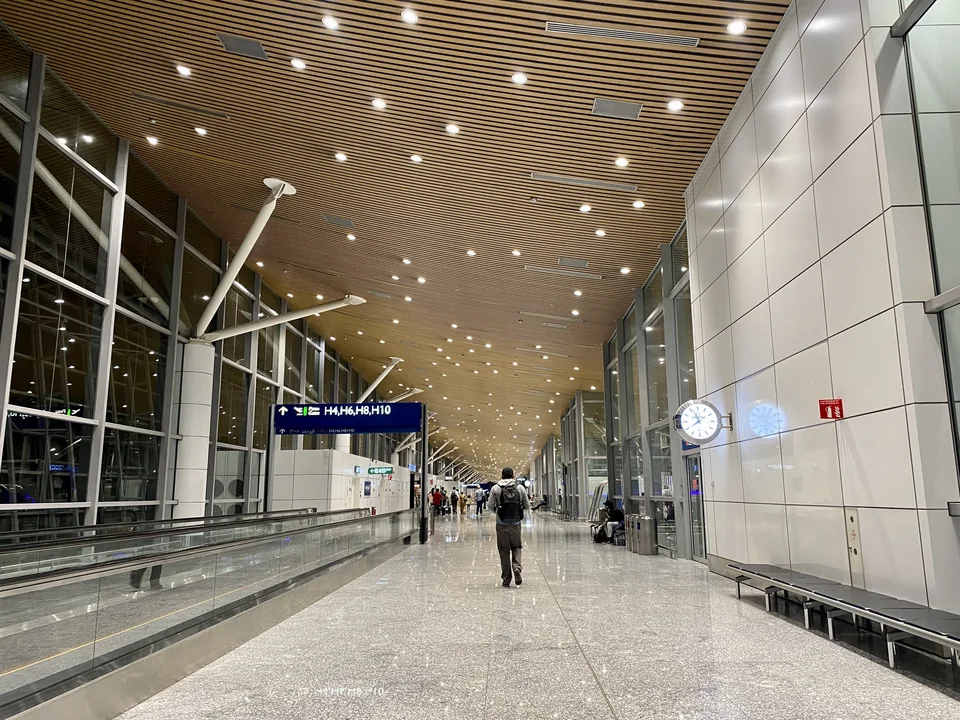
- At Kuala Lumpur airport, report to the EMGS International Student Arrival Centre (ISAC) before immigration. Do not use the automated gates: the officer must stamp a 30-day Special Pass in your passport.
- At the border, show the printed eVAL, your SEV if required, your offer letter and your passport.
- Within 7 working days, complete the medical screening at an EMGS panel clinic; public university students may use the university clinic. Results reach the EMGS system in 3–4 working days, and a failed result can be appealed at the same clinic within three days.
- Hand your passport to the university visa office. It goes to EMGS for the Student Pass and multiple-entry visa to be endorsed. Do not plan trips abroad while it is being processed.
Taylor's offers free airport pick-up for new international students who request it at least three working days before arrival.
Insurance
Medical insurance bought in Malaysia is compulsory throughout your studies, either through EMGS or through the university. EMGS packages for 2026:
| Insurer | Plan | Limit per disability | Annual premium |
|---|---|---|---|
| Etiqa Family Takaful | Plan 2 / Plan 3 | $7,350 (RM 30,000) / $12,250 (RM 50,000) | $120 (RM 498) / $140 (RM 567) |
| Great Eastern Takaful | Regular / Premium | $7,350 (RM 30,000) / $12,250 (RM 50,000) | $130 (RM 547) / $160 (RM 640) |
| The Pacific Insurance | Gold / Platinum | $7,350 (RM 30,000) / $12,250 (RM 50,000) | $140 (RM 551) / $160 (RM 644) |
If cover ends before your pass does, you must top it up to the pass expiry date.
Renewal and changing programmes
EMGS says the pass is usually issued for up to a year at a time and renewed annually; some universities arrange a longer pass from the start — Universiti Malaya, for example, offers a three-year pass package. EMGS recommends applying three months before expiry. Renewal requires a CGPA of at least 2.0 and attendance of at least 80%; if you fall short, the university must submit an explanation letter. The renewal fee is $66 (RM 270).
You may change programme or university while staying in Malaysia once, provided you have completed at least one semester, apply within 18 months of finishing that semester and move to a bachelor's-level programme or higher. Otherwise a new eVAL application, with departure from Malaysia, is needed.
Work, family and staying after graduation
Part-time work. International students may work up to 20 hours a week only during semester breaks or holidays longer than seven days, and only with prior Immigration approval. Permitted workplaces are restaurants, petrol stations, mini-markets, hotels and the campus; cashier jobs are not allowed, nor are hotel roles as singers, musicians, masseurs or guest relations officers. The university files the request, and the student attends the Immigration Department in person with a university representative.
Family. Postgraduate students may apply for dependant passes for spouses, children and parents. Undergraduates may do so only if they hold one of 17 listed nationalities, mostly from the Middle East.
After graduation. The Graduate Pass lets bachelor's and higher graduates stay for 12 months and work in permitted sectors without an employer sponsor. As of 29 September 2026 it is open to nationals of 32 countries, including the UK, the USA, Australia, China, India and most ASEAN states, but not Russia, Kazakhstan or other CIS countries. It also requires a Malaysian citizen sponsor earning at least $370 (RM 1,500) a month. Otherwise, staying on to work requires an employer to obtain an Employment Pass for you.
Visa timeline for a September start
| When | What to do |
|---|---|
| May–June | Accept the offer, pay the deposit and visa package, submit eVAL documents |
| June–July | Receive the eVAL and immediately apply for the SEV on the eVISA portal |
| 1–2 weeks before orientation | Book flights, complete the MDAC, request airport pick-up if offered |
| First week in Malaysia | Medical screening at an EMGS clinic; hand in your passport |
| Once EMGS has processed it | Collect your passport with the Student Pass and multiple-entry visa; stay in Malaysia until then |
| 3 months before the pass expires | Apply for renewal and extend your insurance |
Common mistakes
- Flying visa-free before the eVAL arrives. The Student Pass cannot be issued, and you will have to leave and start again.
- Forgetting the SEV. It is compulsory for many nationalities and can only be obtained from outside Malaysia.
- Using the airport e-gates. Without the Special Pass stamp, endorsement becomes complicated.
- Missing the 7-working-day medical window. EMGS will not start the endorsement without it.
- Travelling while your passport is with the visa office. It must stay in Malaysia until the pass is endorsed.
- Working without approval or during term. Both breach the pass conditions.
FAQ
Yes. Visa-free entry covers tourist visits only. Students need an eVAL, a Student Pass endorsed after arrival and, for nationalities on the EMGS list such as Russia and Kazakhstan, a single-entry visa obtained online before travel.
EMGS's service standard is 14 working days for a complete application. Missing or incorrect documents add time, which is why universities recommend allowing up to two months. Once issued, the eVAL is valid for six months and the SEV for three.
EMGS charges in the first year total about $680–740 (RM 2,770–3,020), including a year of insurance, the medical screening and the i-Kad. Renewal costs $66 (RM 270) a year plus new insurance. Some universities charge a single package, such as Universiti Malaya's $1,340 (RM 5,451).
Bank statements are not on EMGS's document list for new applications. The financial safeguards are your tuition payments, compulsory insurance and the personal bond your university signs with Immigration. An individual university may still ask for more.
Only up to 20 hours a week during breaks longer than seven days, in a limited list of sectors and with Immigration approval arranged through your university. Working during term is not allowed.
The 12-month Graduate Pass is available to nationals of 32 countries; as of 29 September 2026 the list does not include Russia or other CIS countries. Otherwise you need an employer willing to sponsor an Employment Pass.
Checking the EMGS file, preparing documents, coordinating the application with the university and preparing for arrival are provided under an agreement with StudyU. The eVAL, entry visa and Student Pass are issued by the Immigration Department of Malaysia, and admission is decided by the university.
Sources
- EMGS: FAQ on stages, timing, SEV, work, dependants and the Graduate Pass
- EMGS: required documents, medical screening, insurance 2026, SEV-required countries, fee calculator, Graduate Pass
- Immigration Department of Malaysia: visa requirements by country
- Embassy of Malaysia in Moscow: visa requirements for foreigners
- Universiti Malaya: arrival guide and eVAL services, processing fees by country
- University of Nottingham Malaysia: visas and immigration, how to apply
- Taylor's University: information for international students
Checked on 29 September 2026. Ringgit amounts were converted at the ECB rate of 29 September 2026 ($1 = RM4.0810, from EUR/USD 1.1355 and EUR/MYR 4.6340); sums under $100 are shown to the dollar, larger ones to $10.
To plan the admission stage before the visa, read applying to Malaysian universities; all our Malaysian university profiles are on the Malaysia page. If you would like your file checked before submission, send us a request.
During the free initial consultation, we clarify your goal, profile, timing, and budget and identify the next realistic step.
Next steps
- Cost of Studying in Malaysia in 2026/27: Tuition, Tax, Visa and Living Costs
- Applying to Malaysian Universities: Entry Routes, Requirements and Deadlines
- Studying in Malaysia for international applicants
- Universities in Malaysia for International Students: Public, Private and Branch Campuses
- Universiti Malaya (UM): Admission, Fees and Entry Requirements
- University of Nottingham Malaysia: Admission, Fees and Foundation Year
