
Agricultural economics in Turkey: the short answer
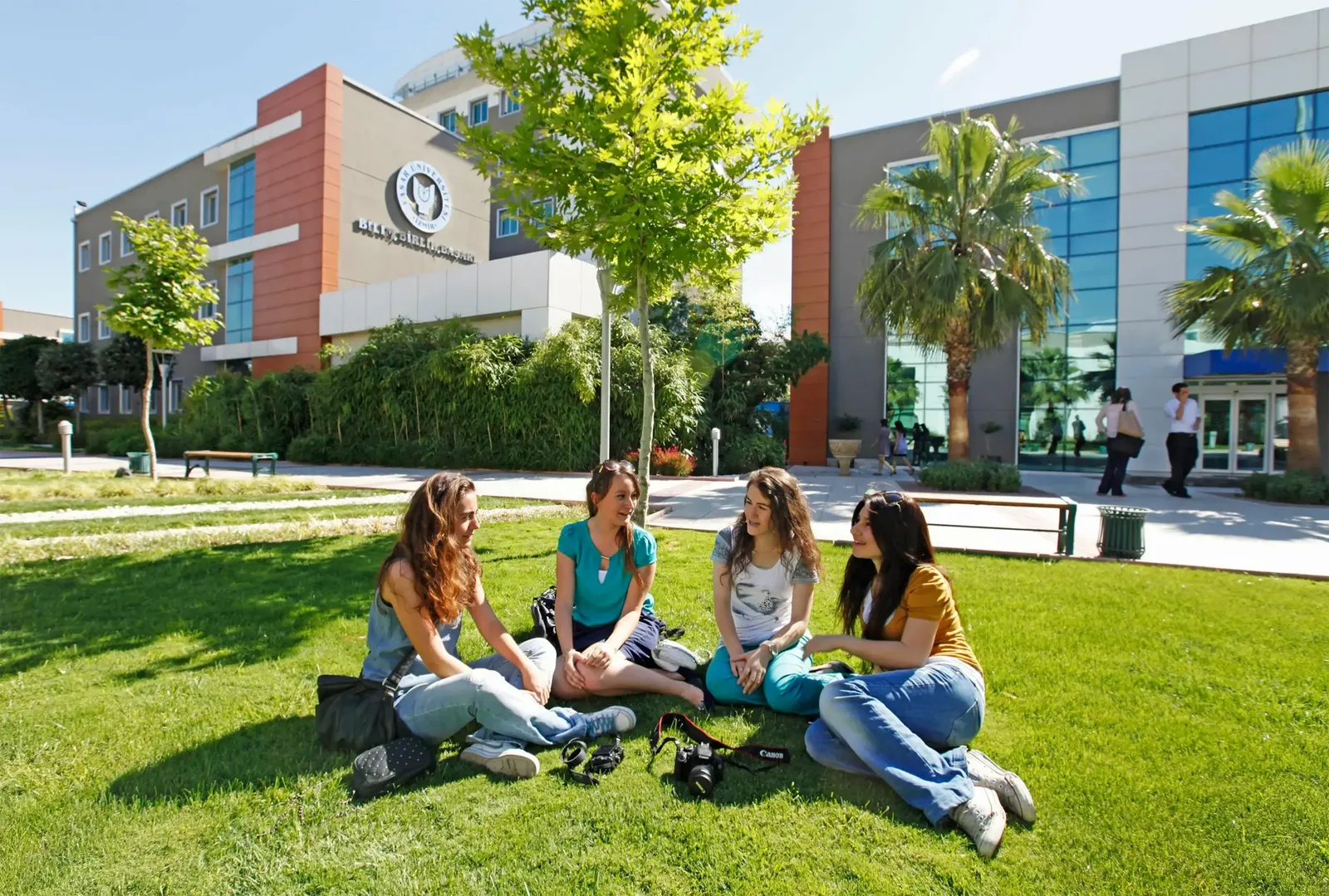
Agricultural economics is a four-year bachelor's that applies economics, management and policy analysis to food and farming: how prices form in agricultural markets, how farms and agribusinesses make investment decisions, how subsidies and trade rules shape production, and how supply chains move food from field to shelf. In the StudyU catalogue the option is Yaşar University in İzmir, where the department is called Agricultural Economics and Agribusiness, is taught in English and charges international students $8,000 a year.
Although it is usually housed in a faculty of agriculture, the programme is closer to economics and business than to crop science. Expect microeconomics, statistics and econometrics alongside introductory plant and animal production, so you understand the sector you analyse.
How the programme is structured
Across eight semesters (240 ECTS) the curriculum moves from economic and quantitative foundations to sector-specific analysis. The first year typically combines mathematics, principles of economics and an introduction to agriculture. The second and third years add farm management, agricultural marketing, cost accounting, agricultural policy, cooperatives and rural development, and econometrics. The final year is dominated by electives and a graduation project, often an applied study of a local value chain.
Yaşar goes further than most: its department requires every senior student to spend a full year on a long-term internship in the sector, for example at a food company, cooperative, exporter or input supplier. Language matters: even in an English-taught programme, fieldwork in Turkey involves Turkish-speaking producers, so basic Turkish makes the internship far more useful.
- Mathematics for economists
- Principles of micro- and macroeconomics
- Introduction to agriculture
- Academic English
- Statistics
- Farm management
- Agricultural marketing
- Accounting and cost analysis
- Econometrics
- Agricultural policy and trade
- Cooperatives and rural development
- Project appraisal
- Food supply chains and agribusiness
- Environmental and resource economics
- Electives
- Graduation project
Who the programme suits
Choose it if you…
- You like economics and data but want to apply them to a concrete sector.
- Your family or region is connected to farming, food processing or agricultural trade.
- You are interested in development work, cooperatives or agricultural finance.
Worth a pause if…
- You want hands-on crop or livestock science; an agricultural engineering or agronomy degree fits better.
- You dislike statistics; econometrics and quantitative analysis run through the degree.
Entry requirements for international students
Private universities such as Yaşar admit international bachelor's applicants on the secondary-school certificate and transcript, and may also accept SAT, ACT, IB, A levels or TR-YÖS. Mathematics results matter because the degree is quantitative.
- Documents: passport, school certificate (for Russian and CIS applicants, the 11-year certificate with transcript), sworn translations and, at registration, an equivalence document from Türkiye's Ministry of National Education.
- English: an accepted TOEFL iBT, IELTS or similar result, or the university's English exam; without it you start with preparatory English.
- Deadlines: private universities usually accept applications from spring until the intake fills or the published closing date, so apply early for scholarship consideration.
How to compare agricultural economics programmes
- Faculty focus: check whether the department is research-led in policy and markets or mostly production-oriented; the course list shows this quickly.
- Quantitative training: look for econometrics, GIS or data courses taught with real software.
- Location: İzmir and the Aegean region have strong export agriculture (olives, grapes, figs, cotton), which helps with applied projects and internships.
- Recognition: confirm the university's status in YÖK Atlas and its institutional accreditation with YÖKAK.
- Public-university alternatives: several state universities teach the subject in Turkish through the international-student quota; they are cheaper but require strong Turkish.
Careers after agricultural economics
Typical roles include analyst or credit officer in agricultural banking, market analyst for food exporters and traders, supply-chain planner in food companies, project officer in rural-development programmes and international organisations, and researcher in policy institutes. Some graduates continue to a master's in agricultural or development economics.
Agricultural engineers in Turkey register with the chamber of agricultural engineers for certain professional acts; if you intend to practise in Turkey, ask the faculty whether the degree title leads to that registration. For work in your home country, check how the ministry of agriculture or employers there classify the diploma.
Where to study agricultural economics
Programme availability for international applicants in the StudyU catalogue.
| University | Degree | Language | Tuition (academic year) |
|---|---|---|---|
| Yasar University | Bachelor | English | $8,000/yr · current list · official fee |
Yaşar charges one flat fee of $8,000 a year for its undergraduate programmes, and the English preparatory year costs the same. Its fee page prints no academic year, so confirm the amount for your intake. The university also advertises international-office scholarships at 75%, 50% and 25% and a 15% sibling discount; it decides who receives them.
When you compare budgets, include the preparatory English year if you need it, student housing in İzmir (usually cheaper than Istanbul), health insurance and the residence-permit fees.
Getting help with your application
A personal strategy, requirement checks, selection of agreed options, document preparation, applications, and support are provided under an agreement with StudyU. For agricultural economics we can compare Yaşar with Turkish-taught public options and check the current fee and scholarship terms directly with the university. The university decides admission and scholarships, Türkiye's Ministry of National Education decides school-certificate equivalence, the consulate decides the visa, the migration authority issues the residence permit, and the dormitory or landlord confirms housing.
Agricultural economics: common questions
Both. It is taught in an agricultural faculty but most courses are economics, management and quantitative methods applied to food and farming.
Yes. The department page states that the medium of instruction is English. Unless you prove your English level, you start with the preparatory year.
Yaşar lists $8,000 a year for undergraduate programmes, with no academic year printed on the fee page. Scholarships of 75%, 50% or 25% can lower that, at the university's discretion.
Mathematics is more important than biology. Introductory crop and animal production courses are taught from the basics.
Common paths are agricultural banking and insurance, food export and trading companies, supply-chain roles, development projects and postgraduate study in agricultural or development economics.
Ready to study Agricultural Economics in Turkey?
During the free initial consultation, we clarify your goal, profile, timing, and budget and identify the next realistic step.
Official sources
- YÖK Atlas: official program catalogue — program availability, institution and stated language of instruction. International quotas and tuition require the university's own current source.
- YÖK: official international-student information — the official university search route and general international-student guidance. The chosen university still owns its admission requirements.
- ÖSYM: official TR-YÖS exam (2026) — the official calendar and application route for TR-YÖS/1 in 2026. Each university publishes whether the result is required for the selected program.
Fees and requirements on this page come from the official documents below; where a university publishes its fee list online, the link sits next to the amount in the table above.
- Yaşar University: tuition fees and scholarships — Undergraduate programmes $8,000 per year; no academic year printed; English preparatory year $8,000; scholarship and sibling discounts.
- Yaşar University: Agricultural Economics and Agribusiness department — English medium of instruction; one-year sector internship for senior students.
- Example admission criteria (Istinye University) — illustrates how private universities accept school averages and SAT, ACT, IB or TR-YÖS scores.
- YÖKAK: Higher Education Quality Council — institutional accreditation status of Turkish universities.
Fees above are published by the universities in US dollars, so no conversion is applied. For readers budgeting in euros, the ECB reference rate on 29 September 2026 was €1 = $1.1355. Fees and programme lists were checked on these pages on 29 September 2026; confirm the active intake before paying a deposit.
Updated:
