
Agricultural engineering and technologies: the short answer
Agricultural Engineering and Technologies is a four-year engineering-oriented bachelor's that combines plant and soil science with the technology used on modern farms: irrigation design, agricultural machinery, sensors, greenhouse climate control, precision agriculture and data. In the StudyU catalogue it is offered by Yaşar University in İzmir, whose English-taught department is named Agricultural Machinery and Technologies Engineering and costs international students $8,000 a year.
Compared with a classical agronomy degree, the emphasis is on engineering tools and digital agriculture rather than on a single crop or livestock speciality. You still study biology and chemistry, but you apply them through design, measurement and automation.
Curriculum and practical training
The degree runs over eight semesters and 240 ECTS. Early semesters build the base in mathematics, physics, chemistry, botany and soil science. The middle years introduce irrigation and drainage, farm machinery and power, plant protection, greenhouse technology, remote sensing and GIS. Later semesters let you specialise through electives such as precision agriculture, renewable energy on farms, food processing technology or agricultural robotics.
Field and laboratory work are central: soil and water analysis, machinery testing, trial plots and greenhouse projects. Ask how many hours per week you spend in labs or fields and whether the faculty operates its own research farm, because that determines how practical the degree really is.
- Mathematics and physics
- General chemistry
- Botany and plant biology
- Introduction to agricultural technologies
- Soil science
- Engineering mechanics and drawing
- Plant physiology
- Statistics and experimental design
- Irrigation and drainage engineering
- Agricultural machinery and power
- Greenhouse technology
- Remote sensing and GIS
- Precision agriculture and sensors
- Farm energy systems
- Electives
- Design or research project
Who this programme suits
Choose it if you…
- You like biology and chemistry but also want to design and build solutions.
- You are interested in water efficiency, climate-resilient farming or agri-tech start-ups.
- You do not mind outdoor fieldwork in heat, mud or early mornings.
Worth a pause if…
- You prefer pure economics or policy; agricultural economics is the closer match.
- You want a purely laboratory-based life-science degree without fieldwork.
Admission requirements for international applicants
Private universities admit international students on the basis of school results or international exams. For this programme, mathematics, chemistry and biology grades are the ones reviewers look at, even when the published minimum is an overall average.
- Application file: passport, school certificate and transcript (the 11-year certificate for applicants from Russia and CIS countries), translations, and later the Ministry of National Education equivalence document.
- Optional scores: SAT, ACT, A levels, IB or TR-YÖS where the university accepts them in place of, or alongside, the school average.
- English: accepted TOEFL iBT or IELTS results, or the university's own test; otherwise preparatory English first.
- Health and safety: fieldwork and machinery courses follow safety rules, and some internships ask for insurance or a health statement.
How to compare agricultural engineering options
- Research farm and greenhouses: the single biggest difference between programmes; ask to see where practical classes happen.
- Technology focus: look for sensors, drones, GIS and data courses if you want precision agriculture, or for plant protection and breeding if you want a crop-science route.
- Language: English-taught programmes are rare in this field; Turkish-taught public programmes are more numerous but need strong Turkish.
- Climate and region: the Aegean region around İzmir offers export horticulture and greenhouse clusters for internships.
- Quality assurance: check institutional accreditation with YÖKAK and the programme record in YÖK Atlas.
Careers and professional registration
Graduates work as irrigation and greenhouse designers, precision-agriculture specialists, farm-machinery and agri-input sales engineers, quality and production staff in food companies, and in agri-tech start-ups. Others join public agencies, development projects or continue to a master's in agricultural engineering, water management or food technology.
In Turkey, agricultural engineers can register with the Chamber of Agricultural Engineers (part of TMMOB) for certain professional services; in your home country, ask the ministry of agriculture or the engineering chamber how a Turkish diploma is recognised before you rely on it for licensed work.
Universities offering agricultural engineering and technologies
Programme availability for international applicants in the StudyU catalogue.
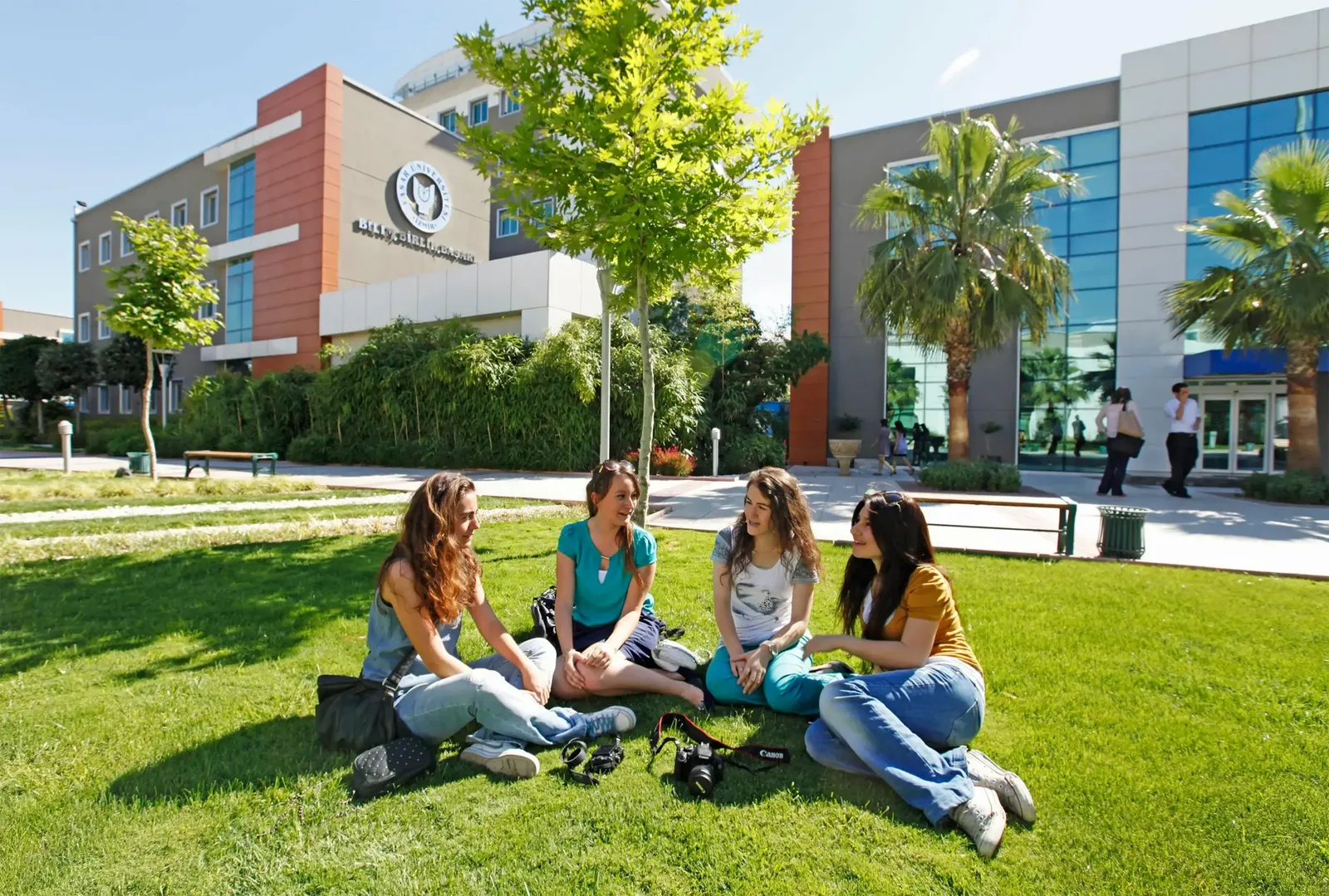
| University | Degree | Language | Tuition (academic year) |
|---|---|---|---|
| Yasar University | Bachelor | English | $8,000/yr · current list · official fee |
Yaşar applies a single $8,000 annual fee to its undergraduate programmes and charges the same for the English preparatory year. No academic year is printed on its fee page, so check the figure in your offer letter. International-office scholarships of 75%, 50% or 25% and a 15% sibling discount are awarded by the university.
Your full budget also includes the preparatory English year if required, field clothing and equipment, transport to practical sites, housing in İzmir, health insurance and residence-permit fees.
StudyU support for this programme
A personal strategy, requirement checks, selection of agreed options, document preparation, applications, and support are provided under an agreement with StudyU. For agricultural engineering we can check the current programme language, fee and scholarship terms with Yaşar and compare them with other options you are considering. The university decides admission and scholarships, Türkiye's Ministry of National Education decides school-certificate equivalence, the consulate decides the visa, the migration authority issues the residence permit, and the dormitory or landlord confirms housing.
Agricultural engineering and technologies: FAQ
Agronomy concentrates on crops, soils and production practices. Agricultural engineering adds design and technology: irrigation systems, machinery, greenhouses, sensors and automation.
Yaşar University lists it as English-taught. Check the programme page and YÖK Atlas for the current medium of instruction before applying.
They help a lot. Mathematics, chemistry and biology results are the grades admissions staff read most closely for this programme.
At Yaşar it is strongly practical: the department states that all senior students complete a one-year internship in the sector, on top of laboratory work. Elsewhere, ask how many practical hours each semester includes.
Yaşar's international tuition page lists $8,000 a year for undergraduate programmes; it does not print an academic year, so confirm the amount for your intake.
Many graduates do, in agri-business, irrigation and food companies. Licensed engineering work abroad depends on how the destination country's regulator recognises the diploma.
Ready to study Agricultural Engineering and Technologies in Turkey?
During the free initial consultation, we clarify your goal, profile, timing, and budget and identify the next realistic step.
Official sources
- YÖK Atlas: official program catalogue — program availability, institution and stated language of instruction. International quotas and tuition require the university's own current source.
- YÖK: official international-student information — the official university search route and general international-student guidance. The chosen university still owns its admission requirements.
- ÖSYM: official TR-YÖS exam (2026) — the official calendar and application route for TR-YÖS/1 in 2026. Each university publishes whether the result is required for the selected program.
Fees and requirements on this page come from the official documents below; where a university publishes its fee list online, the link sits next to the amount in the table above.
- Yaşar University: tuition fees and scholarships — Undergraduate programmes $8,000 per year; no academic year printed; English preparatory year $8,000; scholarship and sibling discounts.
- Yaşar University: Agricultural Machinery and Technologies Engineering department — English medium of instruction; one-year sector internship for senior students.
- Example admission criteria (Istinye University) — how a private university sets school-average and exam thresholds.
- YÖKAK: Higher Education Quality Council — institutional accreditation of Turkish universities.
Fees above are published by the universities in US dollars, so no conversion is applied. For readers budgeting in euros, the ECB reference rate on 29 September 2026 was €1 = $1.1355. Fees and programme lists were checked on these pages on 29 September 2026; confirm the active intake before paying a deposit.
Updated:
