
The Medical University "Prof. Dr. Paraskev Stoyanov" in Varna (MU-Varna) teaches Medicine and Dental Medicine (six years each) and Pharmacy (five years) in English. First-year tuition for 2026/27 is $11,360 (€10,000) for Medicine and Dental Medicine and $9,080 (€8,000) for Pharmacy. For non-EU applicants, admission rests on three things: online biology and chemistry tests, proof of B2 English, and a grade of at least 65% of the maximum in your country's official language on the school certificate. In 2026, non-EU candidates sat the tests on 4 April, 16 May and 13 June, and the paper file with recognition of the school certificate was due by 11 September.
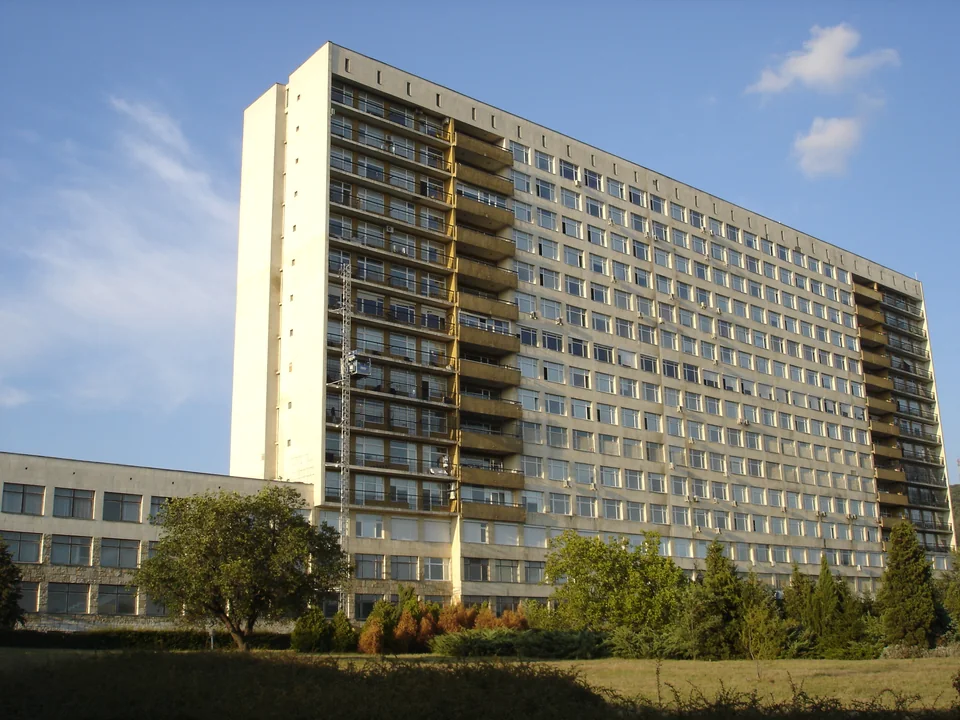
| At a glance | Details |
|---|---|
| Type | public medical university, founded in 1961 |
| Location | Varna, Black Sea coast; main building at 55 Marin Drinov Street |
| English-taught programmes | Medicine (6 years), Dental Medicine (6 years), Pharmacy (5 years) |
| Bulgarian-taught programmes | 14 medical specialties for school leavers |
| First-year fee, 2026/27 | $11,360 (€10,000) for Medicine and Dental Medicine; $9,080 (€8,000) for Pharmacy |
| Entrance tests | online biology and chemistry, 90 minutes each; English by certificate or university test |
| Application fee, 2026 intake | $390 (€340), non-refundable |
| Preparatory course, 2026/27 | English or Bulgarian, 9 months, $5,680 (€5,000) |
Who MU-Varna suits
MU-Varna suits applicants who have firmly chosen medicine, dentistry or pharmacy and want to study in English at a public EU university. Its main practical difference from the Sofia medical schools is the calendar: non-EU test sessions run in spring and early summer. If you prepare early, you know your result long before the visa stage and can assemble documents without a rush.
It is a weaker fit if:
- you decide late in the summer. The spring and June sessions for non-EU applicants are over by then, and in 2026 the July and September sessions were open only to EU citizens. Look instead at the September exams at MU-Sofia and Sofia University;
- your official-language grade is weak. Taking 5 as the top Russian grade, 65% of the maximum is 3.25, so a final grade of 3 does not meet the threshold;
- you want non-medical options. The university covers health sciences only.
Programmes and teaching language
Three integrated master's programmes are taught in English straight after school, with no separate bachelor's stage:
- Medicine, 6 years, qualification "Master – Medical Doctor";
- Dental Medicine, 6 years, qualification "Master – Doctor of Dental Medicine";
- Pharmacy, 5 years, qualification "Master – Pharmacist".
In Bulgarian, the university admits school leavers to 14 health-care specialties. International applicants without a Bulgarian-proficiency document from a Bulgarian university take a language exam set by the Department of Foreign Languages, Communication and Sport, then the entrance exams of their chosen specialty. Those who are not yet proficient, or fail, can join the Bulgarian preparatory course.
Tuition fees
Fees for international students are set every May by a Council of Ministers decree, published in the State Gazette and on the university website. Since Bulgaria adopted the euro on 1 January 2026, fees are quoted in euros.
| English-taught programmes, 2026/27 | First-year fee |
|---|---|
| Medicine | $11,360 (€10,000) |
| Dental Medicine | $11,360 (€10,000) |
| Pharmacy | $9,080 (€8,000) |
| English preparatory course, 9 months | $5,680 (€5,000) |
| Bulgarian preparatory course, 9 months | $5,680 (€5,000) |
The university labels these amounts as first-year fees. They cover lectures, seminars and labs, mid-term and semester assessment, and use of lecture halls, laboratories, clinics and equipment. Housing, books, insurance and travel are extra.
One-off costs during admission:
| Payment | Amount |
|---|---|
| Application and entrance-test fee | $390 (€340), at least one week before the test date |
| Retake of one test (biology or chemistry) | $170 (€150) |
| Online biology and chemistry course before the tests | $680 (€600), run only with at least 10 participants |
| MU-Varna certificate for the visa file | $6 (€5.11) |
| Type D visa fee for a full degree, Moscow | $110 (€100), cash in euros |
For transfers from Russia, see our guide to paying for studies abroad from Russia; for the whole budget, our guide to the cost of studying in Bulgaria.
Requirements for non-EU applicants
Every English-taught programme requires:
- Completed secondary education that gives access to university in the country where you finished school.
- The country's official language on your certificate. It must be a school subject with a final grade of at least 65% of the local maximum. Optional courses do not count, and neither do grades from university-level or pre-med courses. On a Russian certificate this is the Russian language grade.
- B2 English, proven in one of the ways below.
- Passed biology and chemistry tests.
- Approval by Bulgaria's Ministry of Education and Science of your document file.
Proving your English
| Evidence | Minimum |
|---|---|
| IELTS Academic | 6.5 |
| TOEFL iBT | 90 |
| TOEFL PBT | 576 |
| PTE Academic | 61 |
| Cambridge CAE and CPE | 176 |
| Cambridge FCE | 190 |
| IB Diploma taught in English | 4 at SL or HL |
| European Baccalaureate taught in English | 80% in English |
| Bilingual language-school diploma with a final English exam | B2 or higher |
Without a certificate you can take the university's English test for medical specialties; if you do not pass, the English preparatory course is the fallback. Citizens and school graduates of the UK, Ireland, the US, Canada, Australia and New Zealand do not need to prove English.
How the ranking score works
Your score adds the official-language grade from your school certificate to the biology and chemistry test results, each multiplied by three. The maximum is 42. In practice 36 of those 42 points come from biology and chemistry, so test preparation matters far more than your school average. Places go down the ranking among applicants who meet every requirement.
Biology and chemistry entrance tests
Each test lasts 1 hour 30 minutes, and both are taken on the same day. They share a five-part format:
- multiple choice, one correct answer out of four;
- gap filling, four missing terms per item;
- matching two columns;
- true or false;
- short explanations of concepts with examples.
Wrong answers cost nothing, but marking more than one option scores zero for that question.
2026 dates: 4 April, 16 May and 13 June, online for everyone; 16 July and 3 September, for EU citizens only. You can sit the tests in your final school year, before receiving your certificate. If you fail, pass narrowly or are unhappy with the result, you may retake a test once at the next announced date after a written request.
The university publishes topic lists, sample tests, a book of test items and a chemistry textbook for the entrance exams. In 2026, online courses in both subjects ran on 27–29 March and 5–7 June.
Documents
The non-EU file contains:
- The application form from e-application.mu-varna.bg, printed and signed.
- A certified copy of your school-leaving certificate. IGCSE, O-Levels and AS-Levels are not accepted as entry qualifications.
- A certified copy of the transcript with final grades in every subject.
- A document from an authorised body, usually your school, confirming your right to enter higher education in your country.
- Your parents' declaration of financial support during your studies, notarised and translated into Bulgarian.
- A copy of your passport's photo and data pages.
- Five recent colour passport photos.
- A name-change document if the name on your certificates differs from your passport.
- NACID verification of your school certificate. NACID is Bulgaria's National Centre for Information and Documentation, and the check takes about a month.
Documents 2–4 must be legalised and translated into Bulgarian. For Hague Convention countries the university requires an original apostille with a wet stamp; photocopies of legalised documents are rejected. The translation is made by a consular officer of the issuing country or by an agency authorised by Bulgaria's foreign ministry.
You can submit in person, through a representative with a legalised and translated power of attorney, or by post to the admissions office before the deadline. Only applicants whose complete paper file, including the NACID certificate, has arrived are ranked. In 2026 the deadline was 11 September.
The university also has a Russian-language admissions page, but its fees and dates date from 2019–2020, and it mentions a medical certificate and a 70% biology and chemistry threshold that the current English rules do not contain. Rely on the English version.
Timeline: from tests to visa
This is a guide based on the 2026 cycle for an applicant from Russia; the university announces 2027 test dates separately.
- January – March. Register at e-application.mu-varna.bg, pay the $390 (€340) fee at least a week before your chosen test date and prepare from the topic lists.
- April – June. Sit the online tests, with one retake at the next date if needed.
- May – August. Apostilles, translation, NACID application and the full paper file. The university recommends applying in April or May rather than waiting for the deadline.
- By 11 September. The complete file with the NACID certificate reaches the admissions office.
- Committee approval, then the ministry. MU-Varna forwards your file to the Ministry of Education and Science, which issues a certificate of your right to study for the type D visa or refuses; this takes up to a month.
- Two certificates. Collect the ministry certificate at the university in person or through a representative, and order the MU-Varna certificate by email after paying $6 (€5.11).
- Type D visa. Russian citizens apply at the consular section of the Bulgarian Embassy in Moscow after booking by email; for full-time students under Article 24v of the Foreigners Act the embassy states a decision within 15 calendar days of submission (the general limit of 35 working days applies to other grounds). Citizens of other countries apply at the Bulgarian embassy in their own country.
The university estimates two to three months from document submission to visa. The visa stage is covered in our Bulgaria student visa guide, and general admission rules in our guide to applying to Bulgarian universities.
Preparatory courses
Both courses last nine months and run only with at least seven students.
| Course | Hours |
|---|---|
| English | 1,050: general English 580, English for health sciences 94, plus 94 hours each of biology, chemistry, anatomy and physics |
| Bulgarian | 1,150: general Bulgarian 620, introduction to medical terminology 230, plus 75 hours each of biology, chemistry, anatomy and physics |
The English course makes sense if your language is below B2 while your biology and chemistry are solid. It does not replace the entrance tests and adds a year of living in Varna to the degree itself.
Living in Varna: housing, residence and work
The university has two residences, Block 35 and Block 3, offering 750 beds in total. Block 35 is next to St. Marina University Hospital and has double and triple rooms, each with its own bathroom. Block 3 is near the Medical College and the Faculty of Dental Medicine and has double rooms. The website still quotes rent for international students in leva, 100 BGN a month excluding electricity, which is $58 (€51) at the fixed rate of 1.95583 BGN per euro; confirm the 2026/27 figure when you move in. The university estimates a private flat or room in town at 500–700 BGN a month, or $290–410 (€256–358), depending on flatmates, location and condition. Estate agents usually charge half to a full month's rent as commission.
Once in Bulgaria on the type D visa, students apply to the Migration Directorate of the Ministry of Interior for a long-term residence permit, as a rule no later than 14 days before the visa expires. According to the EU Immigration Portal, the permit is issued for up to a year at a time and renewed, and your address must be declared within five days. Students may work without a work permit for up to 20 hours a week, although a medical timetable leaves little room to fund tuition from part-time work.
MU-Varna, MU-Sofia or Sofia University?
| 2026/27, non-EU applicants | MU-Varna | MU-Sofia | Sofia University |
|---|---|---|---|
| Medicine in English, first year | $11,360 (€10,000) | $11,300 (€9,950) | $9,080 (€8,000) |
| English | B2 certificate or university test | part of the entrance exam | tested through an exam set in English |
| Exams | spring and June, online | 9 September and 2 October (after the extension), remote | 10 and 16 September |
| Document submission | in person, by proxy or by post | in person or by proxy only | in person or by notarised proxy |
Varna rewards applicants who start early and want exams finished before summer. The Sofia options still work for later starters but squeeze the visa stage into a few weeks. Our guide to medicine in Bulgaria compares the country's medical schools, and if you are weighing other countries, see medicine in Czechia, Slovakia, Serbia and Hungary.
Common mistakes
- Waiting for autumn. In 2026 the last non-EU test session was on 13 June.
- Ignoring the language threshold. A grade of 3 in the official language rules you out whatever your biology and chemistry scores.
- Paying the fee at the last minute. The money must arrive at least a week before the test, and international transfers can take several days.
- Sending photocopied apostilles. Only original stamps are accepted.
- Relying on the Russian-language page. Its fees and dates are several years out of date.
How StudyU helps
In the free initial consultation we look at your goal, profile and budget and tell you whether Varna is realistic for your intake year. Checking your certificate against the language threshold, a test preparation plan, collecting and legalising documents, the NACID application and the timeline to the visa are provided under an agreement with StudyU. MU-Varna decides on admission, the Ministry of Education and Science on the visa certificate, the Bulgarian consulate on the visa and the Migration Directorate on residence.
More institutions are listed in our Bulgaria catalogue and our overview of universities in Bulgaria.
FAQ
Do I need Bulgarian to study in English?
Not for admission; the requirements concern English. Bulgarian becomes useful in daily life and with patients, so it is worth learning from the first year.
Can I take the tests before finishing school?
Yes. Final-year pupils can sit the tests before receiving their certificate, provided they study their country's official language at school. The full paper file with the NACID certificate is still due by the September deadline.
How many attempts do I get?
One main attempt plus one retake at the next announced date, requested in writing. Each biology or chemistry retake costs $170 (€150).
Is IELTS 6.0 enough?
No. The minimum is 6.5 in IELTS Academic. With 6.0 your options are the university's own English test or the preparatory course.
Are there funded places for international students?
Non-EU citizens applying under general rules pay tuition. State-funded places exist for specific categories, such as people of Bulgarian origin, with fees set by the Council of Ministers decree. Who can apply for those places is covered in our guide to free education in Bulgaria.
What if I pass the tests but my documents arrive late?
The final ranking includes only applicants whose complete paper file, NACID certificate included, reached the admissions office by the deadline. A test result on its own does not earn a place, so start recognising your school certificate right after the spring session.
Where can I work with an MU-Varna degree?
Medical, dental and pharmacy degrees from a Bulgarian public university are covered by the EU's automatic recognition system under Directive 2005/36/EC; the regulator of the country where you plan to work handles registration and any language check. Russia, Kazakhstan and other non-EU countries do not recognise them automatically: the diploma goes through the national procedure, and the licence to practise is a separate step under that country's rules.
How do I send documents from abroad?
Unlike MU-Sofia, MU-Varna accepts the file by post at the admissions office, 55 Marin Drinov Street, Varna. Use tracked delivery and send early: the deadline refers to arrival, not dispatch.
Sources
- MU-Varna: admission for non-EU applicants (requirements, English, documents, ranking, deadlines)
- MU-Varna: 2026 entry test dates and format
- MU-Varna: 2026/27 tuition fees
- MU-Varna: English preparatory course, Bulgarian preparatory course
- MU-Varna: residences and private housing
- MU-Varna: Russian-language admissions page (archived 2019–2020 data)
- Bulgarian Embassy in Russia: type D visa
- Bulgarian foreign ministry: D-visa fact sheet, Article 15 (PDF)
- EU Immigration Portal: student in Bulgaria
ECB rate of 29.09.2026: €1 = $1.1355. Rounding step: $1 below $100, otherwise $10. All dates and fees on this page belong to the 2026/27 intake.
If you want to check whether you meet MU-Varna's thresholds and timeline for the next intake, send us a request.
During the free initial consultation, we clarify your goal, profile, timing, and budget and identify the next realistic step.
Next steps
- Free Education in Bulgaria for International Students: Who Qualifies for Lower Fees
- Medicine in Bulgaria: Medical Universities, English-Taught Programmes, Fees and Exams
- Applying to Bulgarian Universities: Documents, Recognition, Exams and Deadlines
- Cost of Studying in Bulgaria: Tuition, Living Costs and a First-Year Budget
- How to Pay for Studies Abroad from Russia: What Works in 2026
- Studying Medicine in Czechia: Free in Czech or Paid in English — Faculties, Exams, Fees and Degree Recognition
