
Prosthetics and orthotics in Turkey: the short answer
Prosthetics and orthotics (P&O) trains the clinicians and technicians who design, fit and adjust artificial limbs, braces, splints and orthopaedic footwear. In Turkey you can study it as a four-year bachelor's, such as Orthotics and Prosthetics at İstanbul Medipol University ($5 000 a year for 2026–27), or as a two-year associate degree in Orthopedic Prosthetics and Orthotics at a vocational school of health services, where Üsküdar charges $2 800 a year for 2026–27. Both routes are taught in Turkish.
| Question | Answer |
|---|---|
| Degree options | Bachelor's (4 years) or associate degree (2 years) |
| Teaching language | Turkish |
| What you learn | Anatomy, biomechanics, gait analysis, casting and scanning, materials, device fabrication and fitting |
| Published tuition, 2026–27 | $5 000 a year for Medipol's bachelor's; $2 800 a year for Üsküdar's associate programmes |
| Practical training | Workshop fabrication plus clinical placements with patients |
| Professional title | Decided by the health regulator of the country where you will work |
The two routes lead to different jobs. The associate degree prepares technicians who manufacture and adjust devices under supervision; the bachelor’s adds clinical assessment, prescription follow-up and rehabilitation-team work, and is closer to the level that international P&O professional standards describe for clinicians.
What you study
Training combines three strands: the human body (anatomy, physiology, pathology of the musculoskeletal and nervous systems), engineering (biomechanics, materials, CAD/CAM and 3D scanning) and patient care (assessment, fitting, gait training and communication). Workshop hours are high from the first year, and the final year of the bachelor’s is dominated by supervised clinical practice.
- Anatomy and physiology
- Introduction to prosthetics and orthotics
- Workshop techniques and materials
- Medical terminology in Turkish
- Biomechanics and gait analysis
- Lower-limb orthotics
- Casting, scanning and modelling
- Musculoskeletal pathology
- Lower-limb prosthetics
- Upper-limb prosthetics and orthotics
- Spinal orthoses
- Clinical practice in rehabilitation centres
- Advanced clinical internship
- Paediatric and sports orthotics
- CAD/CAM and 3D-printed devices
- Graduation project
A good fit if you
- like working with your hands as well as with people;
- are interested in both engineering and rehabilitation;
- can build clinical-level Turkish for patient communication.
Consider another route if you
- want a purely laboratory or office job with no patient contact;
- need an English-taught programme, since the listed options teach in Turkish;
- plan to practise abroad without first checking whether the local regulator recognises the programme length and clinical hours.
Entry requirements for international applicants
Admission is based mainly on school results at private universities; vocational schools admit on the school-leaving certificate.
- School certificate and transcript. Biology, physics and mathematics results carry most weight. The Ministry of National Education issues the equivalence certificate (denklik) after admission.
- Exam scores. TR-YÖS or SAT are optional at many private universities and can affect scholarships; state universities normally require them.
- Turkish. A Turkish certificate at the level the university sets, or its preparatory year. Clinical placements are impossible without conversational Turkish.
- Health documents. Clinical programmes may ask for a health report and vaccination records before placements.
The university decides admission and scholarships; the Presidency of Migration Management decides the student residence permit.
Bachelor’s or associate degree: how to decide
Match the route to the job you want and to where you plan to work.
| Question | Bachelor’s (4 years) | Associate (2 years) |
|---|---|---|
| Main role | Clinician in the rehabilitation team | Technician in fabrication and fitting |
| Cost per year, 2026–27 | $5 000 at Medipol | $2 800 at Üsküdar |
| Clinical depth | Assessment, prescription follow-up, gait training | Device manufacturing and adjustment |
| Recognition abroad | Closer to international clinician standards | Usually recognised as a technician qualification |
| Further study | Master’s in rehabilitation or biomechanics | Moving on to a bachelor’s later means a new application or a transfer under the university’s rules |
Ask each university how many hours of supervised patient practice the curriculum includes, which rehabilitation centres host students and whether CAD/CAM and 3D scanning are taught hands-on.
Universities offering Orthopedic Prosthetics and Orthotics
Bachelor's and associate options; fees are annual list prices for international students.
| University | Degree | Language | Tuition |
|---|---|---|---|
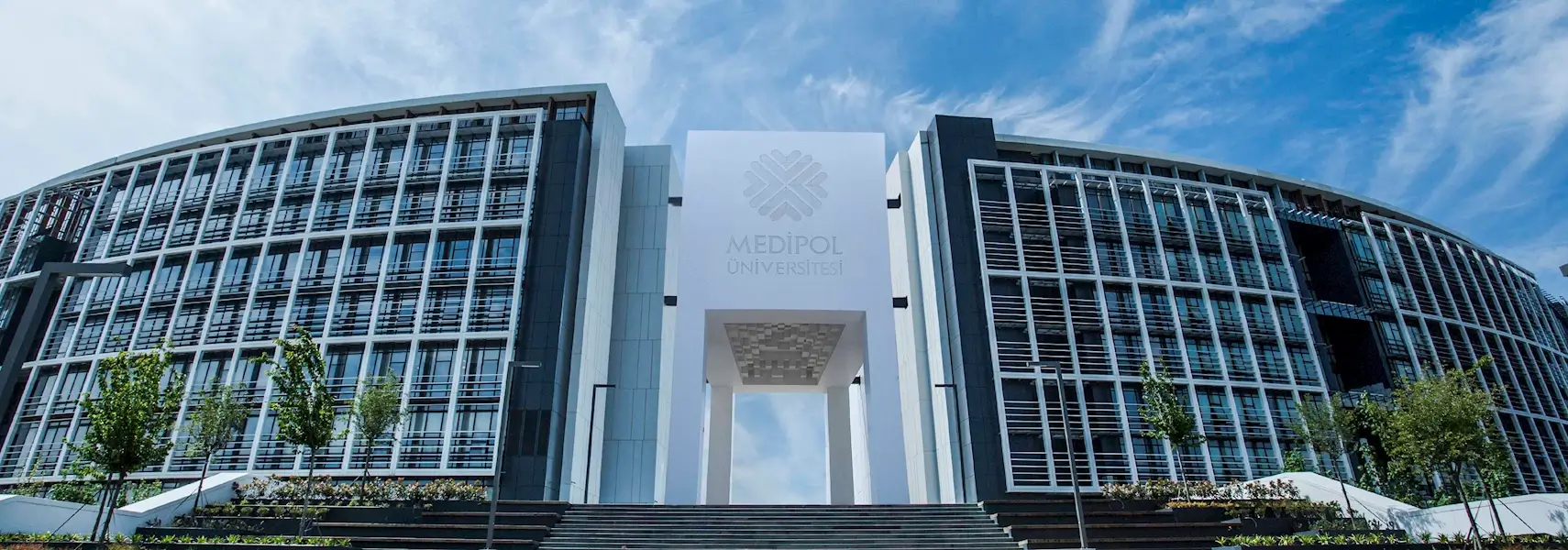
| Medipol University | Bachelor | Turkish | $5 000/yr (2026–27) · fee source |
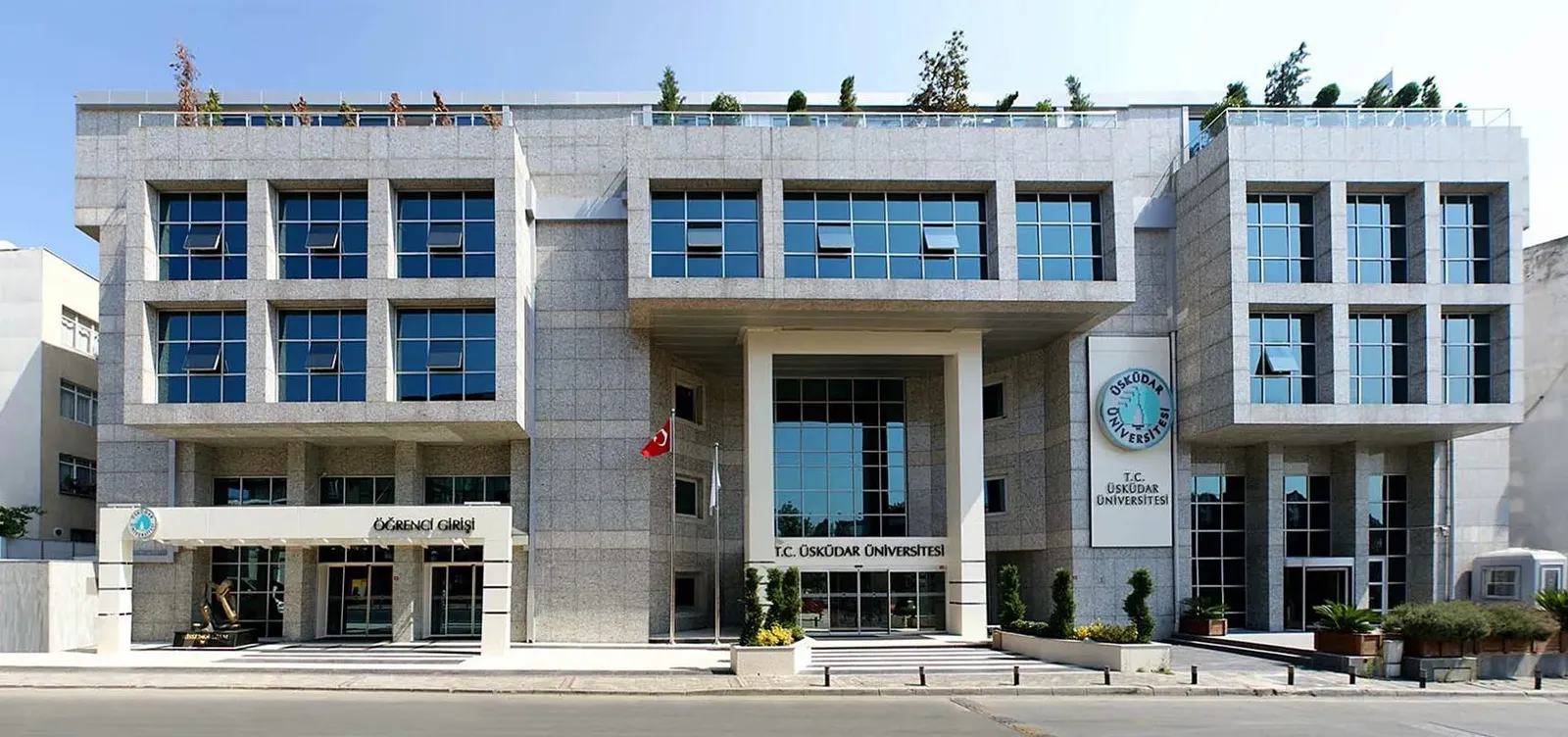
| Uskudar University | Associate | Turkish | $2 800/yr (2026–27) · fee source |
| Gelisim University | Associate | Turkish | $2 750/yr (2025–26 list, latest published) · fee source |
| Nisantasi University | Associate | Turkish | Fee on request · application portal (academic year not stated) |
Üsküdar publishes one fee of $2 800 a year for all programmes of its Vocational School of Health Sciences for 2026–27. Medipol also lists an advance-payment price of $4 500 for Orthotics and Prosthetics. Fees were checked on 29 September 2026.
Careers after prosthetics and orthotics
Graduates work in orthopaedic workshops, prosthetics and orthotics clinics, rehabilitation centres, hospitals and companies that manufacture braces, insoles and components. Demand comes from an ageing population, diabetes-related amputations, sports injuries and children with conditions such as cerebral palsy or scoliosis. Digital skills are increasingly valued as clinics adopt 3D scanning and printing.
Working with patients is a regulated activity in most countries. In Turkey, foreign graduates need a work permit and the authorisations that apply to health professionals; abroad, the national regulator compares programme length and clinical hours and may ask for an exam or supervised practice. Check the destination country before choosing between the bachelor’s and the associate route.
Prosthetics and orthotics in Turkey: questions applicants ask
Not at the universities listed here: Medipol’s bachelor’s and the associate programmes at Üsküdar, Gelişim and Nişantaşı are Turkish-taught.
For 2026–27 Medipol lists $5 000 a year for the bachelor’s and Üsküdar $2 800 a year for its associate programmes. Gelişim’s latest published list (2025–26) shows $2 750.
Choose the bachelor’s if you want a clinical role or recognition abroad; the associate degree suits applicants who want to work as technicians in fabrication and fitting.
No. Physiotherapists treat movement through exercise and therapy, while P&O professionals design and fit external devices. The two professions work closely together.
You need solid basics for biomechanics and materials, but the course is practical rather than mathematically heavy.
Possibly, but the destination country’s regulator decides and may require extra clinical hours, an exam or an adaptation period.
Programme comparison, eligibility checks, document preparation and application follow-up are provided under an agreement with StudyU. The university decides admission.
Interested in prosthetics and orthotics in Turkey?
During the free initial consultation, we clarify your goal, profile, timing, and budget and identify the next realistic step. A personal strategy, requirement checks, selection of agreed options, document preparation, applications, and support are provided under an agreement with StudyU.
Official sources
- YÖK Atlas: official program catalogue — program availability, institution and stated language of instruction. International quotas and tuition require the university's own current source.
- YÖK: official international-student information — the official university search route and general international-student guidance. The chosen university still owns its admission requirements.
- ÖSYM: official TR-YÖS exam (2026) — the official calendar and application route for TR-YÖS/1 in 2026. Each university publishes whether the result is required for the selected program.
Tuition figures come from the universities’ own fee lists for international students: İstanbul Medipol University: 2026–2027 tuition fee list (PDF); Üsküdar University: 2026–2027 international tuition fees; İstanbul Gelişim University: international fee list (PDF); Nişantaşı University: international brochure (PDF). Where a list is available online, the fee cell in the table links to it. All fees are published in US dollars, so no currency conversion was applied. Fees were checked on 29 September 2026; confirm language, curriculum, quota and tuition with the university for your intake before paying.
Updated:
