
What this degree covers
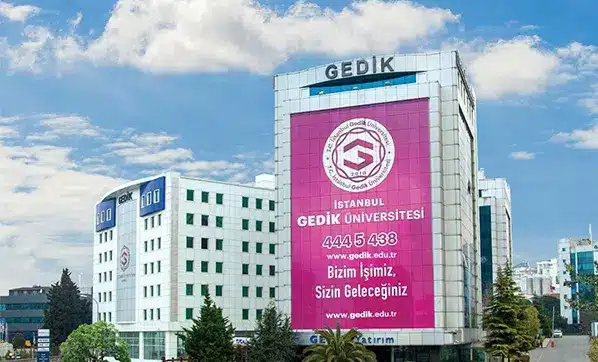
Metallurgy and materials engineering is a four-year engineering bachelor's about how materials are made, processed, tested and chosen: steels and alloys, ceramics, polymers, composites and nanomaterials. Among private universities, Atılım in Ankara teaches Metallurgical and Materials Engineering in English for $14,500 a year (2026/27 intake), while Istanbul options carry newer titles: Sabancı's English-taught Materials Science and Nano Engineering ($36,500, 2026/27) and Gedik's Turkish-taught Materials Science and Nanotechnology Engineering ($5,000, 2025/26).
The discipline links chemistry and physics to industry. You learn why a turbine blade survives high temperatures, how a car body is protected from corrosion, or which polymer suits a medical implant, and you spend a lot of time in labs: microscopy, mechanical testing, heat treatment and chemical analysis.
Turkey has a large steel, automotive, white-goods, defence and construction-materials industry, so the field has a clear local employer base. Long-established departments also exist at state technical universities such as METU and İTÜ, which admit international students through their own procedures.
What you study
The first two years build mathematics, physics, chemistry and engineering fundamentals; from the third year you specialise in material classes, processing methods and characterisation.
- Calculus and linear algebra
- General chemistry
- Physics
- Introduction to materials science
- Engineering drawing
- Thermodynamics of materials
- Crystallography and phase diagrams
- Mechanical behaviour of materials
- Physical metallurgy
- Materials lab I
- Ceramics and polymers
- Composites
- Corrosion and protection
- Materials characterisation (SEM, XRD)
- Summer internship
- Materials processing and manufacturing
- Nanomaterials or biomaterials electives
- Failure analysis
- Senior design project
Expect at least one industrial internship, often in a steel plant, foundry, automotive supplier or research institute. It is the best way to decide between production, quality and R&D careers.
Entry requirements for international applicants
Private universities admit international students on school records and language level; no national entrance exam is required.
- School record. Diploma and transcript with good chemistry, physics and mathematics; Atılım asks for at least 50% success in the graduation GPA.
- English. Atılım and Sabancı teach in English; without a recognised certificate you take the university's exam and possibly a preparatory year.
- Turkish. Gedik's programme is Turkish-taught, so plan for B2 Turkish; Gedik lists TÖMER courses at $350 each (2025/26).
- Documents. Certified school certificate, transcript, passport; certified translations if the originals are not in Turkish or English; proof of funds at registration for Atılım.
How to choose a materials engineering programme
- Classic metallurgy or new materials? Metallurgy titles focus on metals and processing; “materials science and nano” titles lean towards polymers, electronic materials and nanotechnology.
- Labs. Ask what characterisation equipment students can use themselves, not only see in demonstrations.
- Industry links. Internships in steel, automotive and defence supply chains are what employers look for.
- Budget. The gap between Gedik ($5,000) and Sabancı ($36,500) is large; Sabancı lists tuition waivers from 25% to 75% for strong candidates.
- Master's route. Gedik runs a Turkish-taught Metallurgy and Materials Engineering master's, useful if you want to specialise after the bachelor's.
Universities offering Metallurgy and Materials Engineering
Published fees for metallurgy and materials engineering programmes at private universities, with the academic year each university states.
| University | Degree | Language | Tuition |
|---|---|---|---|
| Gedik University — Materials Science and Nanotechnology Engineering | Bachelor | Turkish | $5,000/yr (2025/26) · fee source |
| Atılım University (Ankara) — Metallurgical and Materials Engineering | Bachelor | English | $14,500/yr (2026/27 intake) |
| Sabanci University — Materials Science and Nano Engineering | Bachelor | English | $36,500/yr (2026/27) · fee source |
| Gedik University — Metallurgy and Materials Engineering, thesis | Master | Turkish | $5,000 (2025/26) · fee source |
Bachelor's fees are per year before scholarships. Gedik's newest international list is for 2025/26 and does not say whether the master's fee is annual or for the whole programme.
What it costs
Four years of tuition come to about $20,000 at Gedik (2025/26 fee), $58,000 at Atılım and $146,000 at Sabancı before scholarships.
English preparation costs $6,000 at Gedik (2025/26); at Atılım and Sabancı ask for the preparatory fee in the offer. Atılım requires the first semester to be paid before registration.
Add living costs in Istanbul or Ankara, the residence permit and health insurance.
Careers in metallurgy and materials
Graduates work across heavy and high-tech industry:
- process or production engineer in steel, aluminium and foundry plants;
- quality and materials-testing engineer for automotive and white-goods suppliers;
- R&D engineer developing coatings, composites or battery materials;
- failure-analysis and corrosion specialist;
- researcher after a master's or PhD.
Employment in Turkey requires a work permit arranged by the employer, and some defence-sector positions can be restricted by nationality. Materials engineers' skills transfer well internationally, especially to automotive and energy industries.
Is this program right for you?
It clicks if you…
- You enjoy chemistry and physics and want to apply them to real products.
- You like lab work and careful testing.
- You are interested in sustainability, recycling or new materials for energy.
Consider carefully if…
- You dislike laboratory work.
- You want a purely software or business career.
How to apply
- Nine to twelve months ahead: choose English or Turkish and take a recognised English test if needed.
- Application: submit certified school documents and passport through the university portal.
- Acceptance: receive the letter of acceptance, pay the amount required before registration and apply for a student visa.
- Arrival: register with originals, translations and proof of funds where required, then apply for the residence permit.
FAQ about the program
Yes. Atılım in Ankara teaches Metallurgical and Materials Engineering in English, and Sabancı in Istanbul teaches Materials Science and Nano Engineering in English.
Gedik's Turkish-taught Materials Science and Nanotechnology Engineering at $5,000 a year in its 2025/26 list.
They overlap. Metallurgy concentrates on metals; materials science covers all classes of materials, including polymers, ceramics and nanomaterials.
Yes. Chemistry, physics and mathematics are the foundations of the first two years.
State technical universities such as METU and İTÜ run long-established departments and admit international students through their own procedures; check their international admissions pages.
Production, quality, testing and R&D roles in steel, automotive, white goods, energy and defence supply chains.
Planning an engineering degree in materials?
During the free initial consultation, we clarify your goal, profile, timing, and budget and identify the next realistic step. Programme comparison, document preparation and application support are provided under an agreement with StudyU; the university decides admission and scholarships, and the migration authorities decide the residence permit.
Official sources
- YÖK Atlas: official program catalogue — program availability, institution and stated language of instruction. International quotas and tuition require the university's own current source.
- YÖK: official international-student information — the official university search route and general international-student guidance. The chosen university still owns its admission requirements.
- ÖSYM: official TR-YÖS exam (2026) — the official calendar and application route for TR-YÖS/1 in 2026. Each university publishes whether the result is required for the selected program.
Also checked on 29 September 2026 on the institutions’ own sites:
- Atılım University: undergraduate admissions (ic.atilim.edu.tr) — Metallurgical and Materials Engineering (EN), fee, GPA rule, documents and registration conditions.
- Sabancı University: tuition fee (iro.sabanciuniv.edu) — 2026-2027 undergraduate fee and scholarship levels.
- Sabancı University: bachelor's programmes (iro.sabanciuniv.edu) — Materials Science and Nano Engineering, 100% English.
- Gedik University: tuition fees (2025-2026) (international.gedik.edu.tr) — bachelor's and master's fees, English preparatory and TÖMER fees.
Fees are in US dollars as published for the academic year shown; the offer letter confirms the amount.
Updated:
