
Political Science and International Relations in Turkey: the short answer
Political Science and International Relations (PSIR) is a four-year social-science bachelor's covering political theory, comparative politics, international law, diplomacy and foreign-policy analysis. Turkey is a strong place to study it because the curriculum sits next to live regional questions: the Black Sea, the Middle East, the Caucasus and EU relations. For 2026–27, English-taught PSIR starts at $4 000 a year at Ankara Medipol and $4 400 at Üsküdar, Turkish-taught tracks start at $4 200 (Üsküdar), and Sabancı sits at the top of the range at $36 500.
| Question | Answer |
|---|---|
| Degree and length | Bachelor's, 4 years; master's 1–2 years; PhD about 4 years |
| Teaching language | English or Turkish, often both at the same university |
| Selection | School results; SAT or TR-YÖS optional at many private universities |
| Published tuition, 2026–27 | $4 000–$8 500 a year at most listed universities; Sabancı $36 500 |
| Core skills | Research, analytical writing, negotiation, policy analysis, languages |
| Typical next step | Master’s in IR, security studies, EU studies or public policy |
Political science and international relations are sometimes separate departments in Turkey. Combined PSIR programmes give a balance of domestic politics and global affairs; if you are sure you want diplomacy and foreign policy, compare pure International Relations degrees such as those listed by İstinye, Bilgi and Nişantaşı.
What you study
The first year introduces politics, economics, sociology, law and history. The second and third years build the core: political theory, comparative politics, international relations theory, international law and organisations, and foreign-policy analysis, with Turkish foreign policy and regional studies as a local speciality. The final year is built from electives and a research paper; many departments also run Model UN teams and internships with NGOs, think tanks or consulates.
- Introduction to political science
- Introduction to international relations
- World history since 1789
- Principles of economics
- Political theory
- Comparative politics
- Constitutional law
- Research methods and statistics
- International relations theory
- International law and organisations
- Turkish foreign policy
- Foreign-policy analysis
- Security studies or EU politics electives
- Middle East, Russia or Black Sea regional studies
- International political economy
- Graduation research paper
A good fit if you
- follow international news closely and enjoy debate;
- write well and read a lot in English or Turkish;
- want to combine the degree with languages, internships and a master’s.
Consider another route if you
- want a direct vocational qualification with a clear first job;
- dislike long reading lists and essay exams;
- expect a diplomatic career in your home country without checking its civil-service entry rules.
Entry requirements for international applicants
PSIR admissions at private universities rely on school results. Language is the main hurdle.
- School certificate and transcript. Humanities and language marks help. The Ministry of National Education issues the equivalence certificate (denklik) after admission.
- Exams. SAT or TR-YÖS scores are optional at many private universities and can improve scholarship offers; state universities usually require them.
- English for English tracks. An accepted score (for example TOEFL iBT or another test on the university’s list) or the university’s own exam; otherwise an English preparatory year.
- Turkish for Turkish tracks. A Turkish certificate at the required level or a preparatory year.
- Graduate applicants. A bachelor’s degree, transcript, statement of purpose and references; some institutes add ALES and an interview.
The university decides admission and scholarships; the Presidency of Migration Management decides the student residence permit.
How to compare PSIR programmes
Fees vary widely, so compare what the extra money buys.
| What to check | Why it matters |
|---|---|
| Language of the track | An English track helps with graduate study abroad; Turkish opens local internships |
| Faculty research areas | Regional expertise shapes electives and thesis supervision |
| Exchange partners and double majors | Semesters abroad and a second major add value |
| Internship links | NGOs, think tanks, media and consulates in Istanbul and Ankara |
| Graduate programmes | Several universities publish PSIR master’s and PhD fees for 2026–27 |
Watch for different titles: Political Science and Public Administration trains for public-sector management, and Public Relations degrees are communication programmes, not politics.
Universities offering Political Science and International Relations
Bachelor's fees are annual list prices; graduate fees cover the whole programme where the university says so.
| University | Degree | Language | Tuition |
|---|---|---|---|
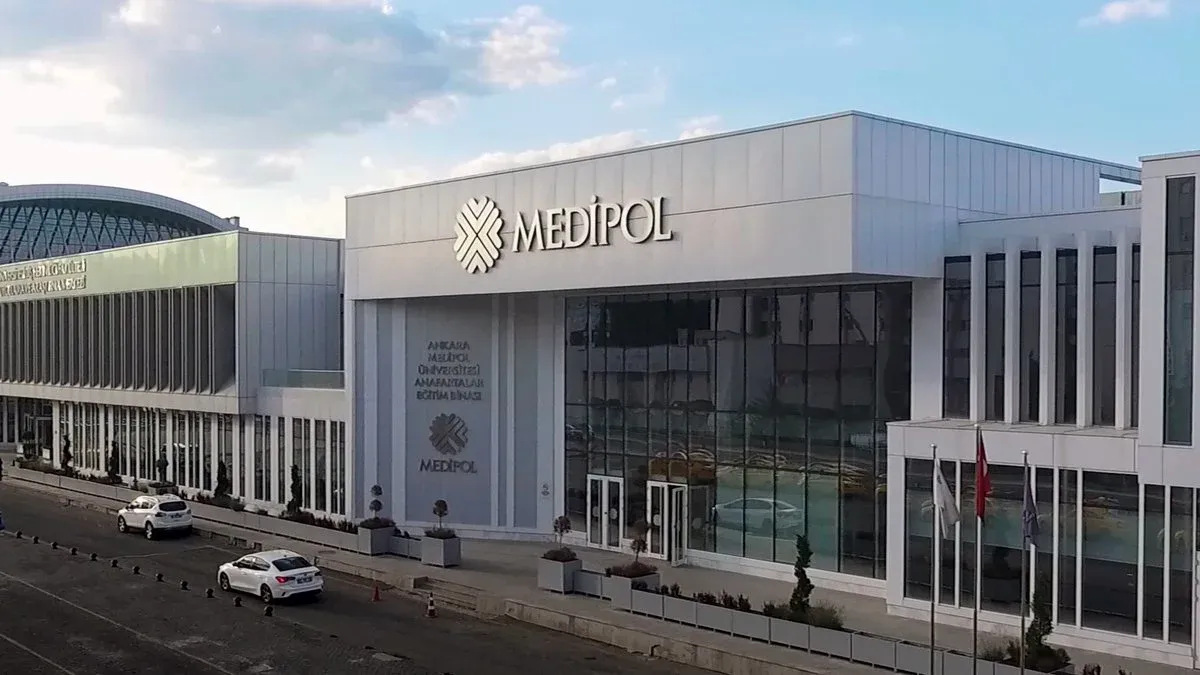
| Ankara Medipol University | Bachelor | English | $4 000/yr (2026–27) |
| Uskudar University | Bachelor | Turkish | $4 200/yr (2026–27) · fee source |
| Uskudar University | Bachelor | English | $4 400/yr (2026–27) · fee source |
| Medipol University | Bachelor | English | $4 500/yr (2026–27) · fee source |
| Okan University | Bachelor | Turkish | $4 500/yr (2026–27) · fee source |
| Okan University | Bachelor | English | $5 000/yr (2026–27) · fee source |
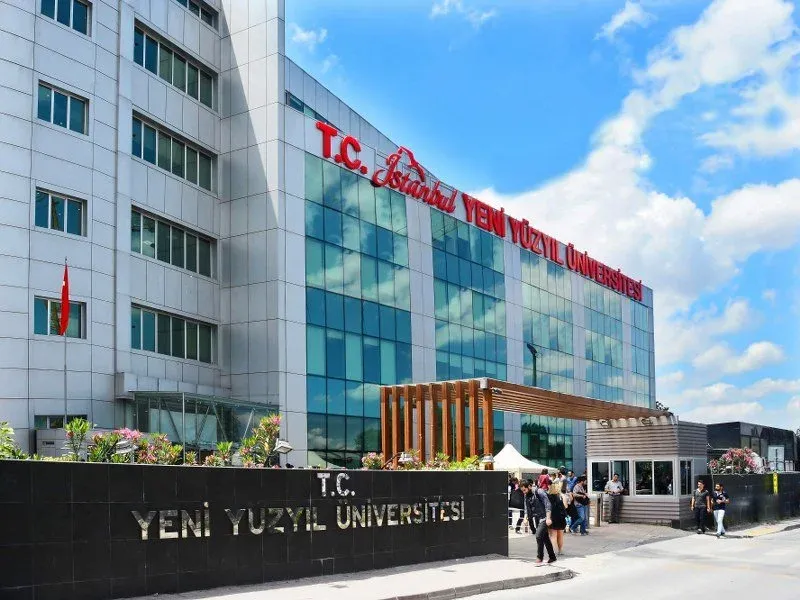
| Yeni Yuzyil University | Bachelor | Turkish | $5 000/yr (2026–27) · fee source |
| Bahcesehir University | Bachelor | English | $8 500/yr (2026–27) · fee source |
| Sabanci University | Bachelor | English | $36 500/yr (2026–27) · fee source |
| Gelisim University | Bachelor | Turkish | $3 500/yr (2025–26 list, latest published) · fee source |
| Gelisim University | Bachelor | English | $4 000/yr (2025–26 list, latest published) · fee source |
| Halic University | Bachelor | Turkish | Fee on request · fee page (academic year not stated) |
| Topkapi University | Bachelor | English | Fee on request · admissions portal (no current fee list) |
| TED University | Bachelor | English | Fee on request · fee page (academic year not stated) |
| TOBB University | Bachelor | Turkish | Fee on request · fee page (academic year not stated) |
| Yeni Yuzyil University | Master | Turkish | $4 000 whole programme, thesis (2026–27) · $3 500 non-thesis |
| Uskudar University | Master | Turkish | $4 800 whole programme, IR thesis (2026–27) · fee source · $4 400 non-thesis |
| Istinye University | Master | Turkish | $8 500 whole programme, thesis (2026–27) · fee source |
| Istinye University | Master | English | $8 500 whole programme, thesis (2026–27) · fee source |
| Altinbas University | Master | Turkish | $6 900 (2025–26 list) · fee source |
| Altinbas University | Master | English | $6 900 (2025–26 list) · fee source |
| Gelisim University | Master | Turkish | $4 500 thesis (2025–26 list) · fee source · $3 750 non-thesis |
| Gelisim University | Master | English | $5 500 thesis (2025–26 list) · fee source · $4 250 non-thesis |
| Nisantasi University | Master | Turkish | Fee on request · application portal (academic year not stated) |
| Yeni Yuzyil University | PhD | Turkish | $9 000 whole programme (2026–27) |
| Bahcesehir University | PhD | English | $40 000 whole programme (2026–27) · fee source |
Sabancı charges one fee for all undergraduate programmes and admits students to a faculty before they choose a major. TED and TOBB publish undergraduate fees without an academic year, so request a dated quote. Fees were checked on 29 September 2026; rows marked 2025–26 show the latest list the university had published.
Careers after PSIR
Graduates work in international organisations and NGOs, think tanks and research institutes, journalism and media analysis, political-risk and consulting firms, corporate public-affairs and government-relations teams, international trade and logistics companies, and in teaching after further study. Many go on to a master’s in international relations, security studies, EU studies, public policy or law.
Diplomatic and civil-service careers are decided by each country’s own entry exams and citizenship rules, so check your home country’s requirements early. In Turkey, foreign graduates need a work permit. Languages matter as much as the degree: English plus Turkish, Russian, Arabic or another regional language is a strong combination for analysis and field roles.
Political Science and International Relations in Turkey: questions applicants ask
Yes. English-taught PSIR or IR programmes are listed at Ankara Medipol ($4 000), Üsküdar ($4 400), Medipol ($4 500), Okan ($5 000), Bahçeşehir ($8 500) and Sabancı ($36 500) for 2026–27.
Most listed universities charge $4 000–$8 500 a year for 2026–27; Sabancı charges $36 500.
It builds the right knowledge and skills, but diplomatic services recruit through their own exams and citizenship rules in each country.
Not at many private universities, which admit on school results; state universities usually require an exam score.
PSIR balances politics and international affairs; public administration focuses on government institutions and public management.
Yes. Yeni Yüzyıl, Üsküdar and İstinye publish 2026–27 master’s fees, and Yeni Yüzyıl and Bahçeşehir list PhD fees.
Programme comparison, eligibility checks, document preparation and application follow-up are provided under an agreement with StudyU. The university decides admission and scholarships.
Planning to study international relations in Turkey?
During the free initial consultation, we clarify your goal, profile, timing, and budget and identify the next realistic step. A personal strategy, requirement checks, selection of agreed options, document preparation, applications, and support are provided under an agreement with StudyU.
Official sources
- YÖK Atlas: official program catalogue — program availability, institution and stated language of instruction. International quotas and tuition require the university's own current source.
- YÖK: official international-student information — the official university search route and general international-student guidance. The chosen university still owns its admission requirements.
- ÖSYM: official TR-YÖS exam (2026) — the official calendar and application route for TR-YÖS/1 in 2026. Each university publishes whether the result is required for the selected program.
Tuition figures come from the universities’ own fee lists for international students: Ankara Medipol University: 2026–2027 tuition fee list; Üsküdar University: 2026–2027 international tuition fees; İstanbul Medipol University: 2026–2027 tuition fee list (PDF); İstanbul Okan University: 2026–2027 tuition fees; İstanbul Yeni Yüzyıl University: 2026–2027 undergraduate fees (PDF); Bahçeşehir University (BAU): 2026–2027 tuition fees; Sabancı University: 2026–2027 tuition fee; İstanbul Gelişim University: international fee list (PDF); İstanbul Yeni Yüzyıl University: 2026–2027 master’s and PhD fees (PDF); İstinye University: quotas and tuition fees for 2026–2027 entrants; Altınbaş University: programme fees flyer (PDF); TED University: undergraduate tuition fees; TOBB ETÜ: tuition fees and scholarship opportunities. Where a list is available online, the fee cell in the table links to it. All fees are published in US dollars, so no currency conversion was applied. Fees were checked on 29 September 2026; confirm language, curriculum, quota and tuition with the university for your intake before paying.
Updated:
