
Turkish Language and Literature: the short answer
Turkish Language and Literature (Türk Dili ve Edebiyatı) is a four-year, Turkish-taught bachelor's covering the history and structure of Turkish, Ottoman Turkish, and literature from early Turkic texts to the modern novel. For 2026/27, Yeni Yüzyıl lists it at $5,000 a year and İstinye at $8,000; Gelişim's latest list (2025/26) shows $3,500 and Haliç publishes $4,700 without a year label. You need a strong command of Turkish from the first semester.
This is a philology degree, not a language course. You read and analyse texts in several historical forms of Turkish, including Ottoman Turkish written in Arabic script, and you study grammar, dialects and literary theory. Speakers of other Turkic languages, such as Azerbaijani, Turkmen, Uzbek, Kazakh or Kyrgyz, often find the historical and comparative courses a natural fit.
International graduates most often use the degree to teach Turkish, to work in publishing, editing and translation, or to continue to a master's and an academic career in Turkology.
What you study, year by year
- Old Turkish language: Orkhon inscriptions and early texts
- Ottoman Turkish I: script and reading
- Introduction to literary theory
- Turkish grammar: phonology and morphology
- Ottoman Turkish II and III
- Classical (Divan) literature
- Turkish folk literature
- Middle Turkish texts
- Modern Turkish literature: Tanzimat to Republic
- Contemporary Turkic languages and dialects
- Turkish syntax
- Literary criticism
- Contemporary Turkish novel and poetry
- Research seminar and graduation thesis
- Electives: teaching Turkish as a foreign language, children's literature, editing
- Comparative Turkic literatures
Ottoman Turkish is usually the hardest part for newcomers. If you already read Arabic or Persian script, you start with an advantage; otherwise plan extra practice in the first year.
Entry requirements for international applicants
- a completed secondary-school certificate and transcript meeting the university's minimum grade;
- an advanced Turkish certificate or a pass in the university's Turkish exam; Haliç, for example, asks for TÖMER C1 for Turkish-taught programmes;
- a Turkish preparatory year if your level is lower: Gelişim's 2025/26 list charges $1,750 and Üsküdar's 2026/27 table lists its one-year TÖMER Turkish course (A1 to B2) at $1,500 per term;
- a passport and translated documents, and after admission the equivalence certificate (denklik) for your school diploma.
Because every course is about Turkish texts, a preparatory year that only reaches the minimum level is rarely enough. Many successful international students arrive with C1-level Turkish and keep reading Turkish literature on their own.
Application steps and timing
- A year or more before. Take Turkish to an advanced level; read modern Turkish novels and newspapers to build vocabulary.
- Six months before. Sit a TÖMER or Yunus Emre Institute exam, gather school documents and shortlist universities.
- Application. Apply online; the university checks your Turkish evidence and decides admission.
- After acceptance. Pay the deposit shown in the letter and apply for a student visa; the consulate decides.
- On arrival. Register, obtain denklik and apply for the residence permit, which the migration authority decides.
How to compare departments
- Ottoman Turkish teaching. Number of semesters and whether palaeography and archive reading are included.
- Staff specialisms. Old Turkish, folk literature, modern literature and linguistics should all be represented.
- Teaching-Turkish electives. Useful if you plan to teach Turkish as a foreign language.
- Library and archives. Access to manuscript collections and digital archives matters for a thesis.
- Graduate route. Haliç, Gelişim and İstinye list master's programmes in Turkish Language and Literature.
A common mistake is to treat the degree as a way to learn Turkish. It assumes you already speak it well and asks you to analyse it.
Universities and published tuition
Bachelor's and master's programmes in Turkish Language and Literature, with the fee year and basis each university gives.
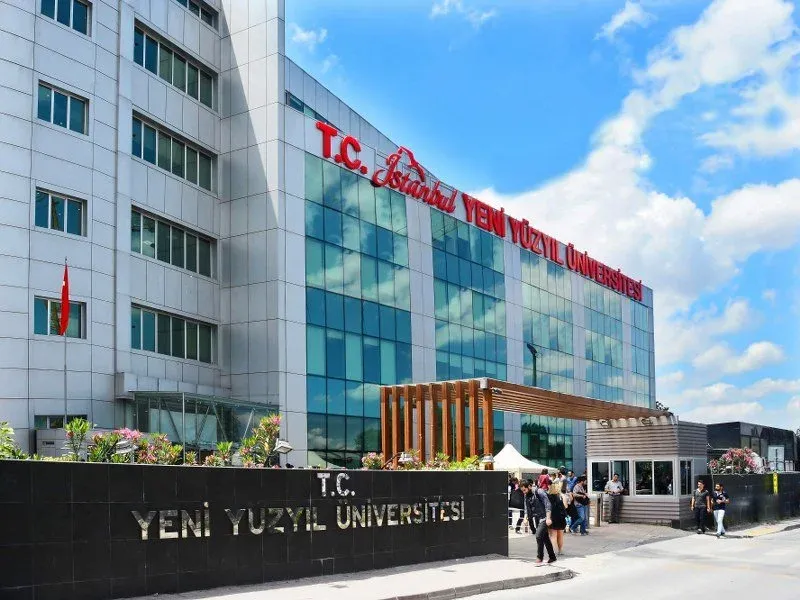

| University | Programme as listed | Degree | Language | Published tuition | Fee year and basis |
|---|---|---|---|---|---|
| Gelisim University | Turkish Language and Literature (Turkish) | Bachelor | Turkish | $3,500/yr | 2025/26 list, latest published · per year |
| Halic University | Turkish Language and Literature | Bachelor | Turkish | $4,700/yr | Year not stated · per year |
| Yeni Yuzyil University | Turkish Language and Literature | Bachelor | Turkish | $5,000/yr | 2026/27 · per year |
| Istinye University | Turkish Language and Literature | Bachelor | Turkish | $8,000/yr | 2026/27 · per year |
| Halic University | Turkish Language and Literature (non-thesis) | Master | Turkish | $2,700 | Year not stated · programme fee |
| Halic University | Turkish Language and Literature (with thesis) | Master | Turkish | $2,700 | Year not stated · programme fee |
| Gelisim University | Turkish Language and Literature (non-thesis) | Master | Turkish | $3,750 | 2025/26 list, latest published · whole programme |
| Gelisim University | Turkish Language and Literature (thesis) | Master | Turkish | $4,500 | 2025/26 list, latest published · whole programme |
| Istinye University | Turkish Language and Literature (with thesis) | Master | Turkish | $8,500 | 2026/27 · whole programme |
Sources: İstanbul Gelişim University, İstanbul Gelişim University (graduate fees), Haliç University, İstanbul Yeni Yüzyıl University, İstinye University, Üsküdar University. Yeni Yüzyıl's 2026/27 list shows a 50% scholarship column ($2,500); İstinye lists a quota of 10 international places for the bachelor's.
Books, housing, insurance and the residence permit are extra.
Careers after the degree
Graduates teach Turkish as a foreign language at language centres, cultural institutes and universities abroad; work as editors, proofreaders and copywriters in publishing and media; translate between Turkish and their home language; and work in archives, libraries and cultural organisations. A master's and PhD lead to research and university teaching in Turkology.
Teaching in schools usually needs a teaching qualification on top of the degree, and permanent posts in Turkish state schools are civil-service jobs for Turkish citizens. A work permit, applied for by the employer, is needed for any job in Turkey after graduation.
Who this programme suits
A strong fit if you…
- you already speak Turkish well and love reading;
- you are curious about language history and old scripts;
- you want to teach Turkish, edit, translate or research;
- you speak another Turkic language and want to study the family in depth.
Think twice if…
- you are a beginner in Turkish;
- you want a quick route to a well-paid corporate job;
- you prefer English-language literature, where English Language and Literature fits better.
Plan your Turkish Language and Literature application
During the free initial consultation, we clarify your goal, profile, timing, and budget and identify the next realistic step. A personal strategy, requirement checks, selection of agreed options, document preparation, applications, and support are provided under an agreement with StudyU. The university decides admission after checking your Turkish, the consulate decides the visa, and the migration authority decides the residence permit.
Frequently asked questions
An advanced level. Haliç asks for TÖMER C1 for Turkish-taught programmes, and other universities test applicants with their own exam. Plan for a preparatory year if you are below that level.
For 2026/27, Yeni Yüzyıl lists $5,000 a year and İstinye $8,000. Gelişim's latest list (2025/26) shows $3,500, and Haliç publishes $4,700 without an academic-year label.
Yes. Ottoman Turkish in Arabic script is a core part of the curriculum, usually over several semesters, because much of the literature before 1928 was written in it.
Yes. İstinye lists a thesis master's at $8,500 for 2026/27, Gelişim lists thesis and non-thesis master's programmes on its 2025/26 list, and Haliç publishes a $2,700 programme fee without a year label.
Teaching Turkish as a foreign language, editing and publishing, translation, cultural-institute work and, after graduate study, academic research in Turkology.
Under an agreement with StudyU, we check your Turkish certificates, compare programmes and prepare the applications. The university decides admission.
Official sources
- YÖK Atlas: official program catalogue — program availability, institution and stated language of instruction. International quotas and tuition require the university's own current source.
- YÖK: official international-student information — the official university search route and general international-student guidance. The chosen university still owns its admission requirements.
- ÖSYM: official TR-YÖS exam (2026) — the official calendar and application route for TR-YÖS/1 in 2026. Each university publishes whether the result is required for the selected program.
All tuition figures on this page are published by the universities in US dollars, so no currency conversion was applied. YÖK Atlas lists Turkish Language and Literature programmes and their universities; fee sources are linked under the table.
Updated:
